Best Paris Cooking Classes (All Tried & Tested by Me!)
Disclosure: This post may contain affiliate links; more info here.
Paris is always a good idea. And so is booking a Paris cooking class while you’re there. Especially if you travel to eat (like I do!).
You could spend your entire trip eating at the best restaurants in Paris, without a clue what’s going on in their kitchens. And that’d already be a fabulous time, obviously… But what if you want to get your hands dirty? Learn the techniques and discover the chef’s secret ingredients – and maybe sip some wine while you’re at it? That’s where this list of the best Paris cooking classes comes in.
From piping macarons to baking flaky croissants to churning your own butter, the options are almost overwhelming. Lucky for you, I’ve tried and tested them all, and rounded up my favorites below!
And, by the way, I’m not just a food-obsessed travel blogger. I’m also a trained chef (diploma and all!). So I know what separates a good class from a touristy, forgettable one. These French cooking experiences are fantastic skill-building experiences and lots of fun.
Whether you’re a complete beginner, a pastry-lover, or seasoned home cook, there’s a baking class or cooking class in Paris here for you. Bon appetit!
Quick Picks: Best Cooking Classes in Paris
Short on time? Here’s a quick list of the best cooking classes in Paris. And before you ask… No, I refuse to pick a favorite! I loved them all. It just comes down to what you want to learn to make.
These classes are all small-group and taught in English by professional chefs, pastry chefs, or cheesemongers.
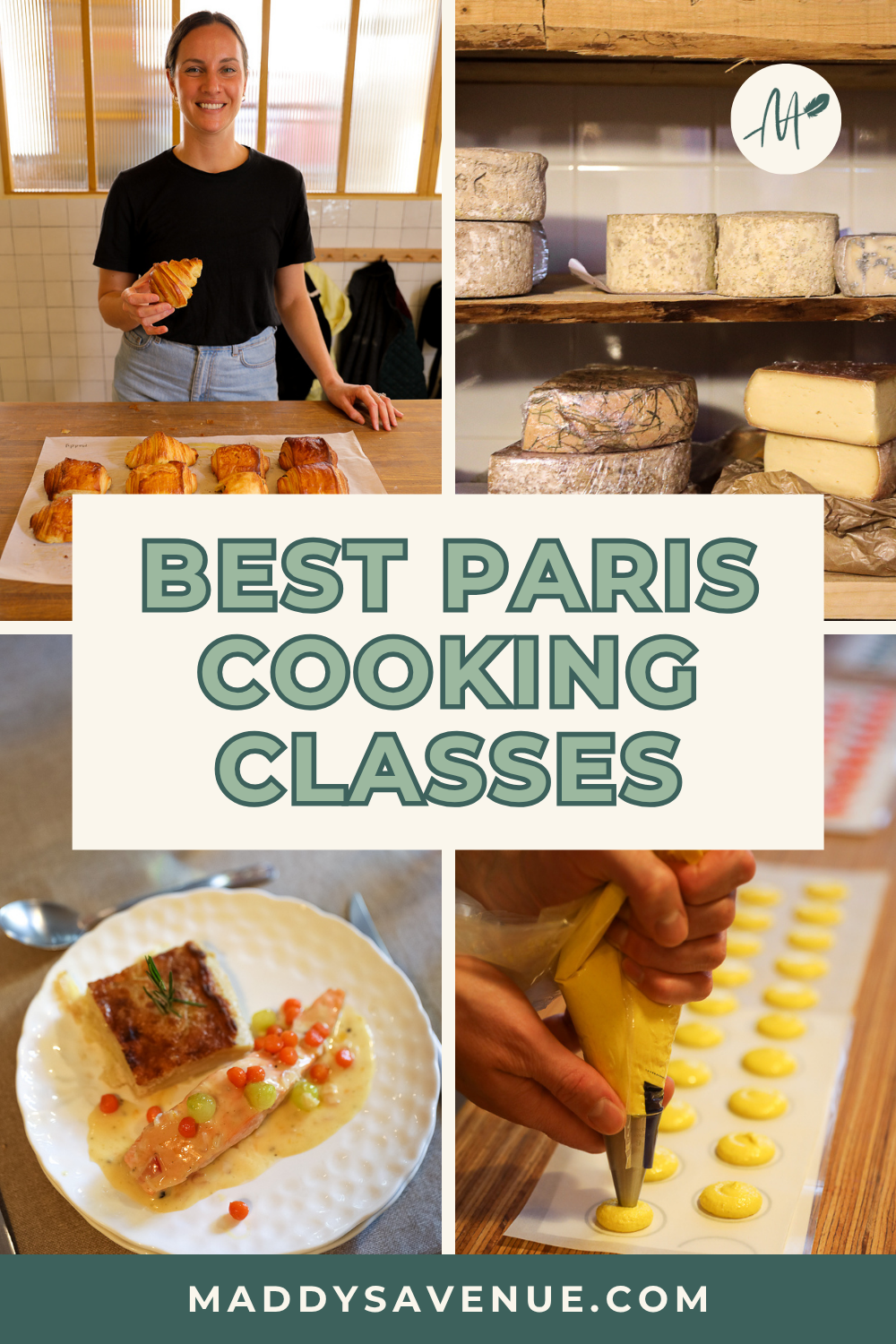
- Croissant Baking Class with a Chef: Master the art of making croissants and pains au chocolat. You’ll complete every step of the process from scratch, from buttery lamination to flaky, golden-brown perfection.
- Butter and Cheesemaking Workshop: Churn butter, make fresh cheese from scratch, learn the surprisingly fascinating science behind it all, and snack on your creations with French wine, aged cheeses, and a crusty baguette.
- Macaron Baking Class with a Chef: Take on France’s notoriously finicky cookie and leave with a giant box of glossy, colorful macarons you made yourself. (Mine were dangerously good!)
- 3-Course Cooking Class with Wine and Market Visit: Shop at a local farmer’s market like a Parisian, then cook and devour a seasonal three-course French meal with wine.
- The Art of Cheese and Wine Pairing Class and Tasting: Skip the apron and head straight for the wine and cheese cellar, where you’ll learn which pairings are heavenly, which are horrible, and why.
Best Croissant Baking Class in Paris
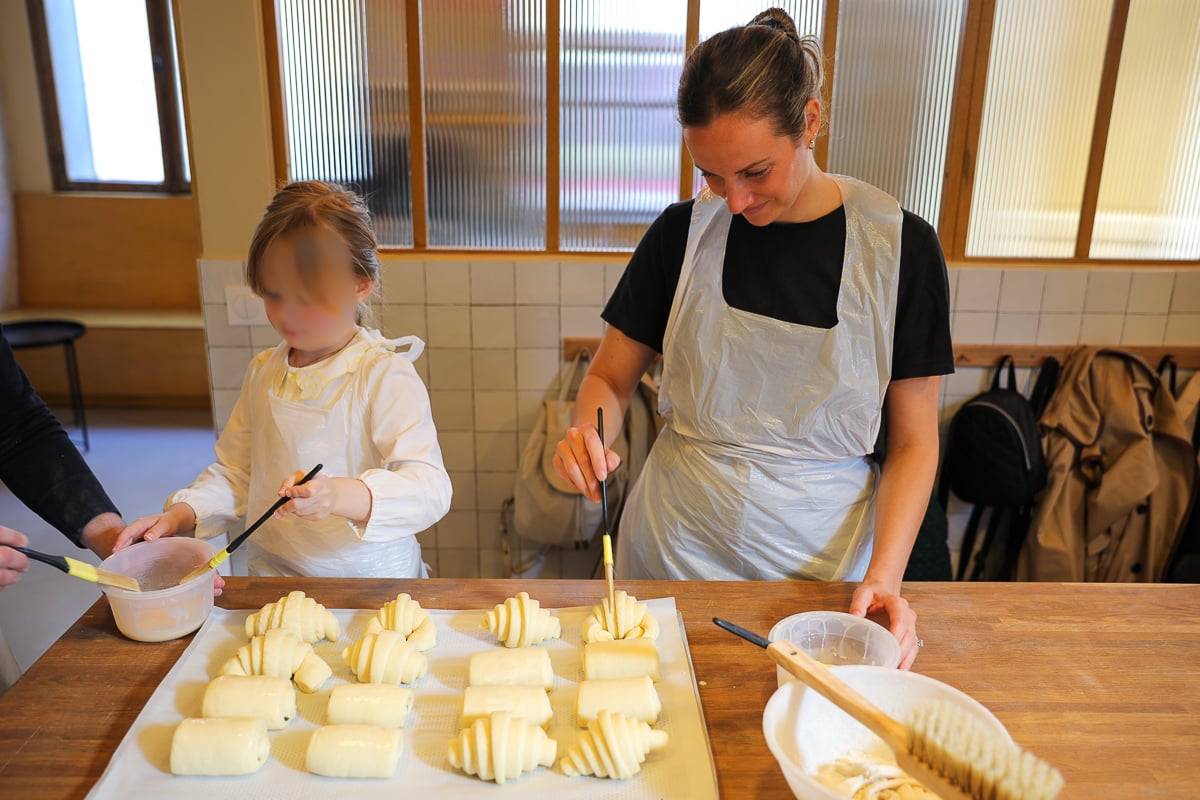
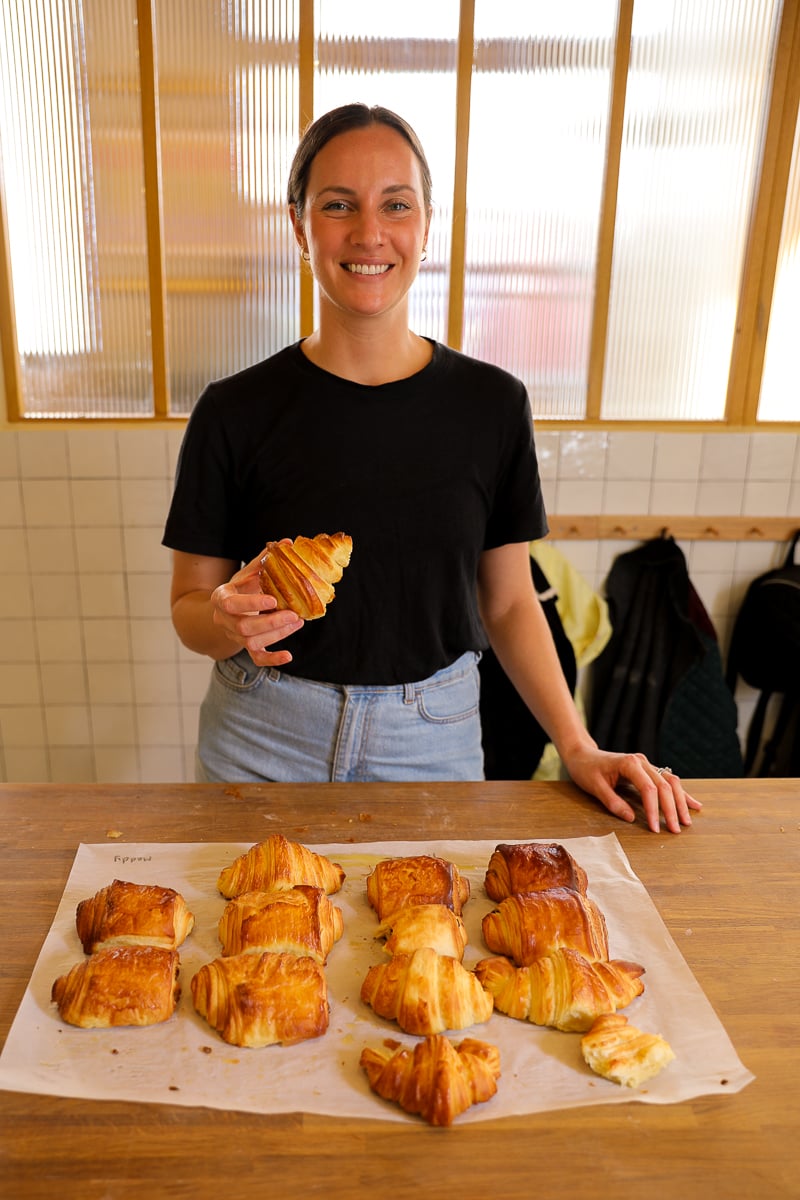
Take this Paris Croissant Baking Class with a Chef, and you’ll walk away knowing how to make perfectly buttery, flaky, crisp croissants and pains au chocolat good enough to impress a Parisian. (Even the receptionist at my hotel, Le Clark Hotel, said they were good!)
Over a few hours, you’ll complete every step of the croissant-making process – from activating the yeast to baking off your croissants to golden-brown perfection.
I’m not a big baker, so I left this class with a massive smile – and a box of fresh-baked bragging rights.
But the real souvenir? Knowing exactly how to make croissants at home, right down to which yeast and flour to buy… (Though honestly, it’s such a long, involved process, I’ll probably reserve croissant-making for very special occasions – like Christmas brunch!)
Quick Facts: Croissant Class
- What you’ll make: Croissants and pains au chocolat
- Duration: ~2.5 to 3 hours
- Group size: Small (up to 8 travelers; my class had 7)
- Difficulty: Medium
- Vibe: Cozy, technical, skill-building
- Ages: All ages
- Format: Hands-on pastry class
- Where: Le Marais, Maison Fleuret (3rd arrondissement)
- Language: English
- Good to know: Starts at 9 AM, 1 PM, and 4:30 PM daily. This croissant baking class sells out, so book ASAP!
What the Croissant Class is Like
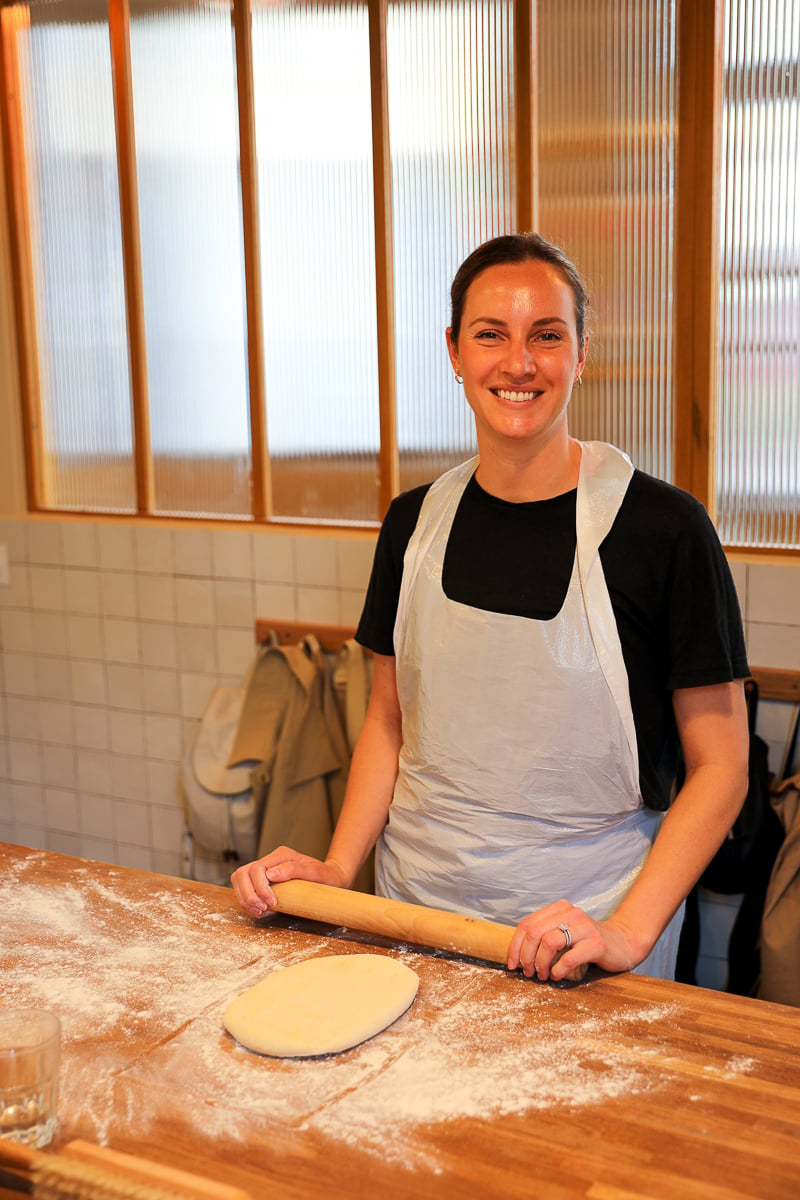
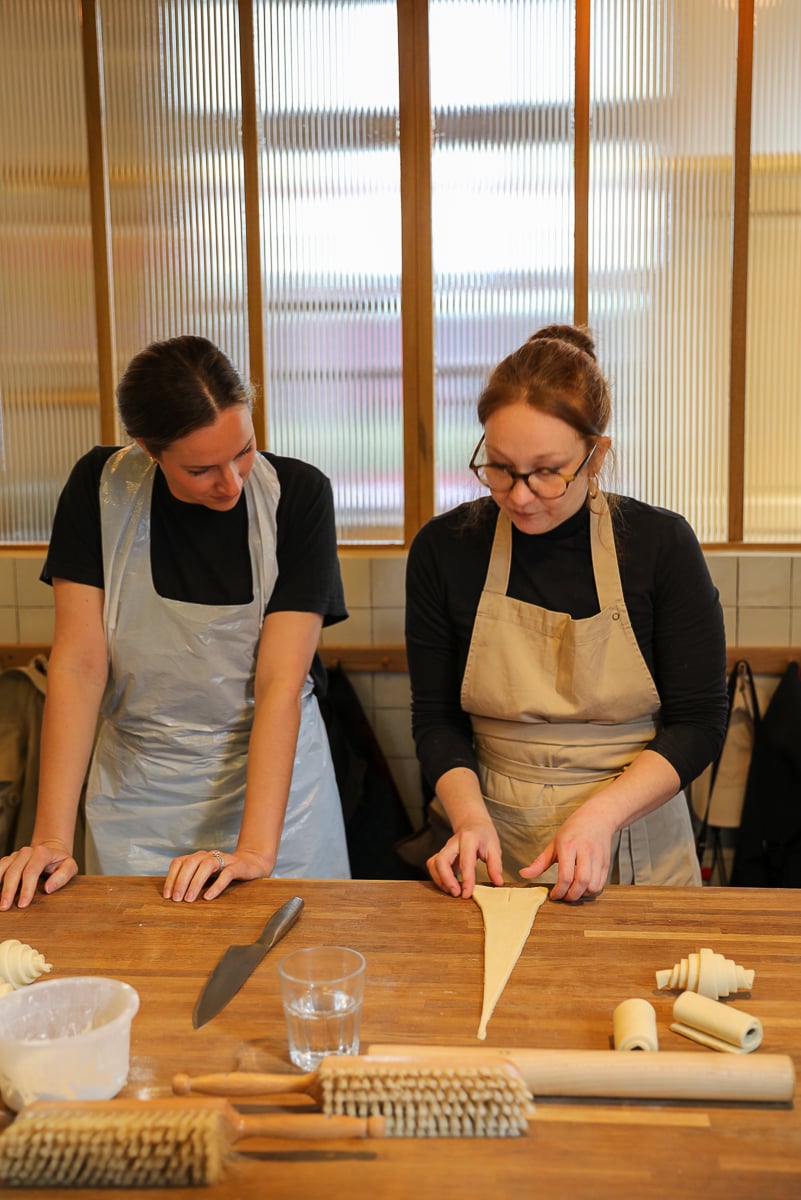
Our teacher, Rosalie, was a classically trained pastry chef who worked in Parisian bakeries – and she was as warm and engaging as she was knowledgeable. With just seven of us in the Paris Croissant Class, it felt more like baking with a (very talented) friend.
We started from scratch, making the dough and rolling it out, before laminating it.
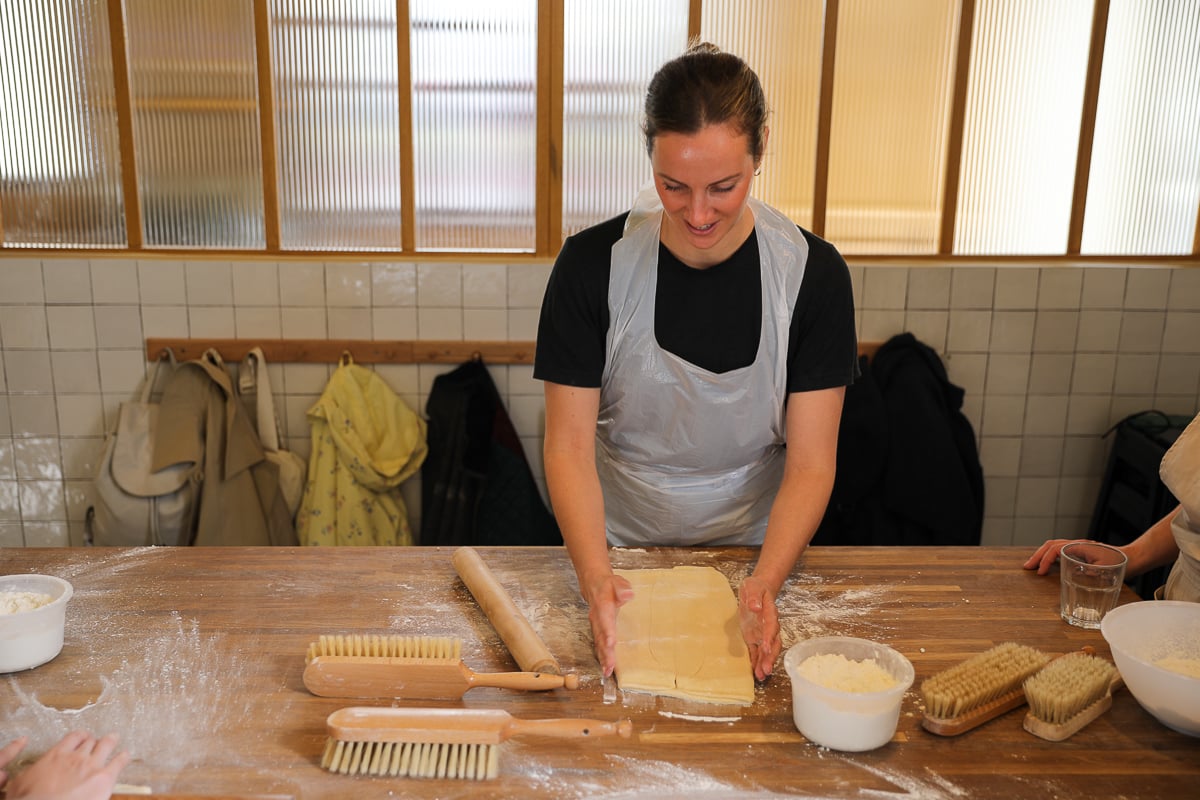
Lamination is what makes a croissant a croissant. It’s when you flatten cold butter into a thin block, then roll it into the dough, over and over, to create those signature flaky layers. Rosalie told us to be extra careful not to handle the dough too much, since your body heat can melt the butter right out.
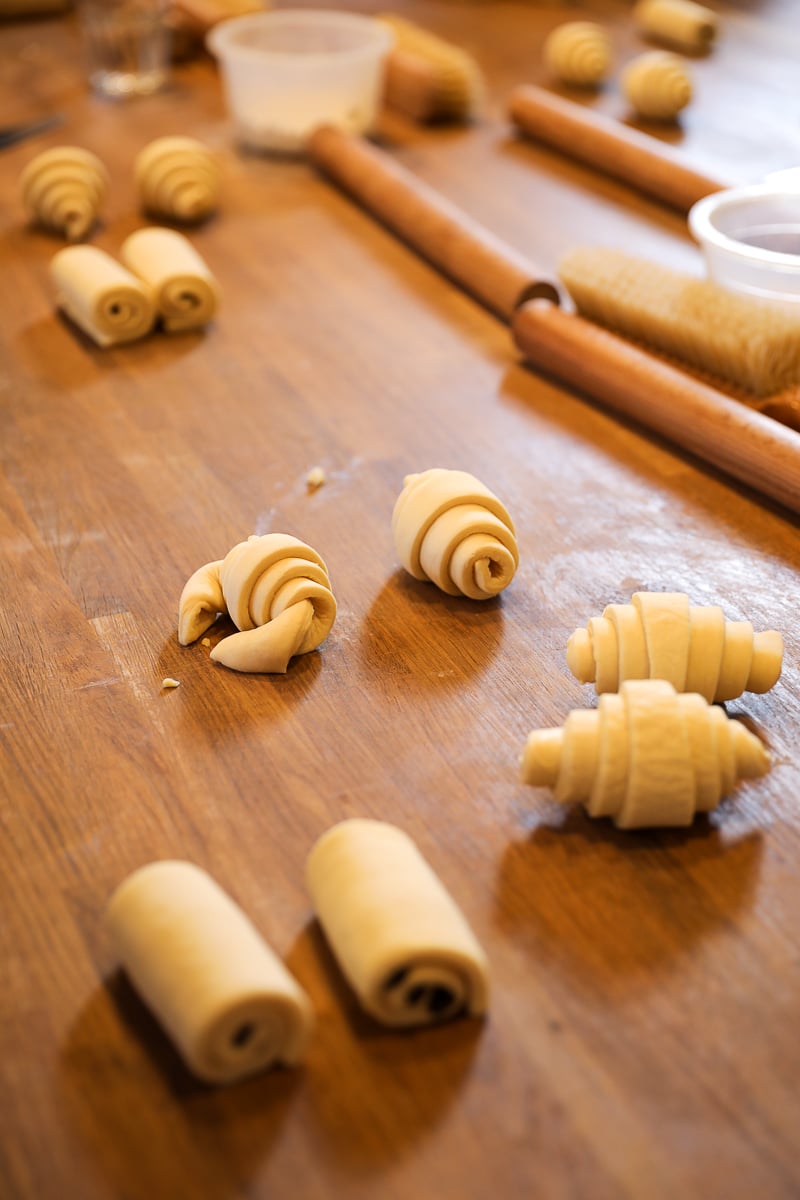
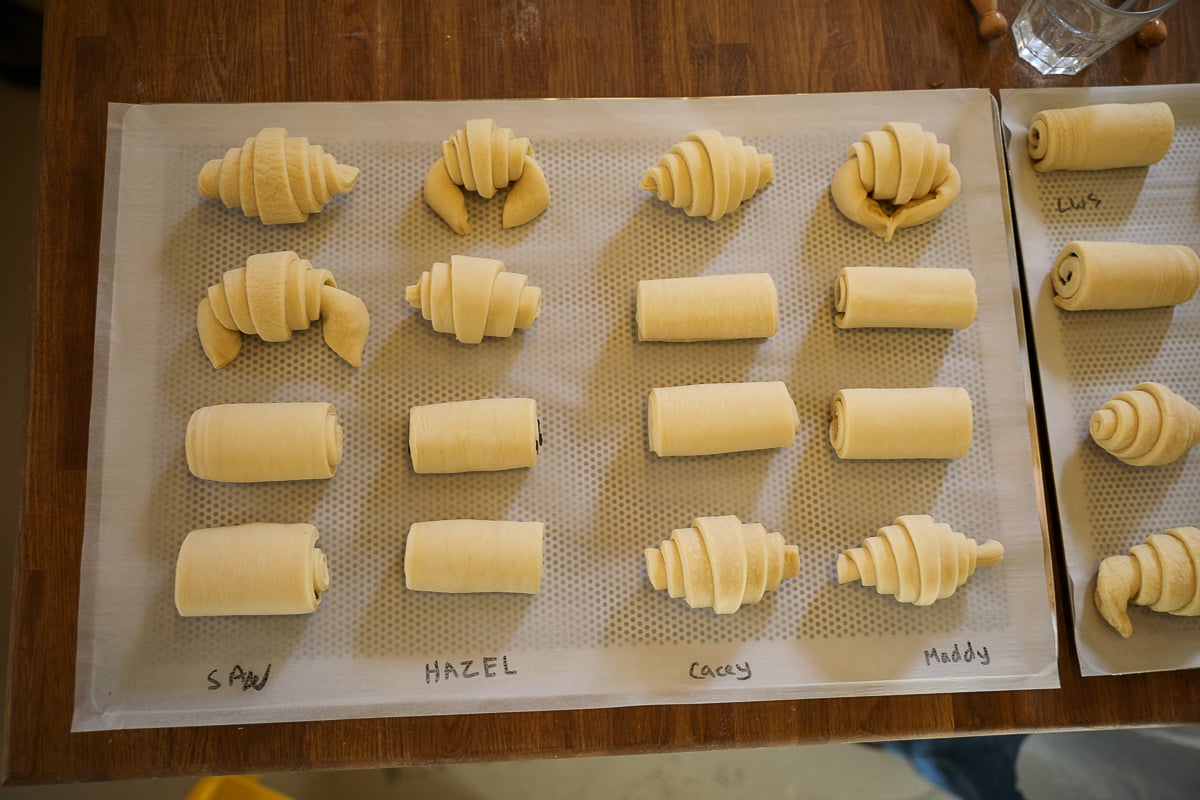
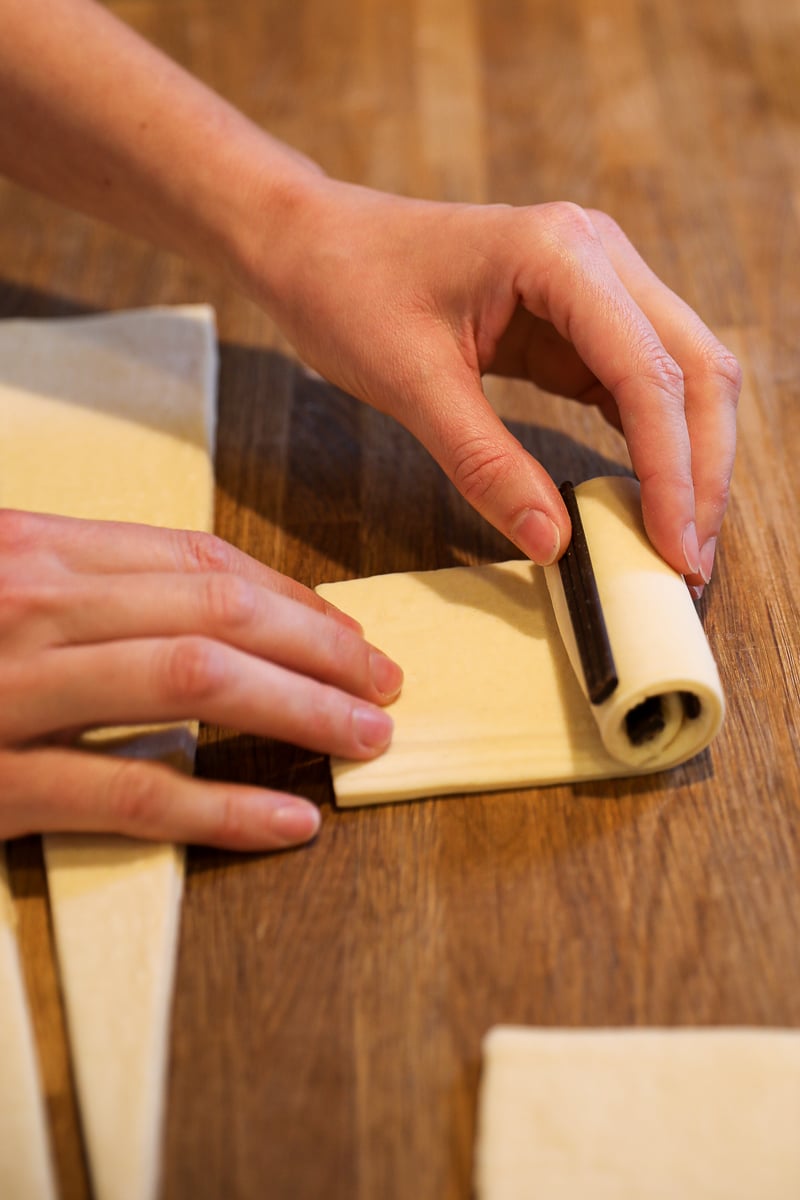
Next, she taught us to shape the buttery dough into the modern, flat croissant shape and the classic curved one, and how to roll dark chocolate batons into our pains au chocolat. We each made four, in any style we wanted. And with a final flourish of egg wash, they were ready to bake.
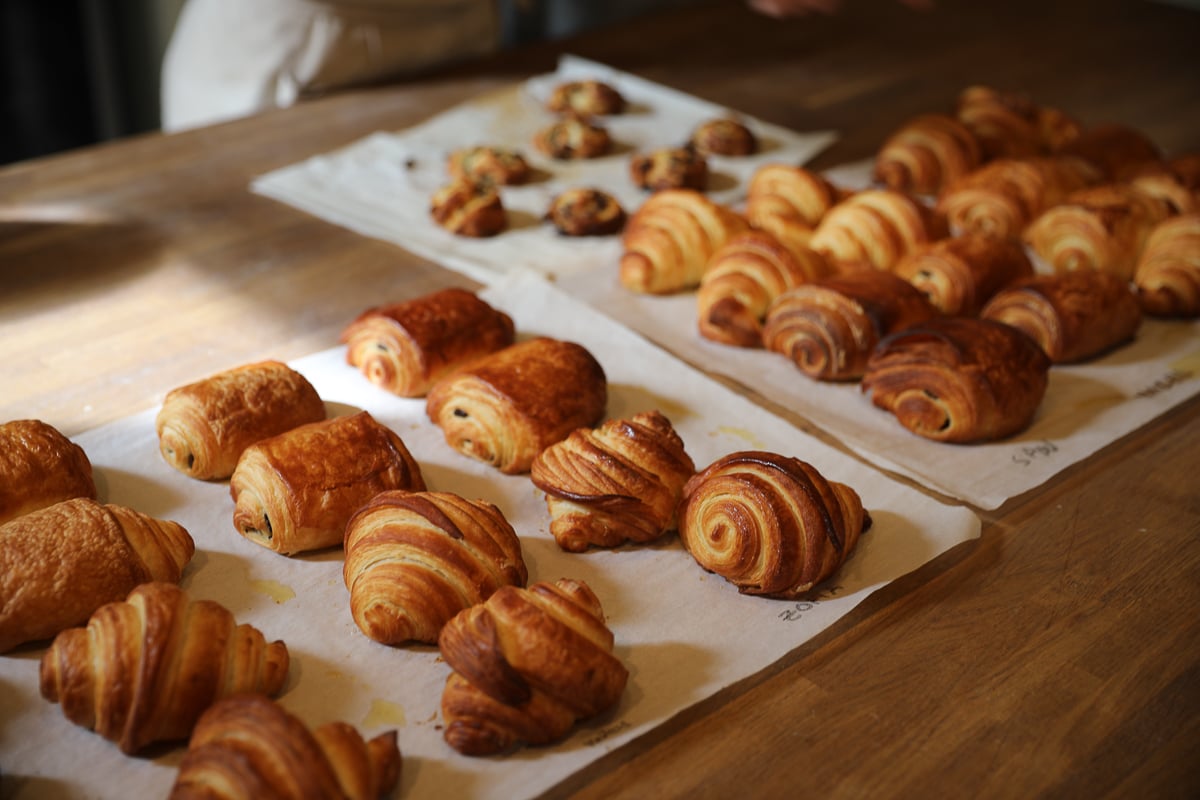
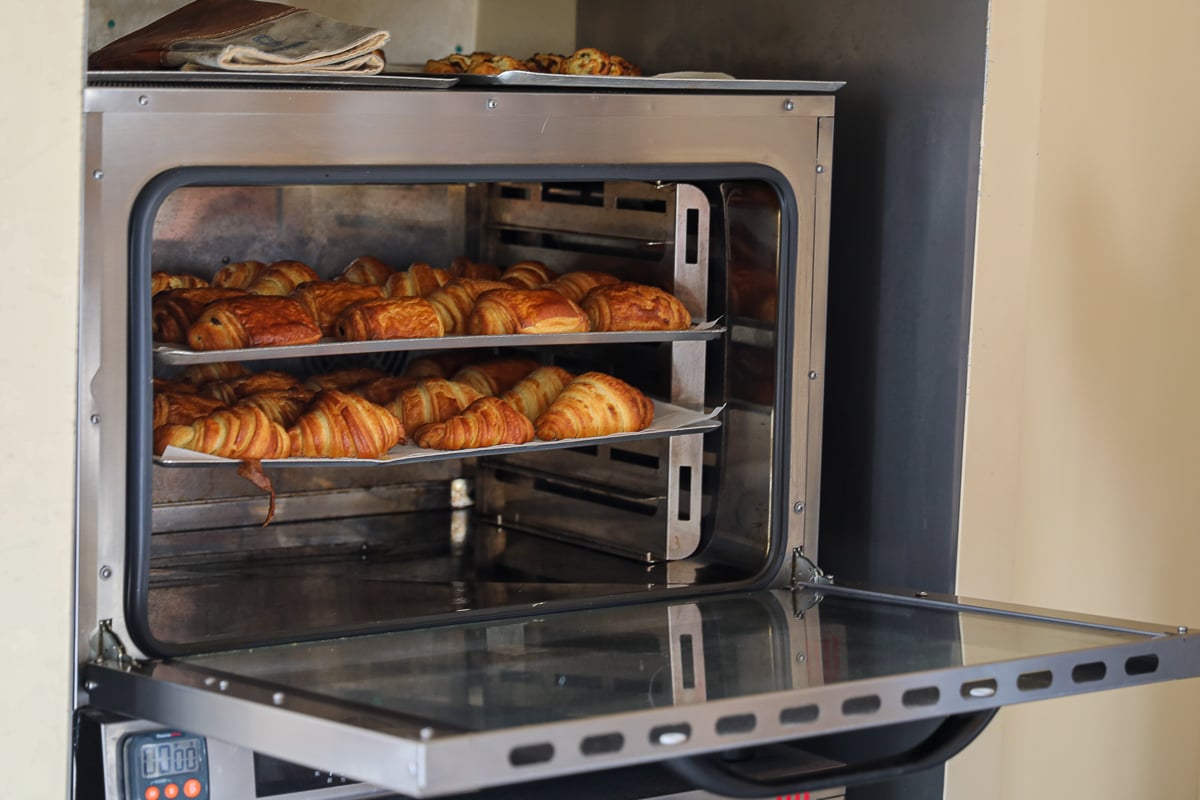
Finally, we pulled our croissants out of the oven. And that’s when I decided there’s nothing better than the aroma of a fresh-baked croissant. Except actually biting into one. And getting butter all over your fingers. Pure joy.
(Maddy’s pro tip: Film the steps as you go, so you’ve got cues to follow when you get home. I did!)
Book your Paris Croissant Baking Class here!
MADDY’S NOTE: In case you’re already wondering… Croissants can’t be made in three hours flat – so how’d we do it? We completed every step ourselves, skipping only the hours of resting and chilling. We made our dough from scratch, then laminated a pre-chilled batch the previous class had prepped. Clever, huh?
Best Cheese and Butter Making Workshop in Paris
Ever wondered how milk turns into cheese? Or how to make your own butter from scratch? In this Cheese and Butter Making Workshop (with Wine and Tasting!), you’ll learn both – and discover just how simple the processes are… Even if a bit of math and chemistry is involved.
This class is perfect for beginners, but also for people (like me) who are obsessed with cheese, butter, and learning new cooking skills.
I hope you’re ready to add a healthy dose of butter to your diet. Because after this class, you’ll be churning butter in your own kitchen on the regular!
Quick Facts: Cheese and Butter Class
- What you’ll make: Fresh cow’s milk cheese and butter
- Duration: ~2 hours
- Group size: Small (up to 10 travelers; my class had 4)
- Difficulty: Easy
- Vibe: Fun, science-forward
- Ages: All ages
- Format: Cheese education, hands-on workshop, cheese and wine tasting
- Where: Île Saint-Louis, Paroles de Fromagers (4th arrondissement)
- Language: English
- Good to know: Usually starts at 10 AM (other timeslots sometimes available). Closed Sundays and Mondays.
What the Cheese and Butter Class is Like
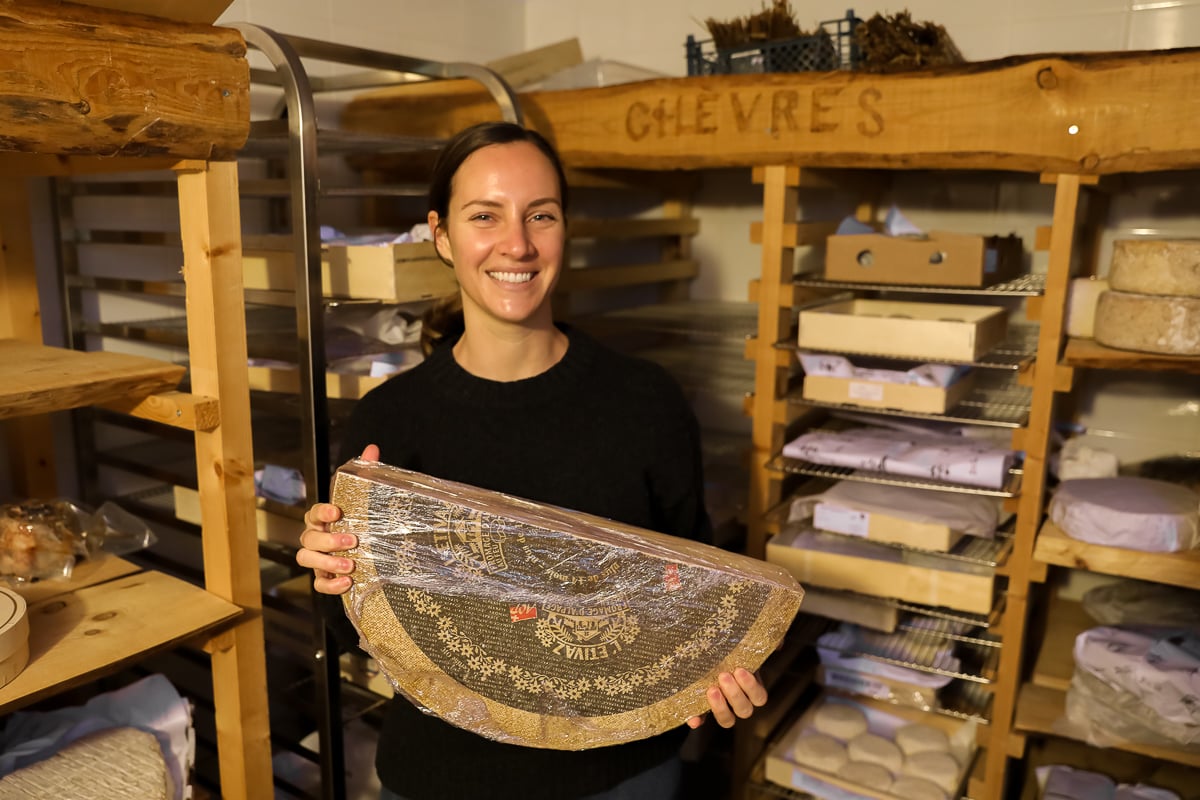
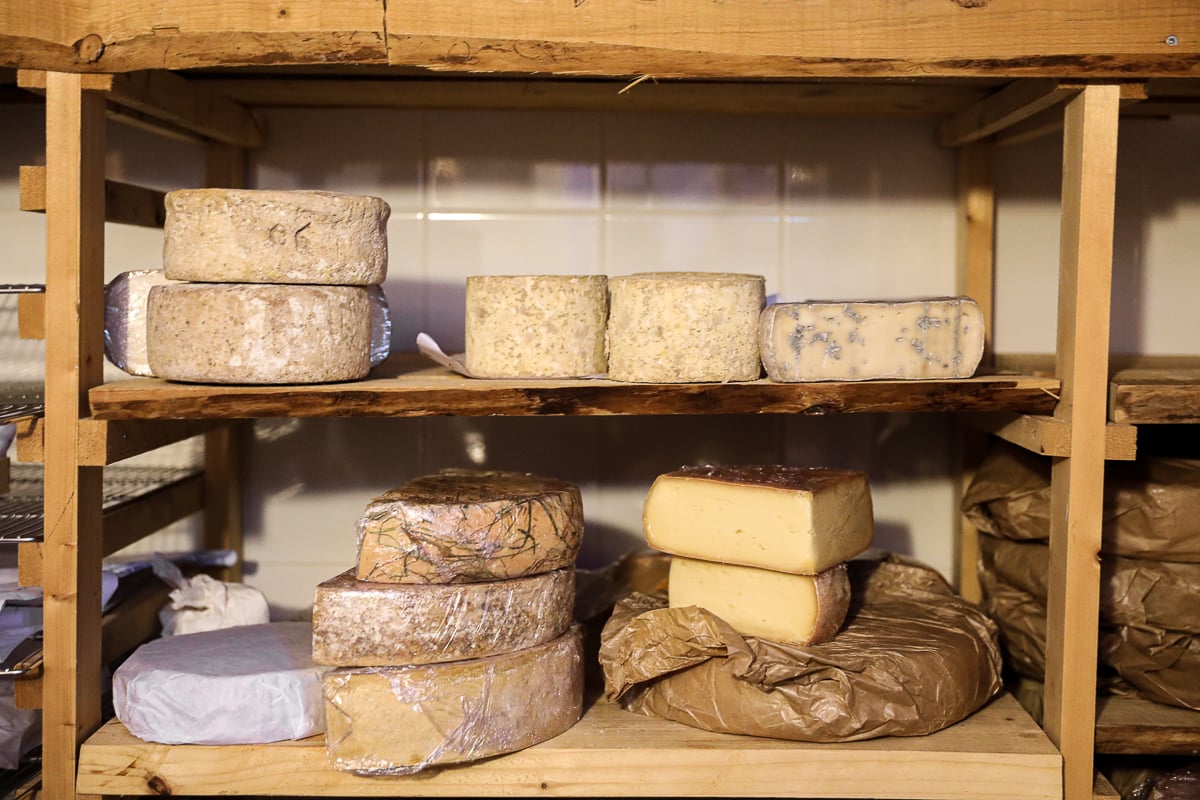
Want all the cheesy details? Our workshop started in the cheese cave, where the cheesemonger walked us through the different categories of cheese – like fresh, bloomy-rind, and bleu – and showed off some of France’s most important cheese-making regions. We even got to say “cheese” with a giant half-wheel.
We headed into the workshop, where the cheesemonger scribbled the chemistry and the process of fresh cheese-making onto the whiteboard…
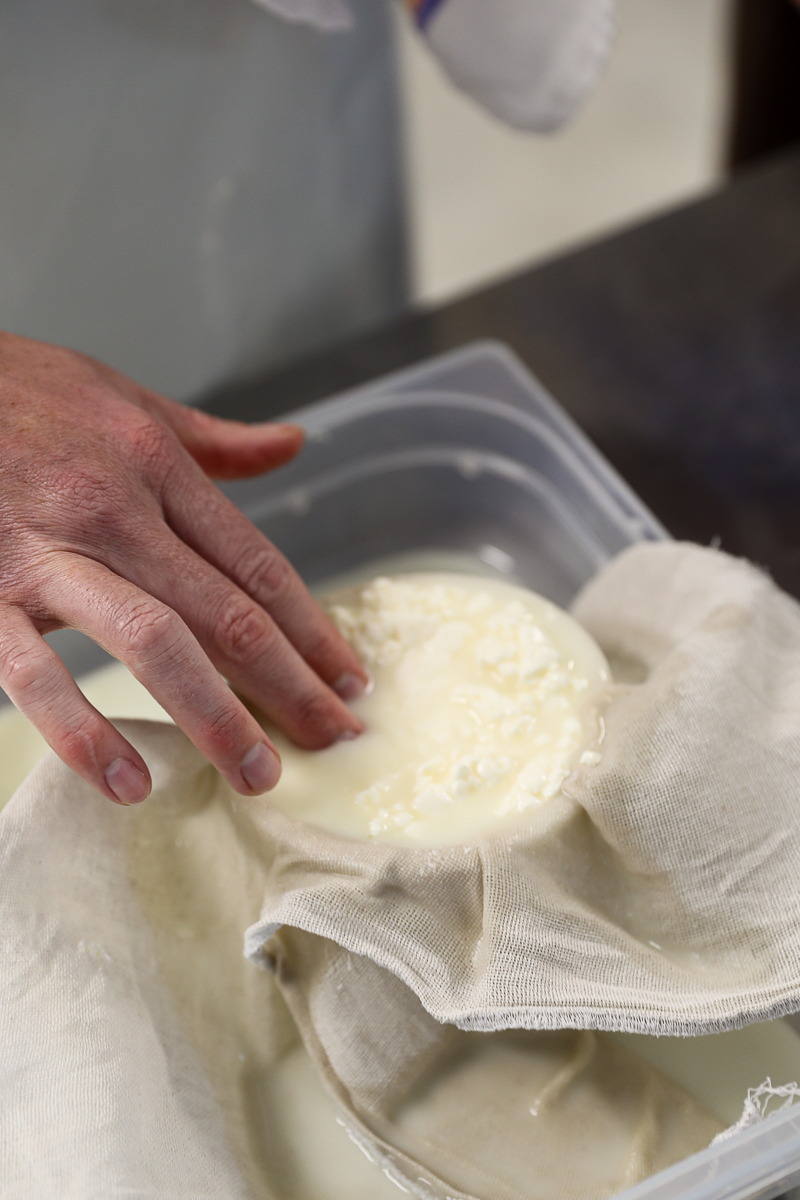
He explained that milk is about 87% water and 4% protein (among other components). 80% of that protein is casein, which turns into soft, custardy curds when you heat the milk to 39°C and add rennet (a natural coagulant).
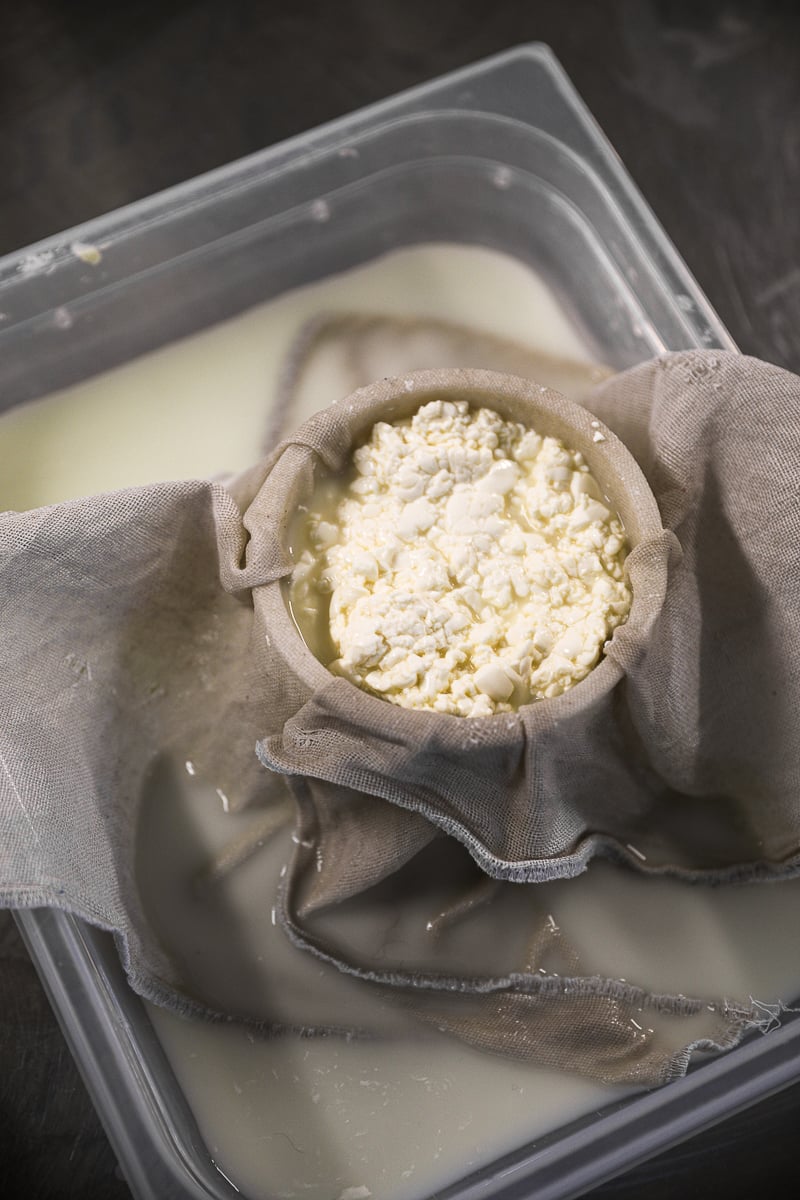
Then, you slice through the curds with a knife to release the whey, drain the whey through a cheesecloth, and put the remaining curds into a cheese press. And there you have fresh cheese! More or less…
After the scientific crash course, we did exactly that. And in under an hour, we’d transformed plain ol’ milk into homemade cheese.
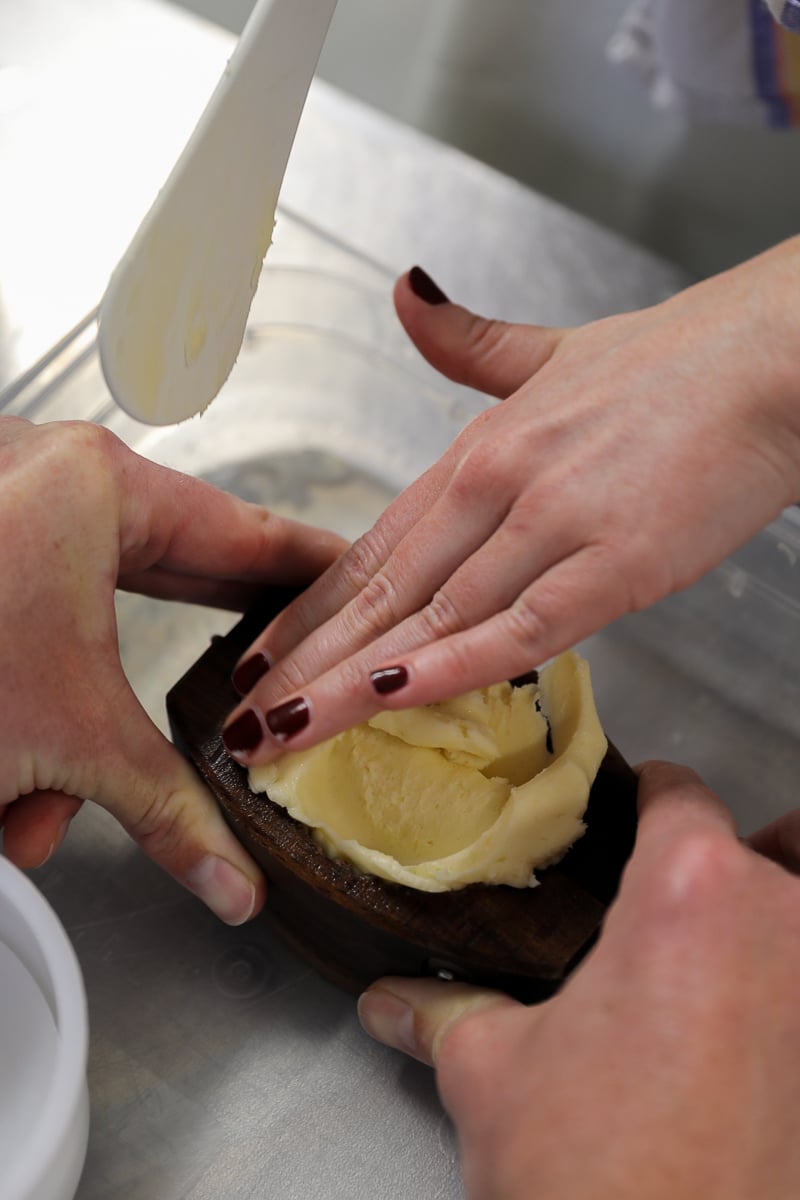
Next came the arm workout: butter-making. We talked through different salt-to-high-fat-cream ratios and agreed on 2% salt.
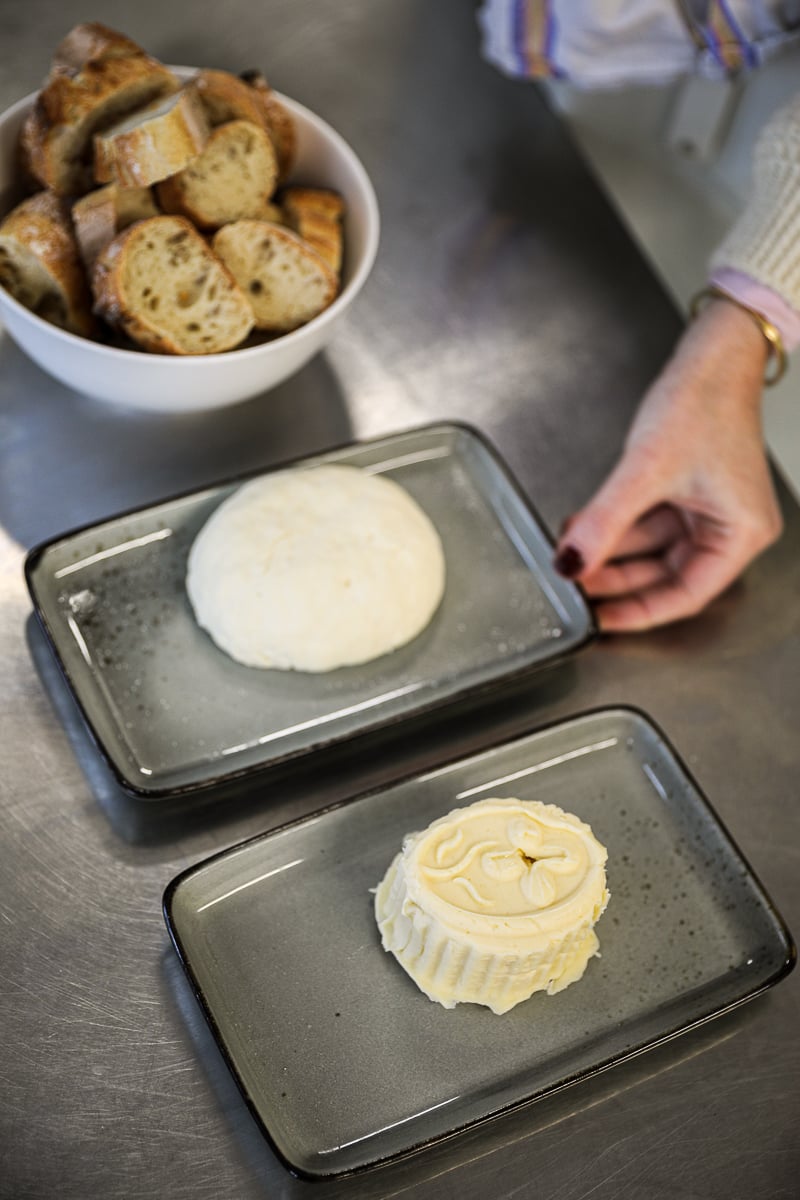
Wcre whisked (and whisked, and whisked). Once the cream clumped into butter, we packed it into little wooden molds – stamped with flowers and zigzag edges – and they turned out so cute! I’d made butter in the past, but I forgot how easy it is!
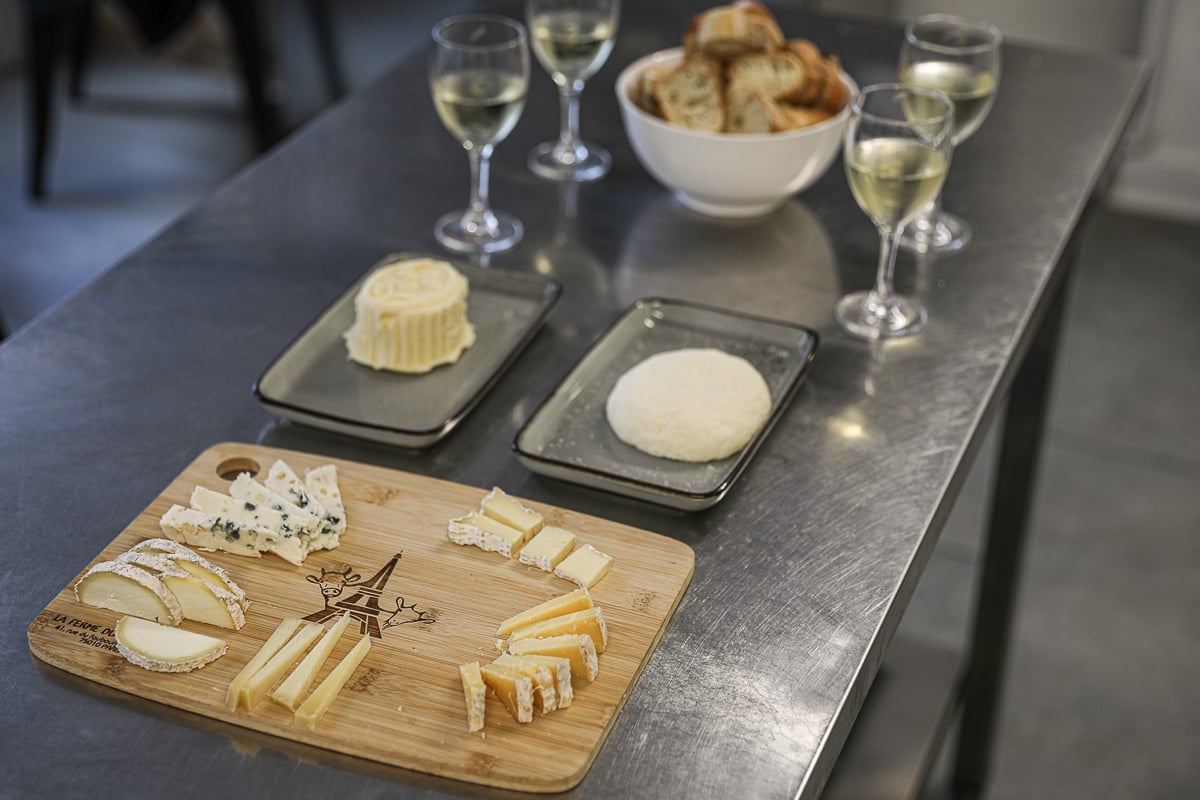
And finally, the best part: the cheese tasting. The cheesemonger laid out a board of five aged cheeses from the cave, alongside our fresh cheese and butter, a fresh baguette, and white wine. As we nibbled, we marveled at how delicious our creations were. (Though I suspect the fantastically flavorful French milk from happy cows was mostly to blame.)
I left this workshop inspired and determined never to go back to store-bought butter! I bet you’ll feel the same.
Best Macaron Baking Class in Paris
Notoriously finicky, famously delicate, and oh so French, macarons have a reputation for being one of the hardest treats to master. So why not learn from a pro?
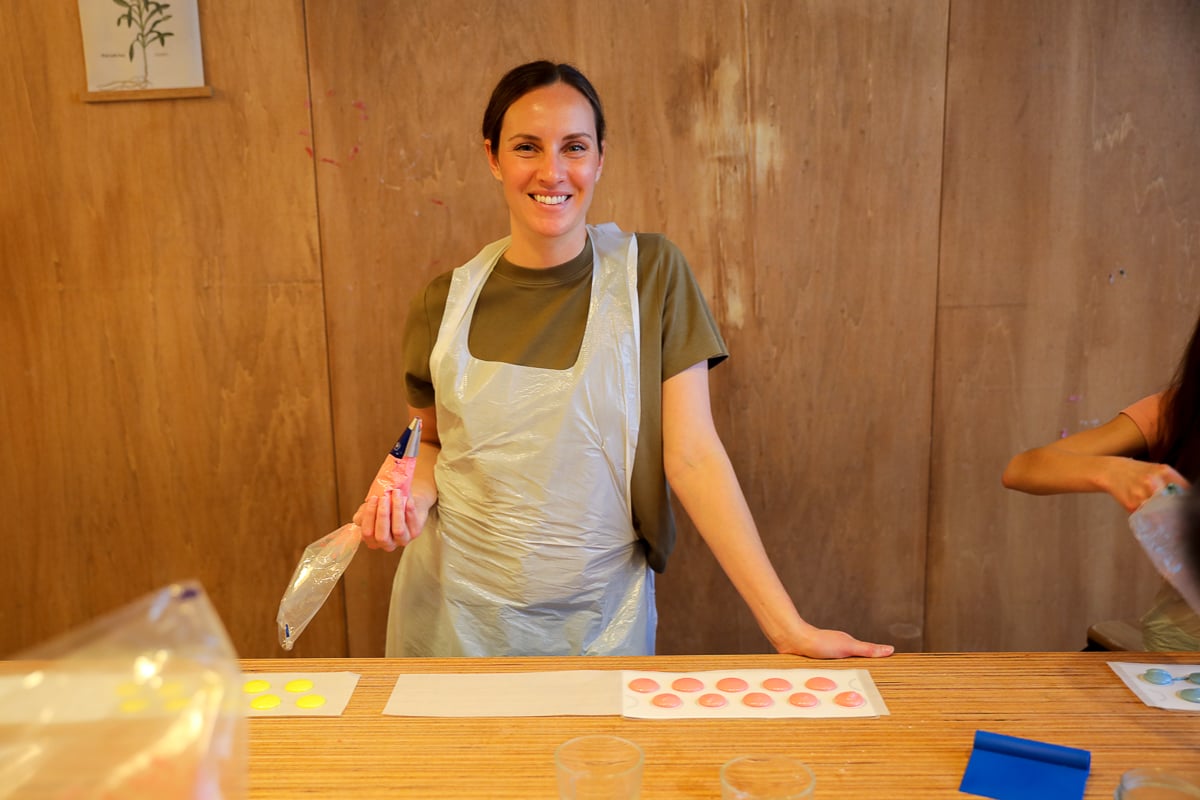
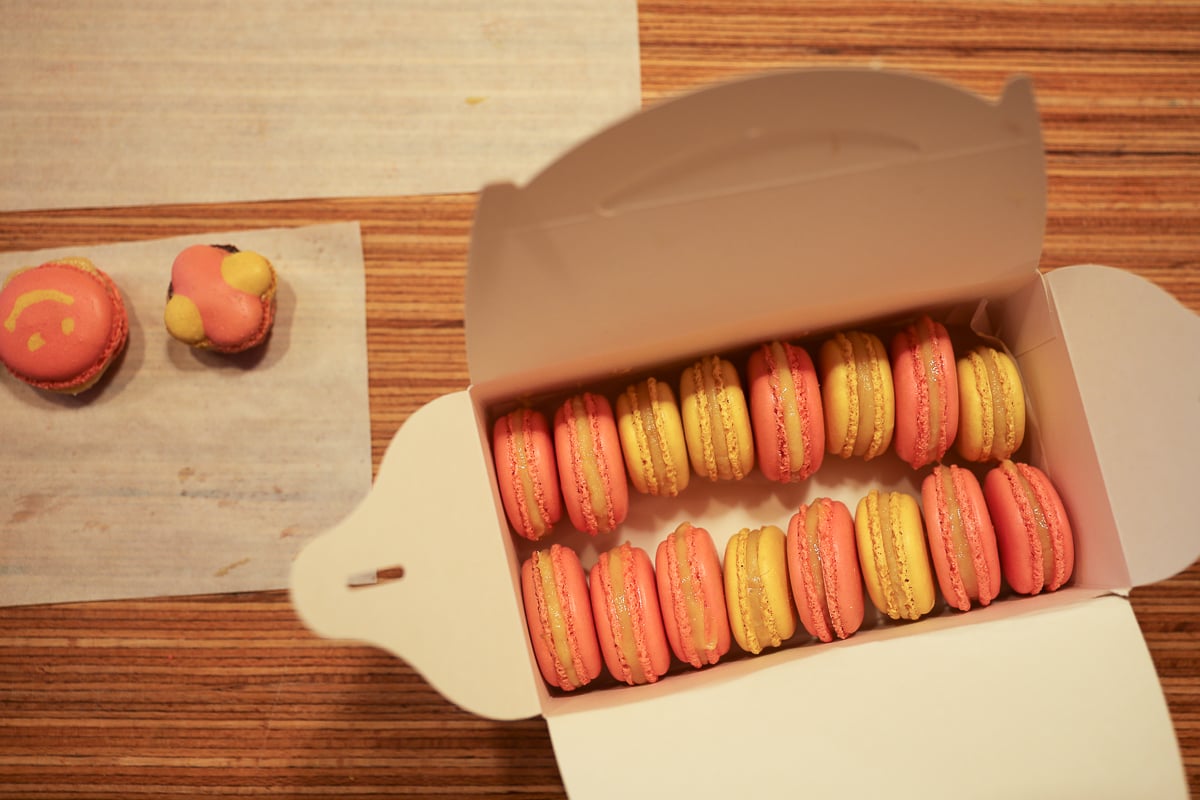
In this Paris Macaron Baking Class, a skilled pastry chef walks you through every step, so even the most technical parts feel doable. And by the end, you’ll have made a batch of perfectly glossy, crack-free macarons, entirely from scratch. (Well, I can’t promise yours will be flawless, but ours were!)
This was easily the most creative cooking class I took (and maybe the most fun – but that’s a hard call). Because you’re not just following steps; you’re picking colors, choosing ganache fillings, piping shells into neat little rounds, and dreaming up fun designs.
Quick Facts: Macaron Class
- What you’ll make: ~15 to 20 macarons
- Duration: ~2 hours
- Group size: Small (up to 8 travelers; my class had 7)
- Difficulty: Easy to Medium
- Vibe: Fun, creative, hands-on
- Ages: All ages
- Format: Hands-on baking class
- Where: Le Marais, Maison Fleuret (3rd arrondissement)
- Language: English
- Good to know: Starts at 9 AM, 1:30 PM, and 4:30 PM daily. This macaron class is popular, so reserve it ASAP!
What the Macaron Class is Like
I hate to be such a raving fan of my own work, but the macarons I made during this Paris Macaron Baking Class were some of the best I’ve ever eaten. Sorry, not sorry, Ladurée.
Starting with the base, we sifted the almond flour and powdered sugar until perfectly fine (because lumps are a macaron’s mortal enemy).
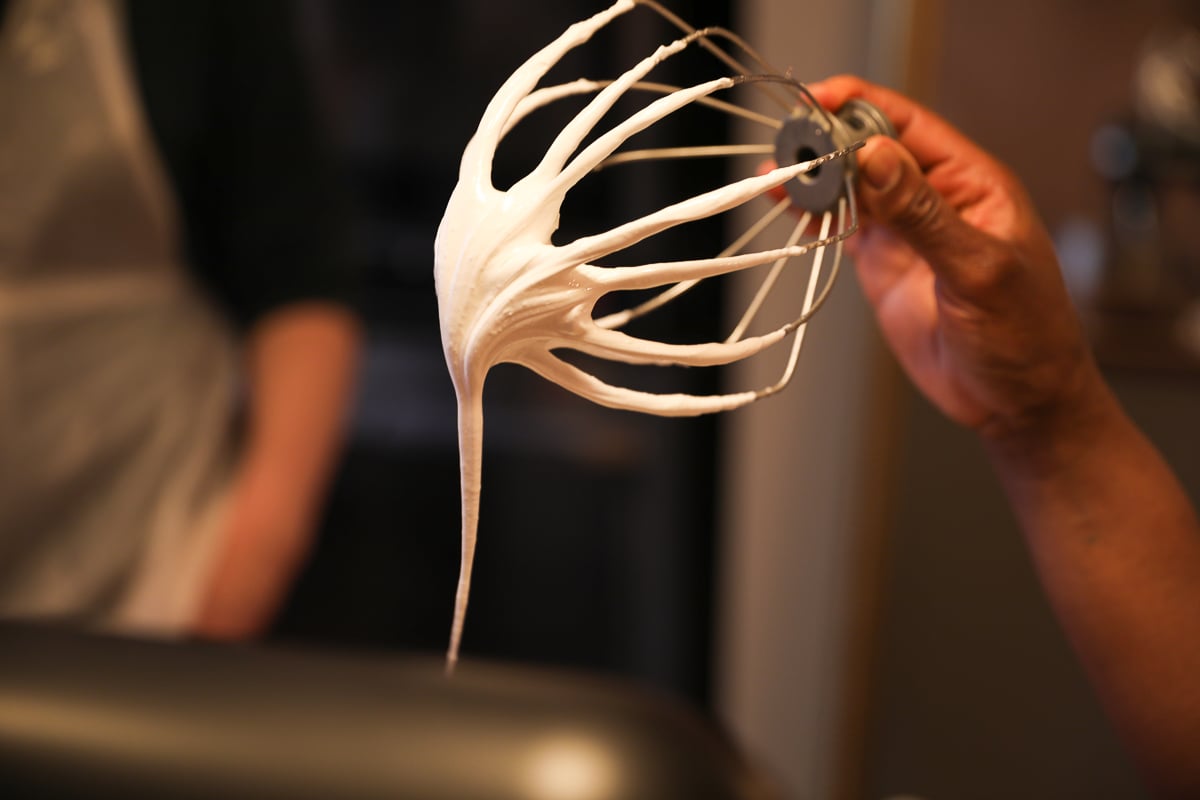
The next step is what makes or breaks your macarons: the meringue. Our instructor, Alice, taught us to make an Italian meringue, slowly streaming hot sugar syrup into whipping egg whites. It’s trickier than the French method, but it’s more stable, which means glossier shells with fewer cracks. (This is the pro way, and the main reason why our macarons came out perfectly.)
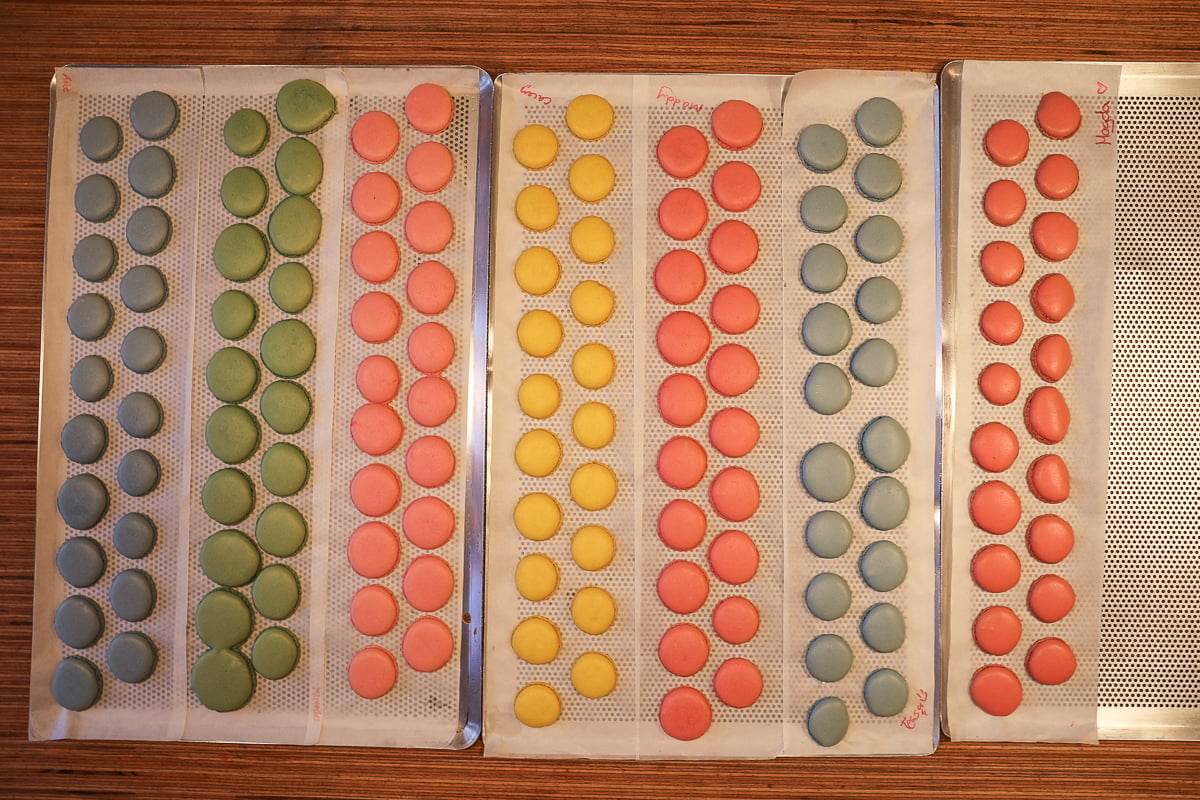
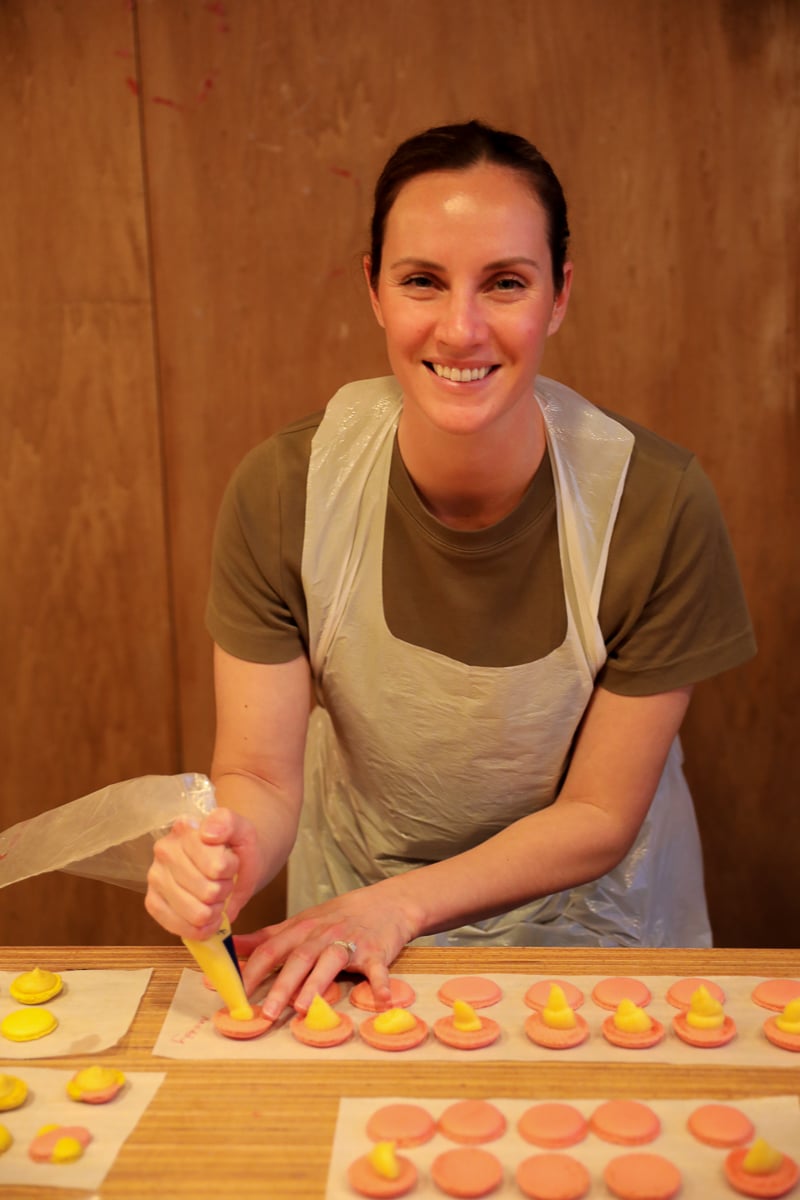
Next, we mixed our colors into the almond-sugar base – I chose bright pink to contrast with a yellow-orange mango ganache, while my husband went for yellow shells to match his passionfruit ganache – so we could do the macaronage: gently folding in the meringue until the batter was smooth.
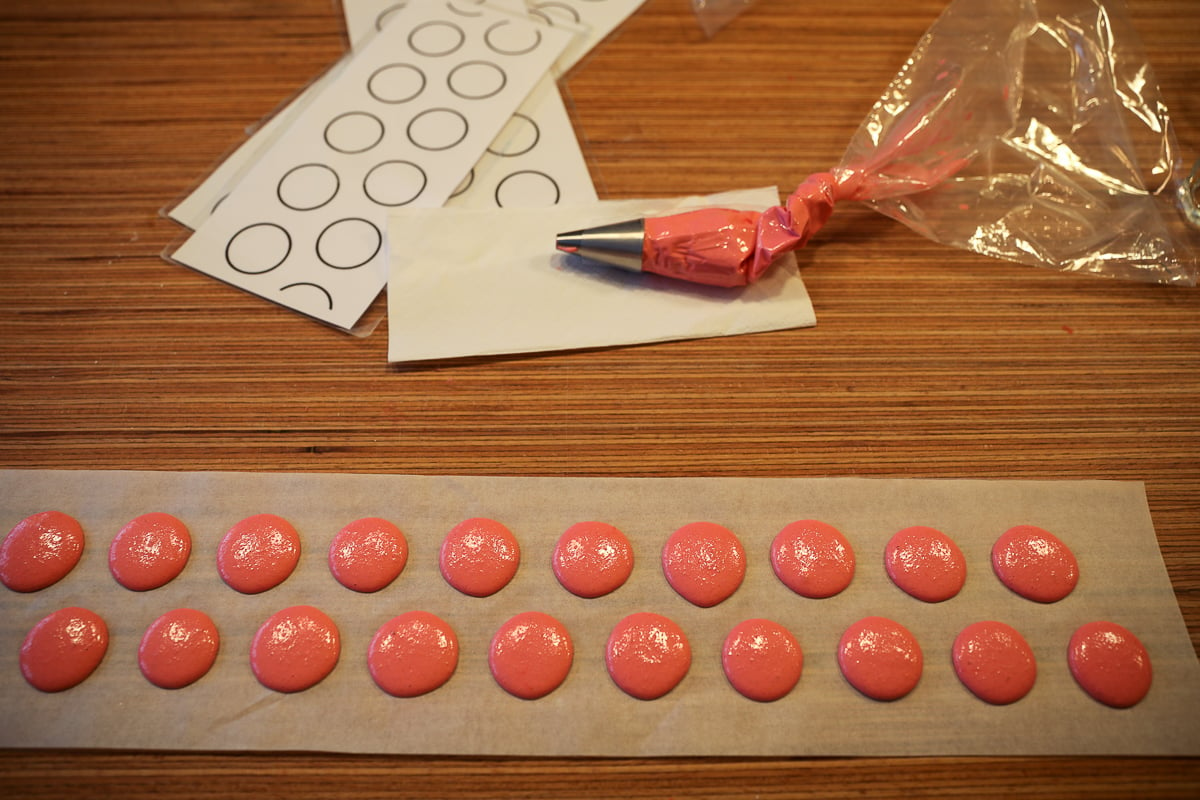
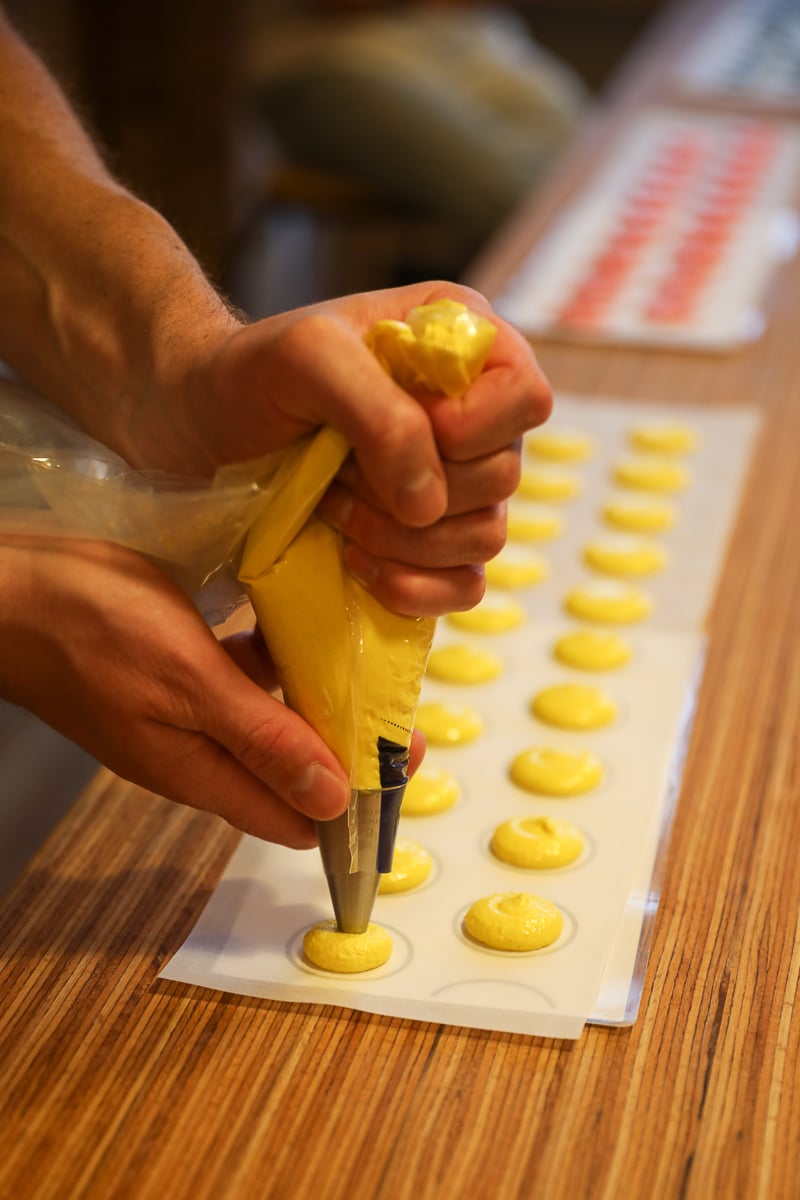
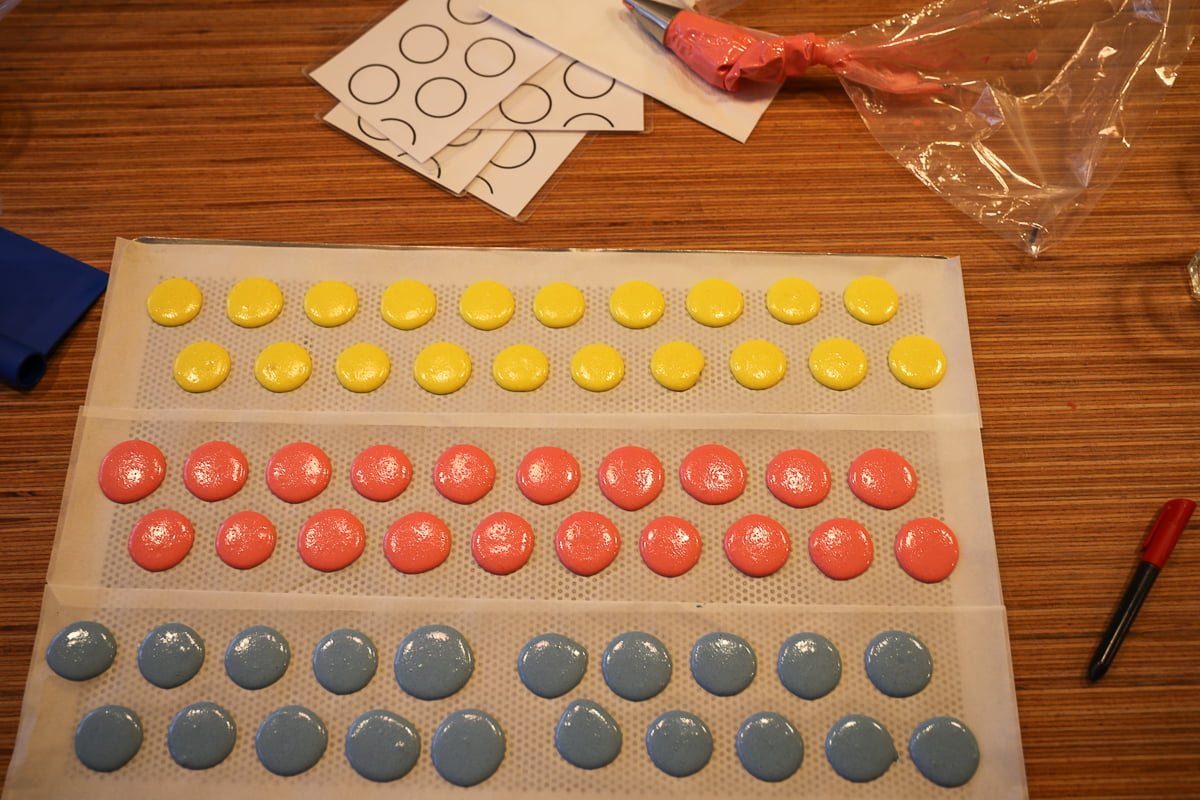
We piped neat little rounds onto baking paper, using guides underneath to keep everything uniform. Focus here, because even shells are far easier to assemble later!
Then, my favorite part. Once we’d mastered the classic rounds, everyone started swapping piping bags and experimenting with colors, patterns, and shapes. How cute is my little cow macaron?!? (You’re correct – they are extremely cute.)
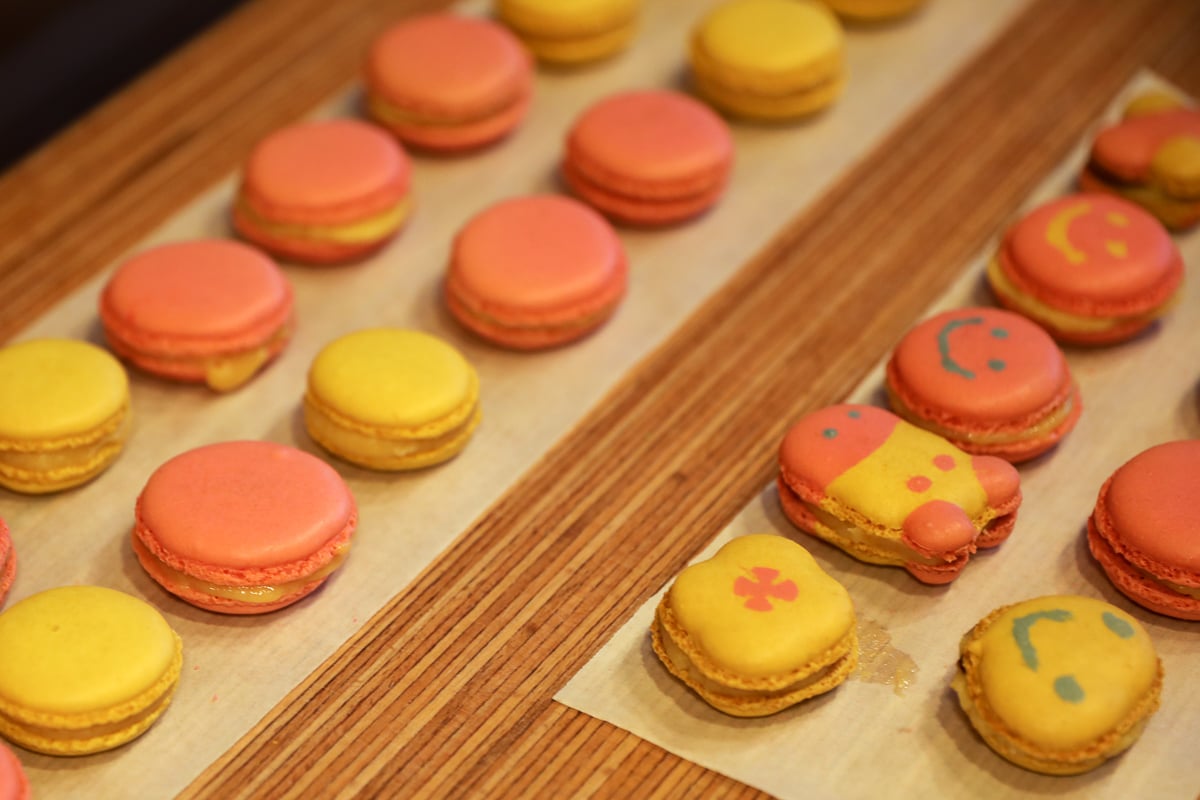
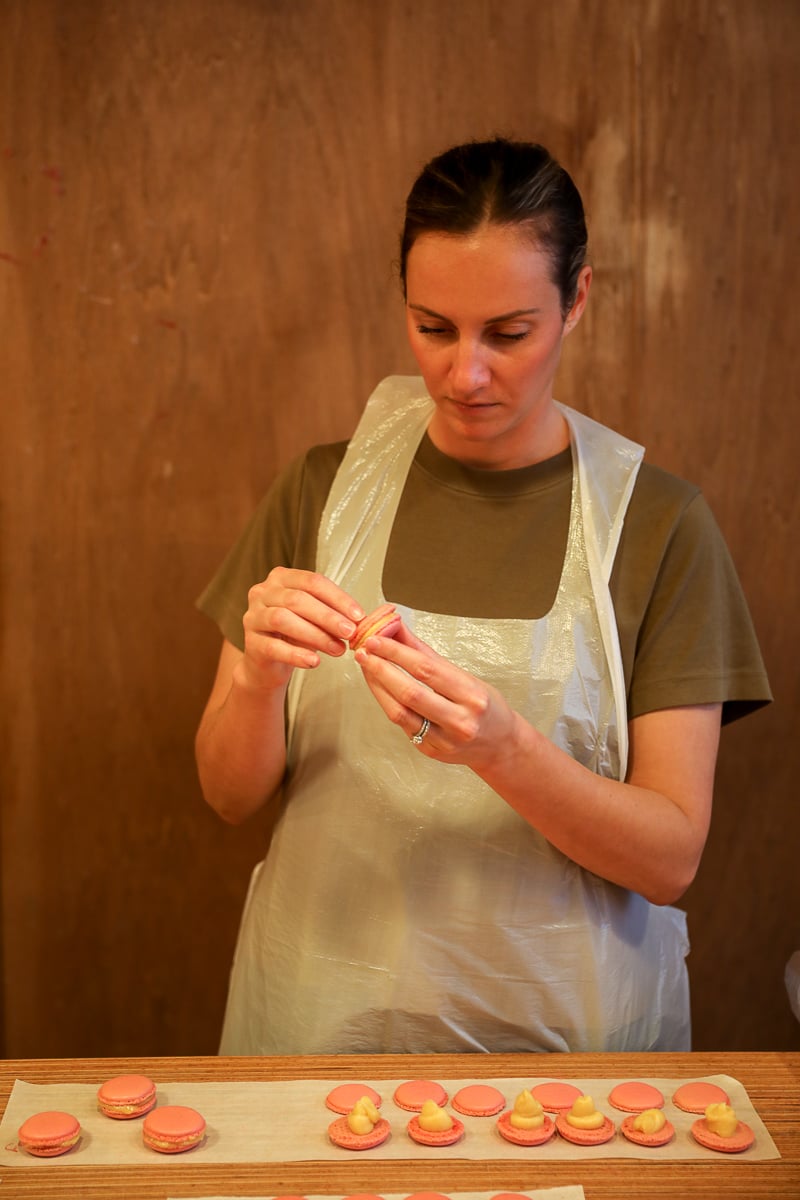
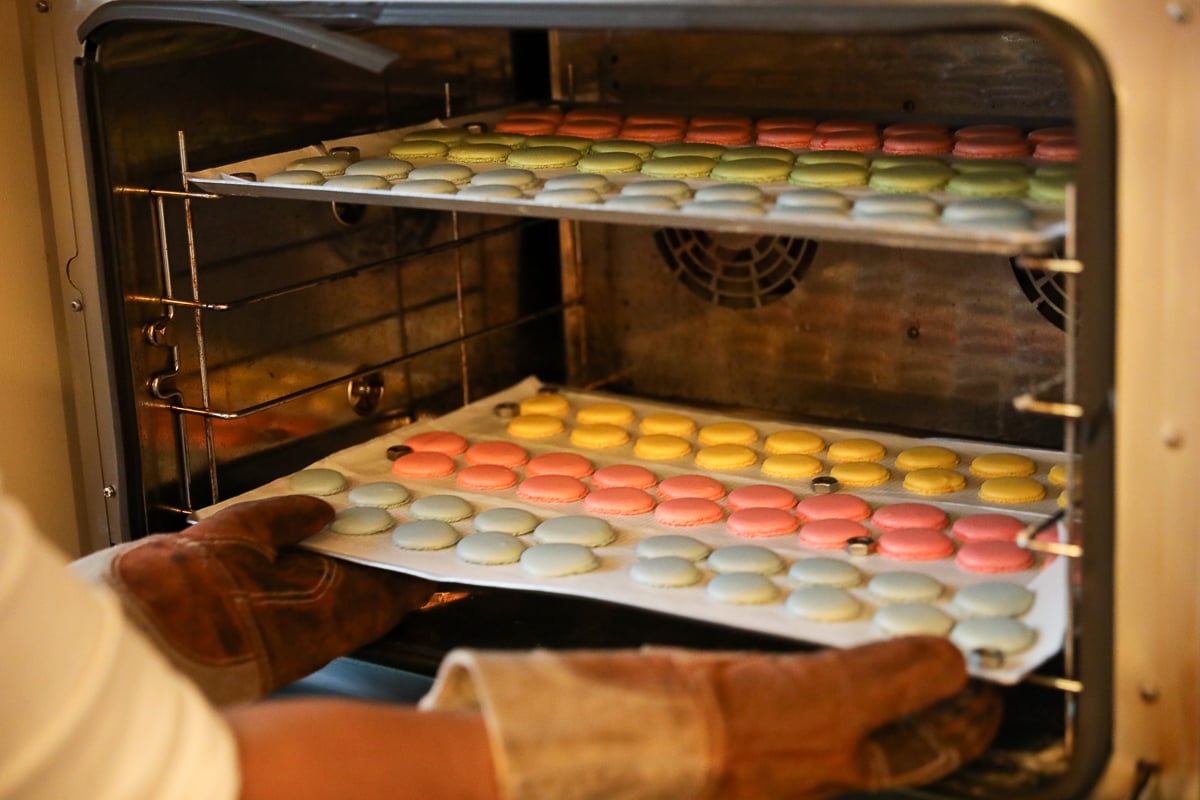
Out of the oven, our shells were perfect. Glossy, light, and not a crack in sight. Finally, we piped in our ganache fillings and sandwiched the shells together. We chose tropical fruit flavors, but there were other options, too, like chocolate, raspberry, pistachio, and coffee.
I was actually shocked by how good they were… Bold, fruity flavors. Paper-thin, crisp shells. Soft, chewy centers. And all the credit goes to Alice’s expert guidance – and our meticulous piping, of course.
My husband and I walked away with one giant box of about 30 macarons… Which, I’m proud to say, made an excellent breakfast on our train to Bayeux, Normandy, the next morning.
Best French Cooking Class (Lunch or Dinner) in Paris
If you’re a serious foodie who loves to cook, this Paris Cooking Class and Lunch (with Wine and Market Visit) is the one for you.
I’ve done dozens of classes around the world, but this one is top-tier when it comes to an immersive, educational cooking experience, led by a trained chef instructor.
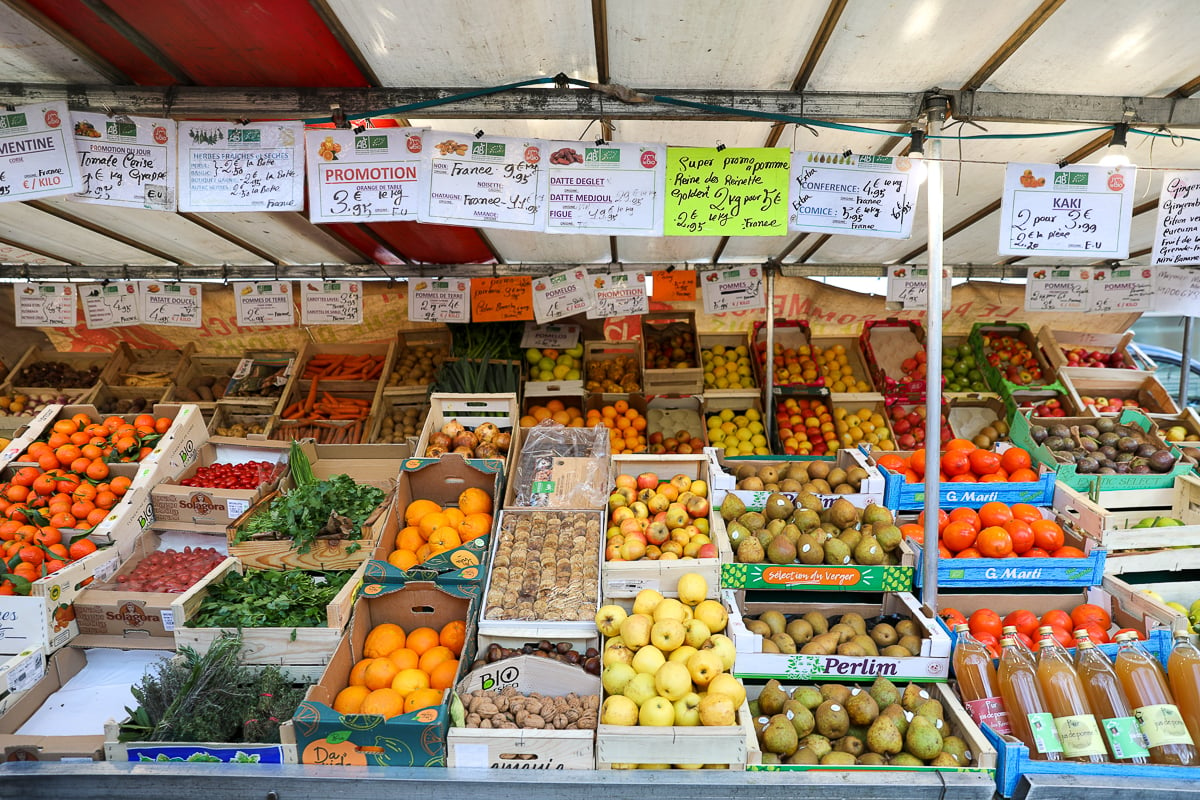
If you choose the market visit option (you should!), then you’ll visit an ultra-local Latin Quarter farmer’s market beforehand to gather ingredients. Then, you’ll return to the professional kitchen to make a full-on three-course French meal.
No matter how often you cook, I promise you’ll leave with plenty of new tricks, techniques, and inspiration – plus the recipes for everything you just made.
Quick Facts: 3-Course Cooking Class
- What you’ll make: A seasonal 3-course French meal
- Duration: 4.5 or 6 hours (market visit is optional)
- Group size: Small (up to 12 travelers; my class had 8)
- Difficulty: Medium
- Vibe: Lively, in-depth, technique-rich
- Ages: 12+
- Format: Market tour, hands-on cooking, 3-course meal
- Where: Latin Quarter, Le Foodist (5th arrondissement)
- Language: English
- Good to know: Available as a lunch (9 AM) or dinner cooking class (4:30 PM)
What the French Cooking Class is Like
My husband and I booked the Paris Lunch Cooking Class with the market add-on (starting at 9 AM) to celebrate my birthday. And we had the best time.
After getting acquainted with our sassy, quick-witted instructor, we enjoyed coffee and pastries together, and set off for the market.
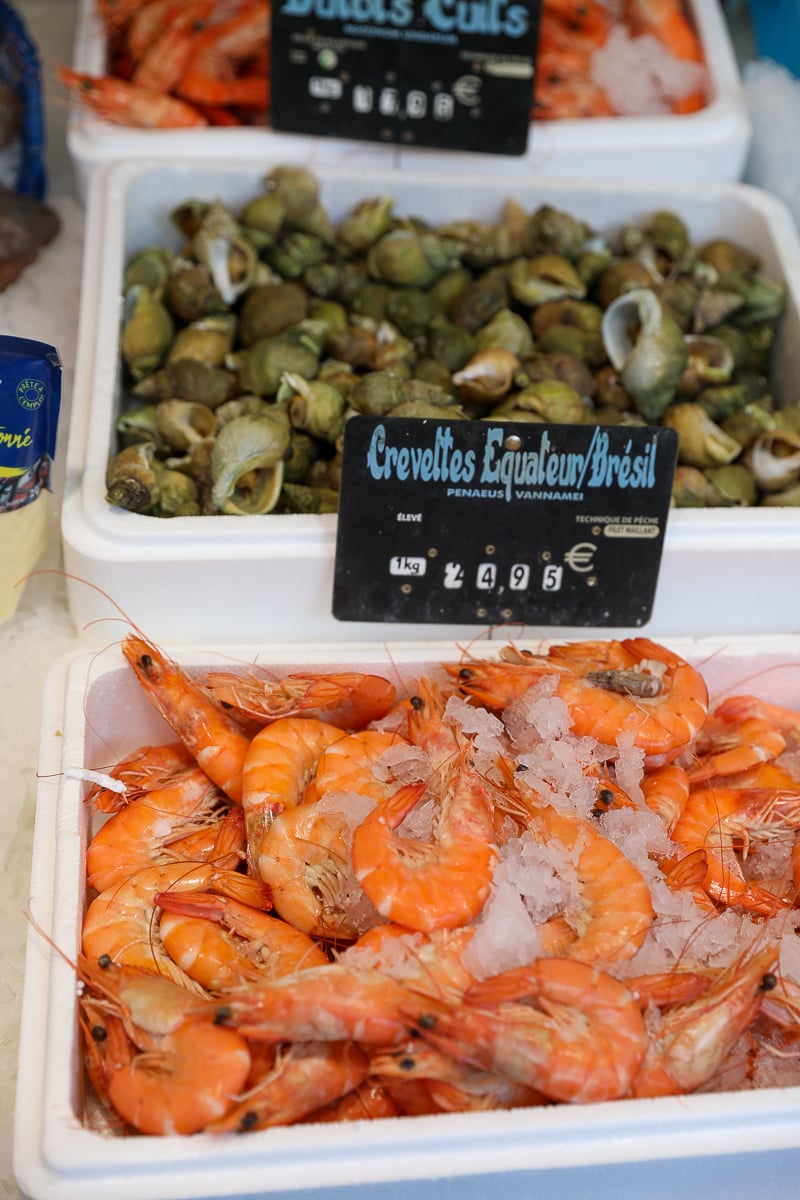
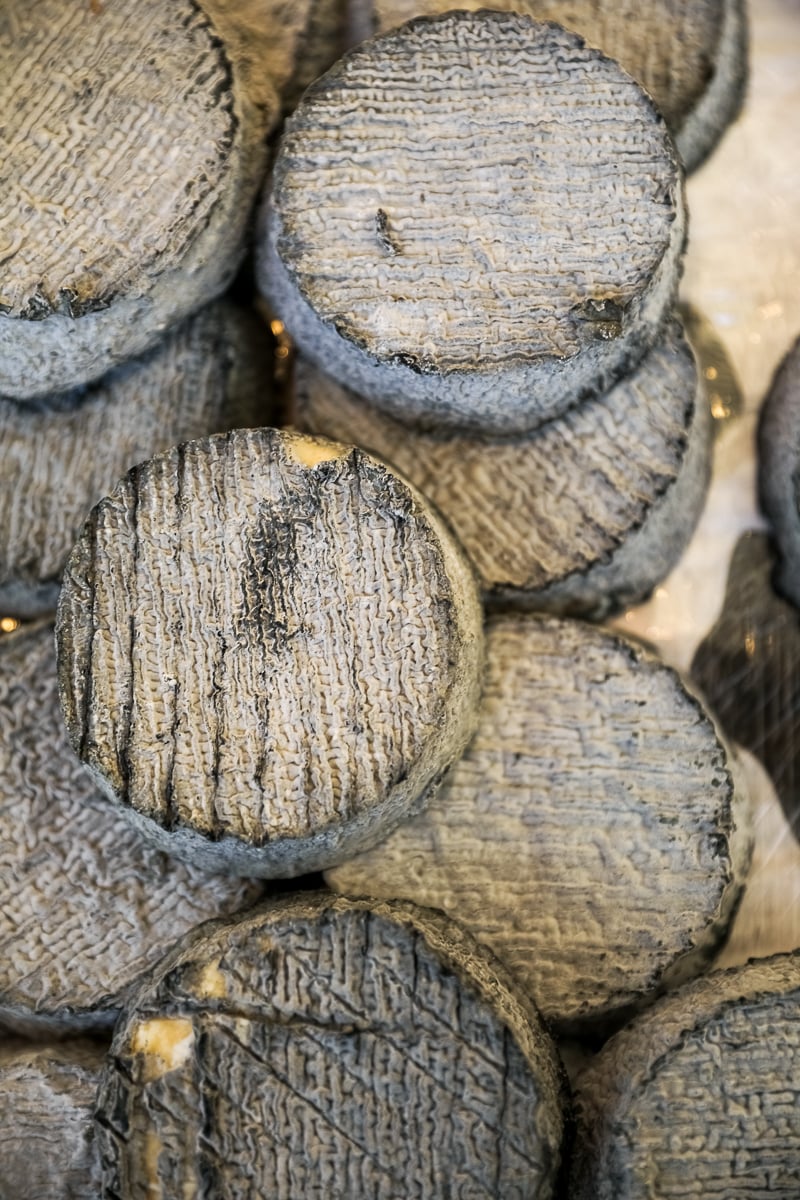
At Marché Monge, we met the vendors, bought the fresh ingredients we needed, and tasted a few cheeses (including Brie – very Parisian!).
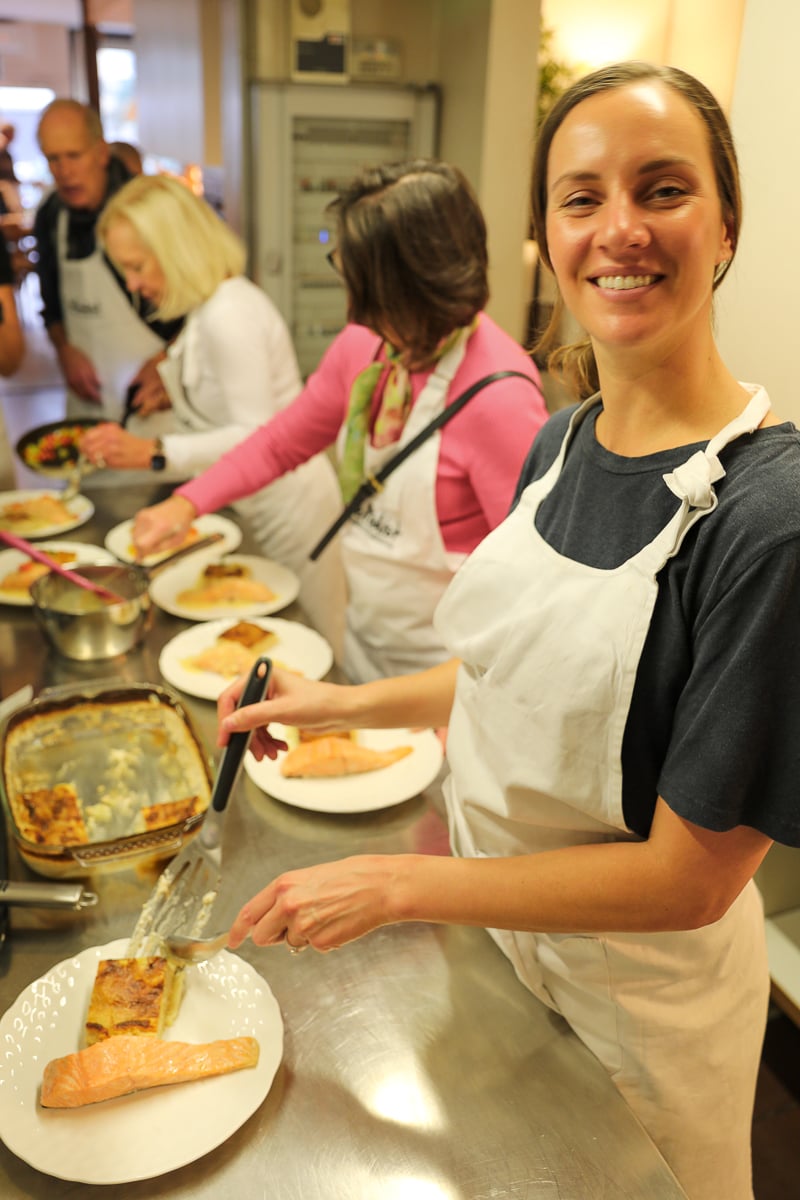
Then it was back to the kitchen to plan and cook our meal. The chef gave everyone jobs to do, and it felt like we were a team of line cooks in a real Parisian bistro. (Though I think our kitchen was probably a lot more fun than the average restaurant’s.)
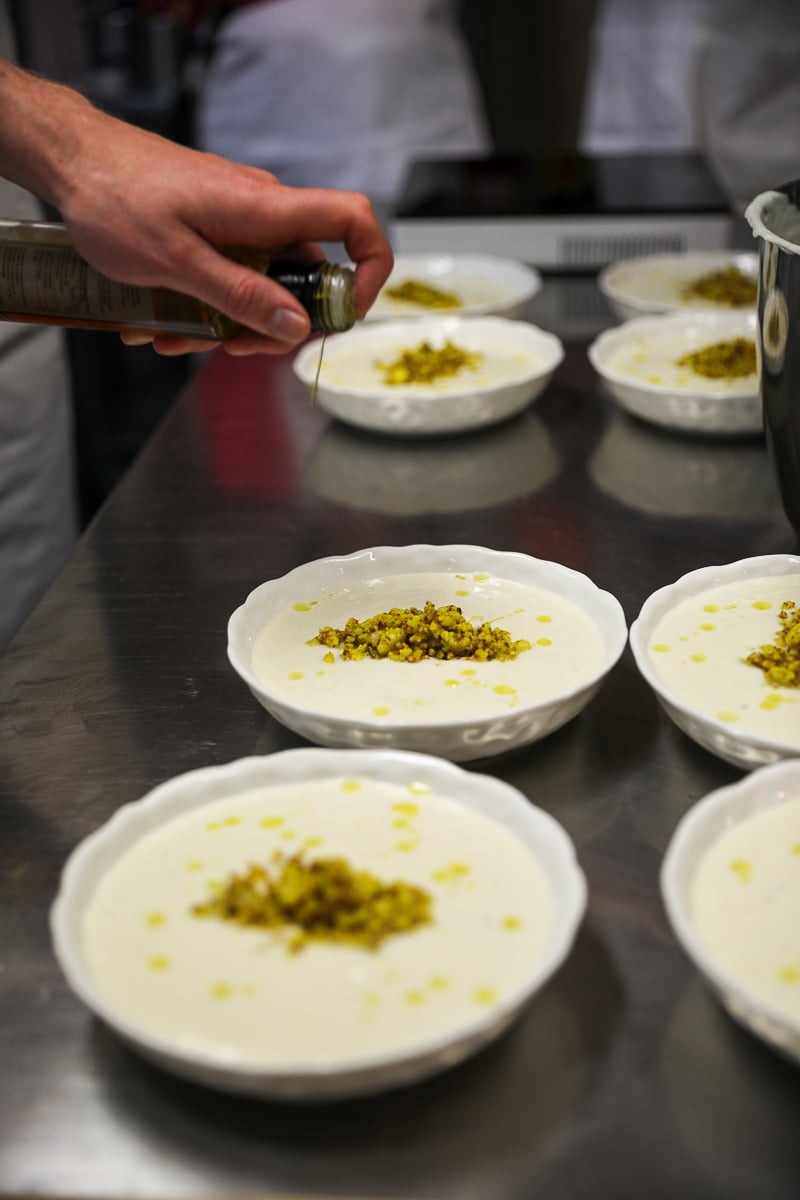
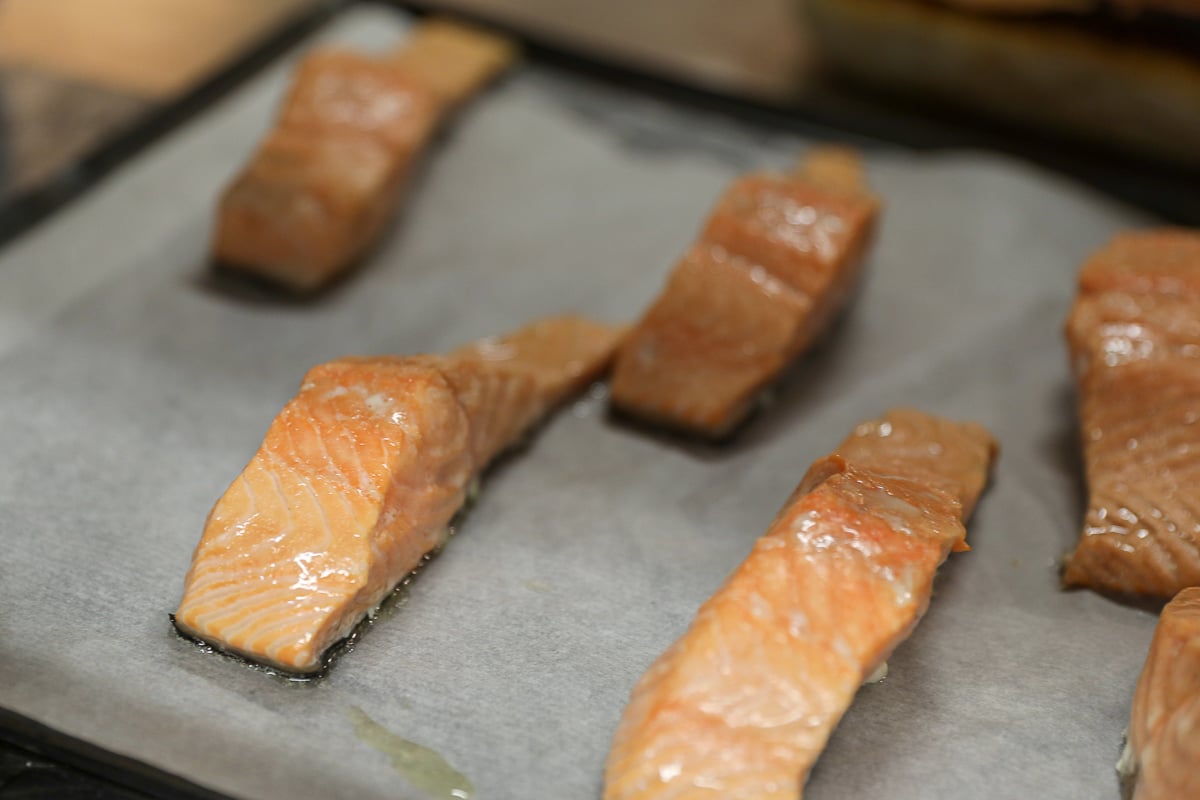
We sliced potatoes with a mandoline. Chopped, roasted, and curried cauliflower. Crafted a vibrant orange-infused butter and white wine sauce. And baked our salmon to absolute perfection.
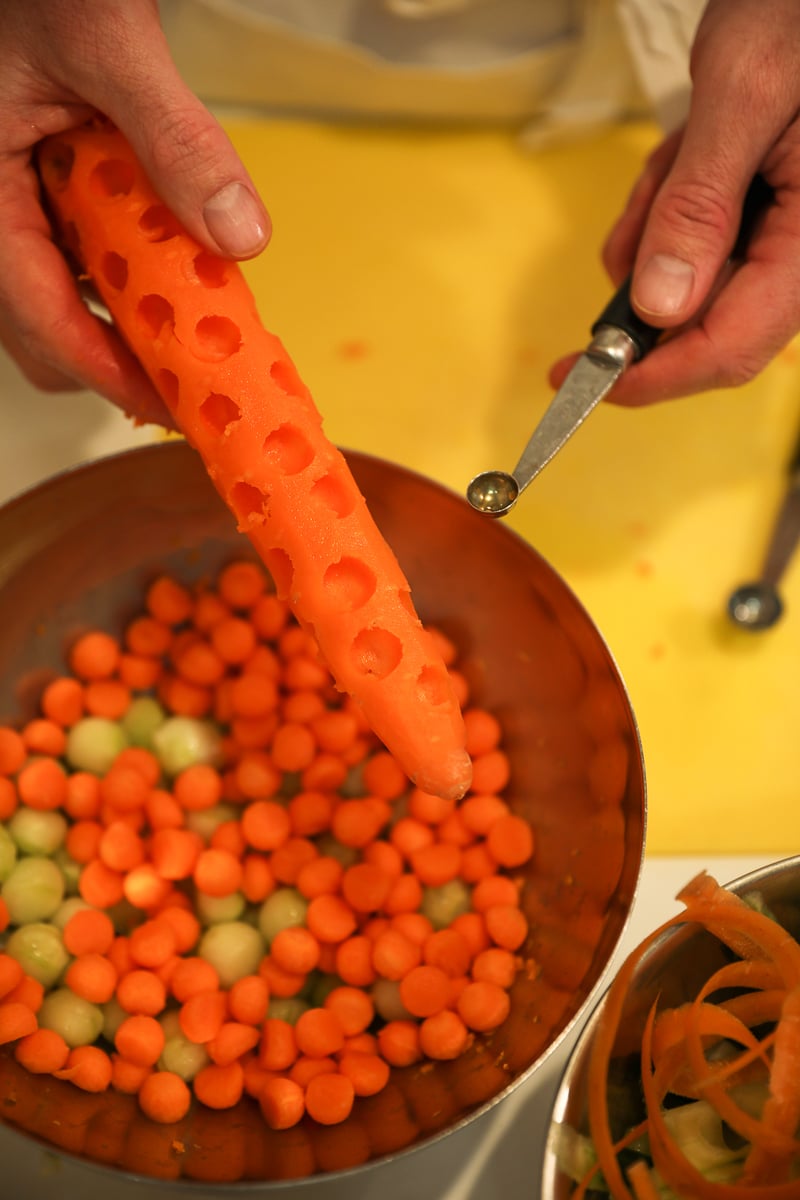
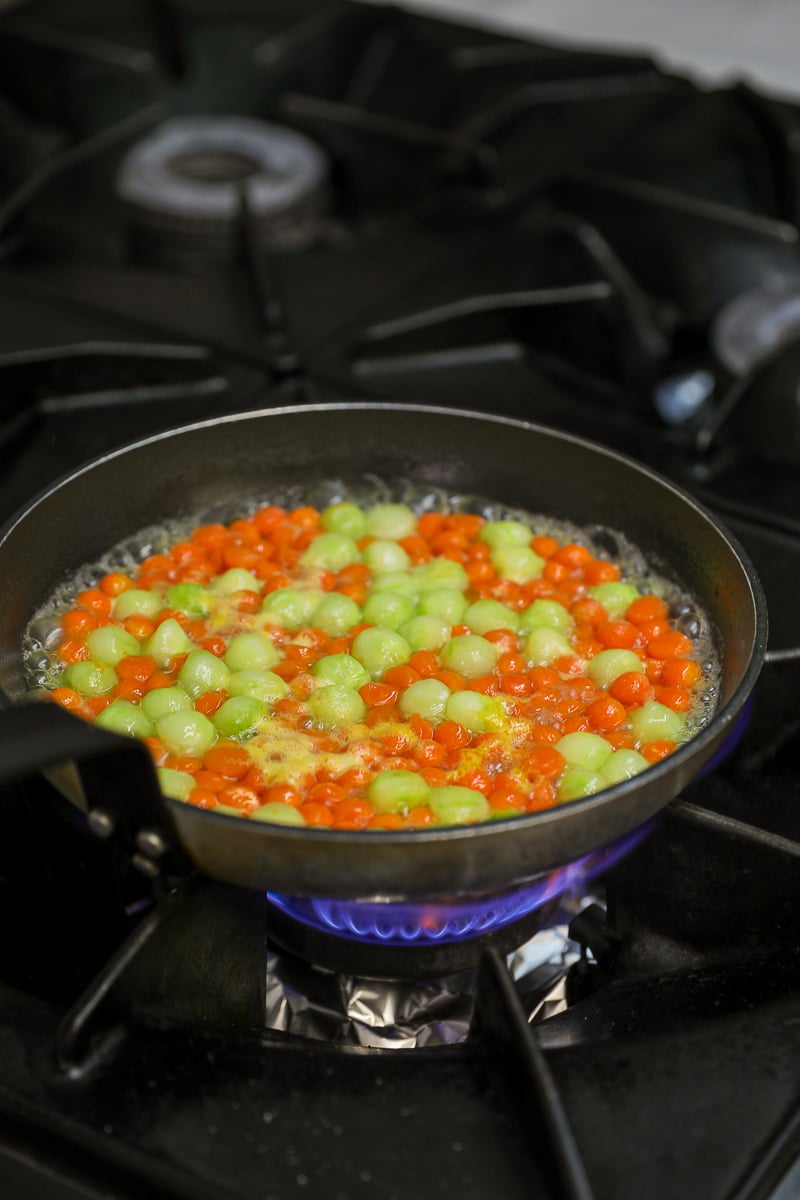
Even now, I can’t get over the fact that we used a Parisienne scoop to make cucumber balls and carrot balls and sautéed them in a sweet glaze… (Cooked cucumbers? Mind-blown.)
By the end, we’d made:
- Potage Dubarry: The silkiest roasted cauliflower and leek velouté (soup) with a drizzle of truffle oil
- Salmon Beurre Blanc with Gratin Dauphinois: Perfectly baked salmon with a citrus beurre blanc, glazed cucumbers and carrots, and a luscious scalloped potato gratin
- Poire Belle Hélène: Poached pear with Madagascan vanilla bean ice cream, dark chocolate sauce, and toasted almonds
Note: The menu changes daily (and with the seasons), so you probably won’t cook these exact dishes.
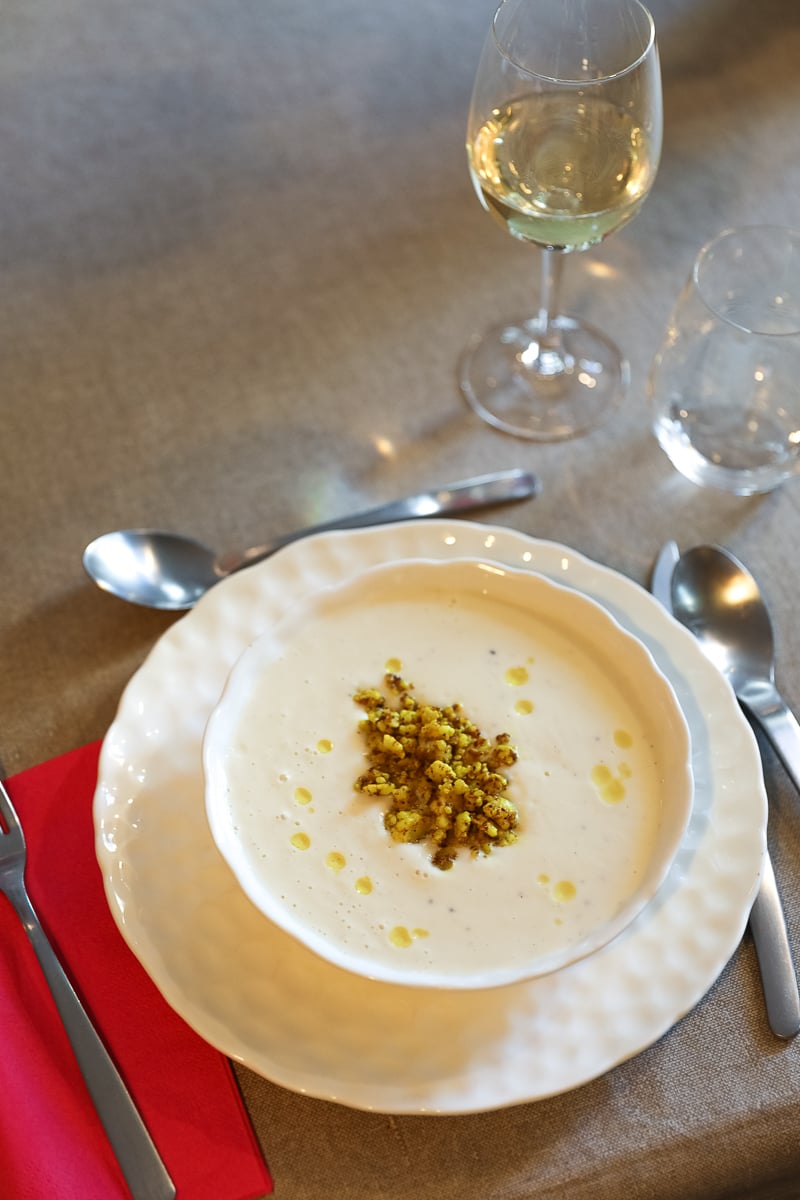
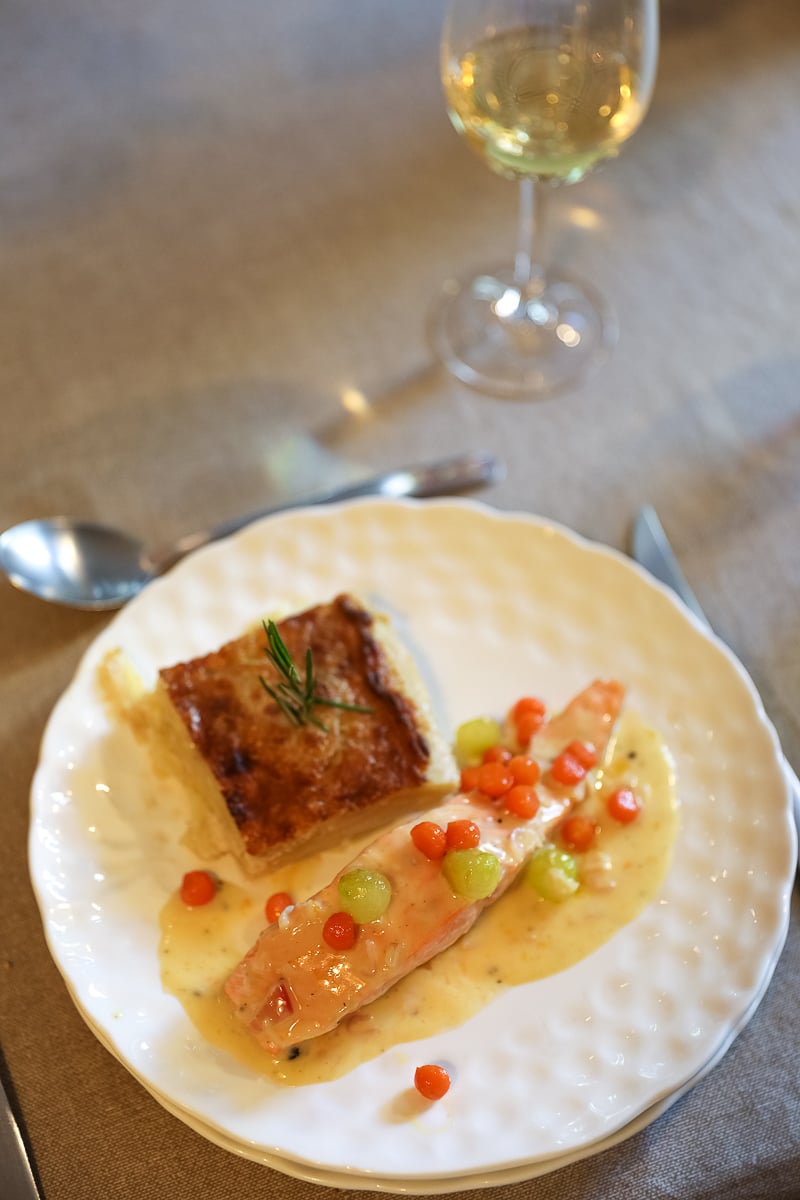
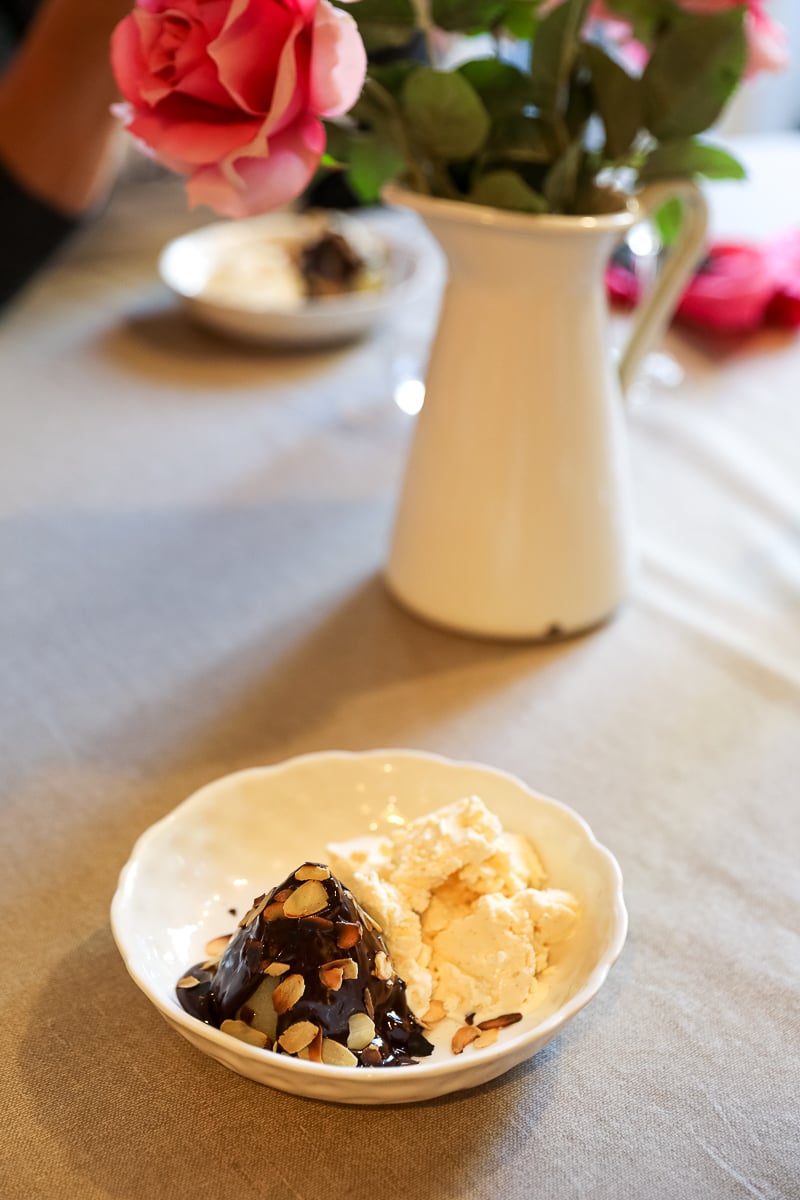
Aprons off, we sat down with our fellow cooks to devour everything we’d made, paired with white and red wines. Everything was perfect, but I still daydream about how buttery and rich that potato gratin was!
Book your 3-Course Lunch Cooking Class here!
Or, if you prefer the 4:30 PM option, book your 3-Course Dinner Cooking Class here!
Best Cheese and Wine Pairing Class in Paris
Want to skip the apron and go straight to the best part (eating and drinking)?
This Art of Pairing Cheese and Wine Class isn’t technically a cooking class, but it was such a fun, interesting foodie experience, it’d be rude if I didn’t include it!
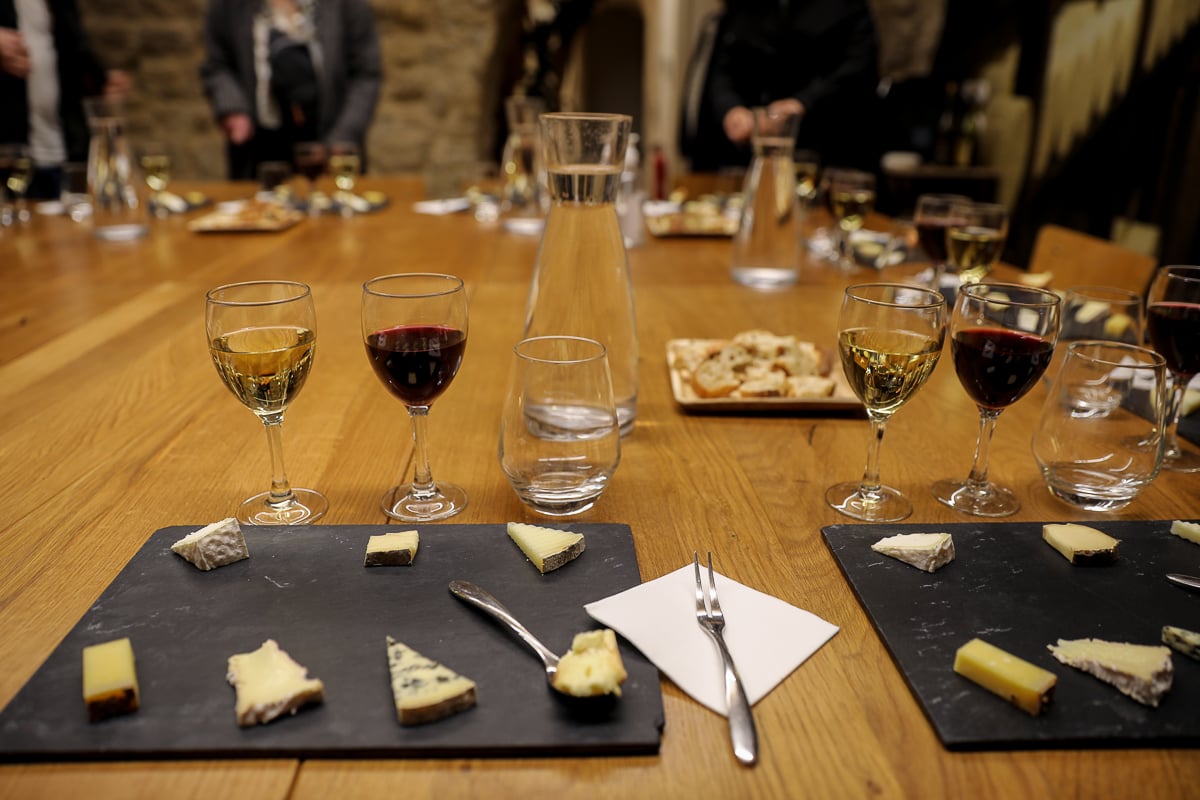
You’ll taste your way through seven French cheeses and three wines with an expert cheesemonger, learning which pairings work, which clash, and why.
But it’s more fun than a standard tasting, because you’re not just sipping and nodding along. You get to play sommelier yourself. (More on that below.)
Quick Facts: Cheese and Wine Pairing Class
- What you’ll do: Taste and pair 7 cheeses with 3 French wines
- Duration: ~1.5 hours
- Group size: Small (up to 12 travelers)
- Difficulty: Easy
- Vibe: Relaxed, indulgent, no apron required
- Ages: All ages (18+ for wine)
- Format: Guided tasting (no cooking)
- Where: Île Saint-Louis, Paroles de Fromagers (4th arrondissement)
- Language: English
- Good to know: Daily at 4:30 PM (other timeslots sometimes available).
What the Cheese and Wine Pairing Class is Like
This Cheese and Wine Pairing Class takes place in a 17th-century cheese cellar beneath the streets of Île Saint-Louis.
Our cheesemonger host was phenomenal: warm, funny, and very enthusiastic about cheese. She had us all gathered around one big table in the cellar and encouraged endless questions and discussion. (I’ll also admit I’m a very analytical wine taster. In other words, I kept finishing my glasses. And she just kept refilling them. Loved her!)
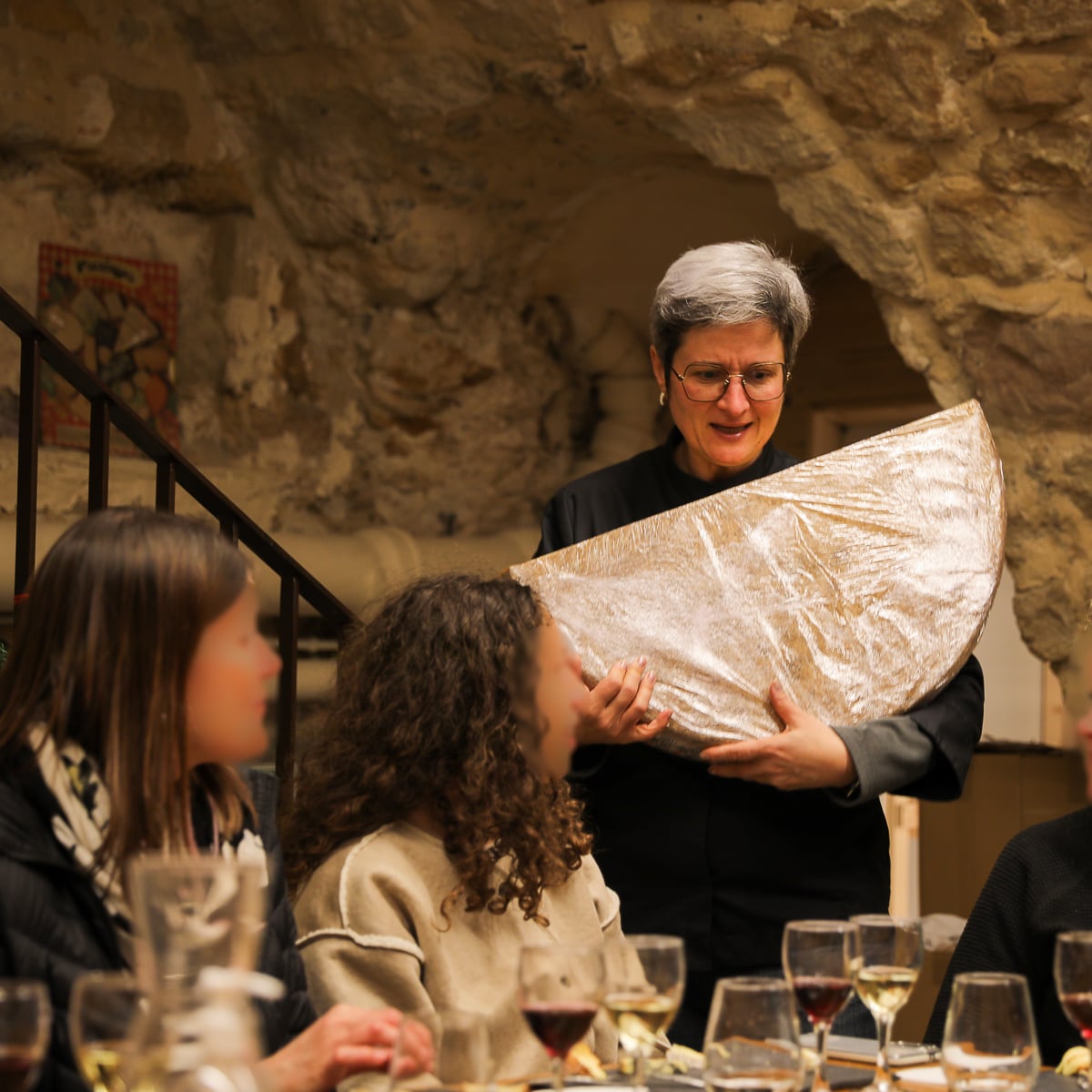
Before we started tasting, she walked us through the basics of French cheese – styles, aging processes, and cheesemaking techniques – including the fact that France has over 1,200 varieties of cheese!
Then came the cheese and wine pairing exercise. The concept was simple but super fun: we’d taste a cheese on its own, then try it with different wines and decide which pairing worked best before the cheesemonger revealed the “correct” answer and explained why.
And unsurprisingly, some pairings were terrible. For example, we learned that bloomy-rind cheeses (like Camembert) often clash with tannic red wines, creating a strange metallic flavor. Meanwhile, bright white wines pair beautifully with tangy goat cheeses.
My two favorites were the 36-month Comté – nutty, complex, and almost caramelized – and the Époisses, a gloriously pungent Burgundian cheese washed in local alcohol that smelled aggressive but tasted divine.
We worked through seven cheeses in total, including a few I’d never heard of (and now love):
- Mothais sur Feuille: a delicate goat cheese aged on a chestnut leaf
- Saint-Nectaire: semi-soft cow cheese nicknamed “the cat’s fur”
- Fourme d’Ambert: a mellow bleu that loves a sweet dessert wine
Book your Art of Cheese and Wine Pairing Class here!
I left feeling approximately 400% more confident in building a cheese board and picking the perfect wine to match – and you will, too.
If the wine has you curious, consider adding a day trip to from Paris to Champagne or a visit to the wineries in Beaune to your France itinerary.
How to Choose the Right Cooking Activity in Paris
I get it… You probably don’t have time for all five of these Paris cooking classes. If you’re still not sure which to book, here’s my quick advice:
- Book the croissant class if you love baking projects and want to learn an impressive technical skill.
- Pick the cheese and butter workshop if you want something unique, science-forward, and less intimidating than baking.
- Choose the macaron class if you want something super fun, creative, colorful, and beginner-friendly.
- Go for the full French cooking class if you’re a serious foodie who wants the most immersive and educational experience.
- Book the cheese and wine pairing class if you’re short on time (you just need 1.5 hours) and want a relaxing foodie experience.
Traveling as a couple? My husband and I did all of these classes together. They’re all fantastic date activities in Paris, along with taking a Seine River dinner cruise and experiencing the best day trips from Paris.
You’ll leave with some of your favorite travel memories – and new kitchen skills to keep practicing together at home!
Traveling as a family? There were kids of all ages in my croissant class and my macaron class – from a 6-year-old up to teenagers. As long as your kiddos enjoy hands-on activities and can follow step-by-step instructions, these classes are a fun experience for the whole family.
FAQ: Paris Cooking Classes
It depends on what you want to learn. For pastry lovers, I highly recommend the croissant and macaron baking classes. Do both if you have time! For serious foodies, the 3-course French cooking class is the best overall experience.
Nope! Not at all. Unless you’re enrolling at Le Cordon Bleu, most Paris cooking classes are beginner-friendly and designed for travelers of all skill levels.
Yes, every class included in this guide is taught in English.
I recommend booking as early as possible, especially between April and October, and around the holidays. The best small-group classes sell out weeks in advance.
Wear comfortable clothes (but nothing too loose) and comfortable, closed-toe shoes (you’ll be on your feet most of the time!). Most classes provide aprons.
All of them! My husband and I took all of these classes together. Besides eating at the best restaurants in Paris, these classes ended up being some of our favorite activities in Paris.