16 Best Things to Do in Lyon, France
Disclosure: This post may contain affiliate links; more info here.
Of all the things to do in Lyon, France, eating is probably at the top of your list. As it should be.
As the World Capital of Gastronomy, Lyon is famous for its liberal use of butter, traditional bouchons, bustling food markets, and specialties like quenelles de brochet and pâté en croûte. Locals even joke that Lyon is fed by three rivers: the Rhône, the Saône, and the Beaujolais (the local wine).
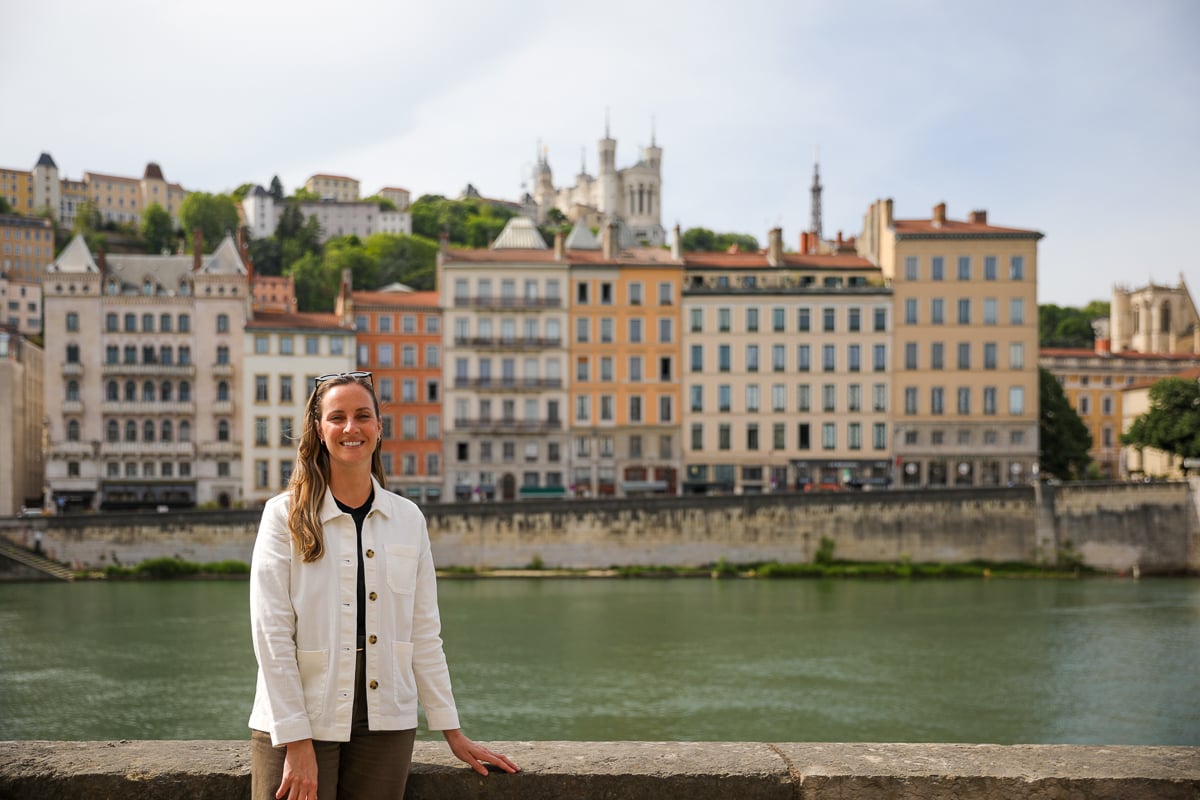
Between a fantastic Old Town food tour, browsing Les Halles, and indulging in as many Lyonnais classics as possible, I took my food research seriously. As a trained chef, it was my duty (read: pleasure).
But in between meals, Lyon has so much more to offer. From wandering the secret passageways of Vieux Lyon to discovering the city’s fascinating silk-weaving history, admiring the views from Fourvière Basilica, and exploring the massive Parc de la Tête d’Or, you can easily fill three days in Lyon.
In this guide, I’m sharing all my favorite things to do, see, and eat in Lyon. Allez!
Lyon, France: My Quick Picks
Short on time? Here are my top favorite things to do in Lyon!
- Top foodie experience: Lyon Old Town Food Tour (this is a must do!)
- Best history experience: Lyon Highlights and Secrets Walking Tour
- Must-visit landmark: Basilica of Notre-Dame de Fourvière
- Prettiest neighborhood: Vieux Lyon (Old Town)
- My favorite neighborhood: Croix-Rousse
- Best free activity: Parc de la Tête d’Or
Best Foodie Things to Do in Lyon
1. Eat Your Way Through Lyon on a Food Tour
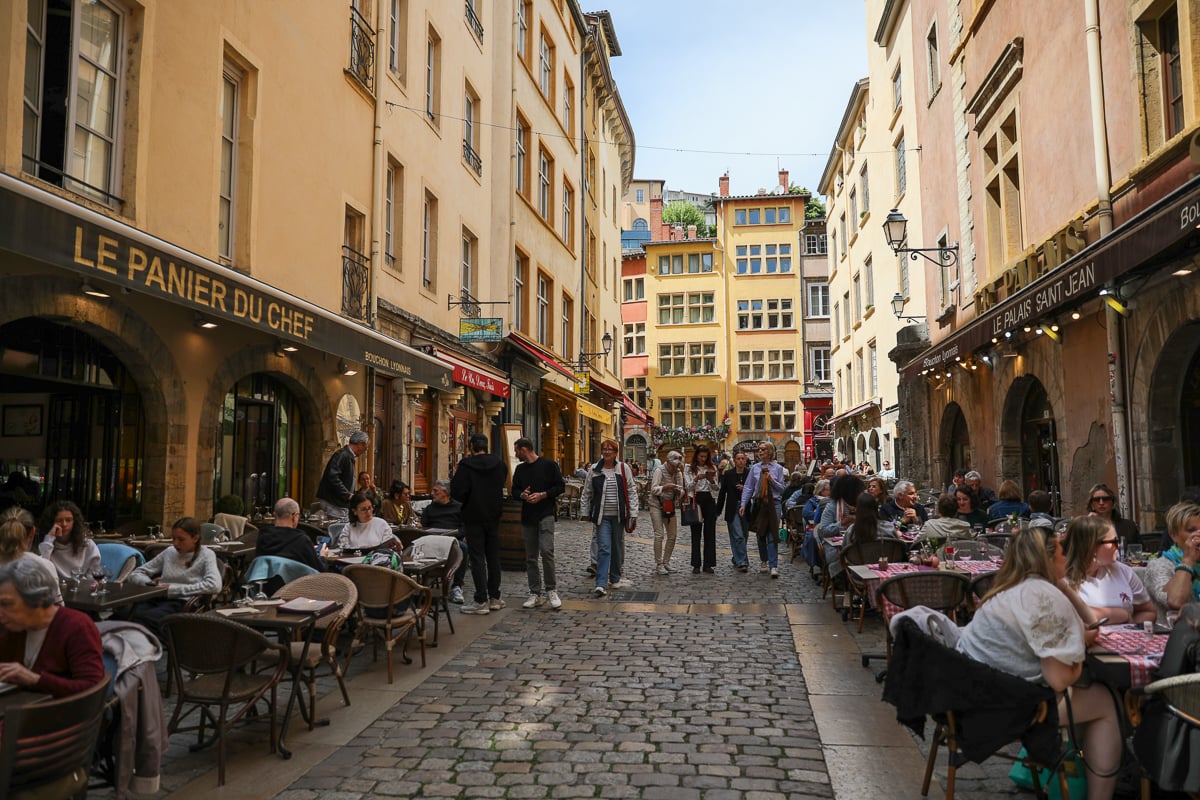
I booked this Walking Food Tour of Lyon Old Town to discover as many Lyonnais specialties as possible in four hours. I recommend you do the same.
With our local guide, Nathalie, we explored Old Town’s cobblestone streets and secret passageways, stopping at specialty food shops and a traditional bouchon. Along the way, we also learned how Lyon’s silk-weaving heritage, legendary female chefs (the Mères Lyonnaises), and Paul Bocuse shaped its food culture.
We tasted 15+ local specialties, including:
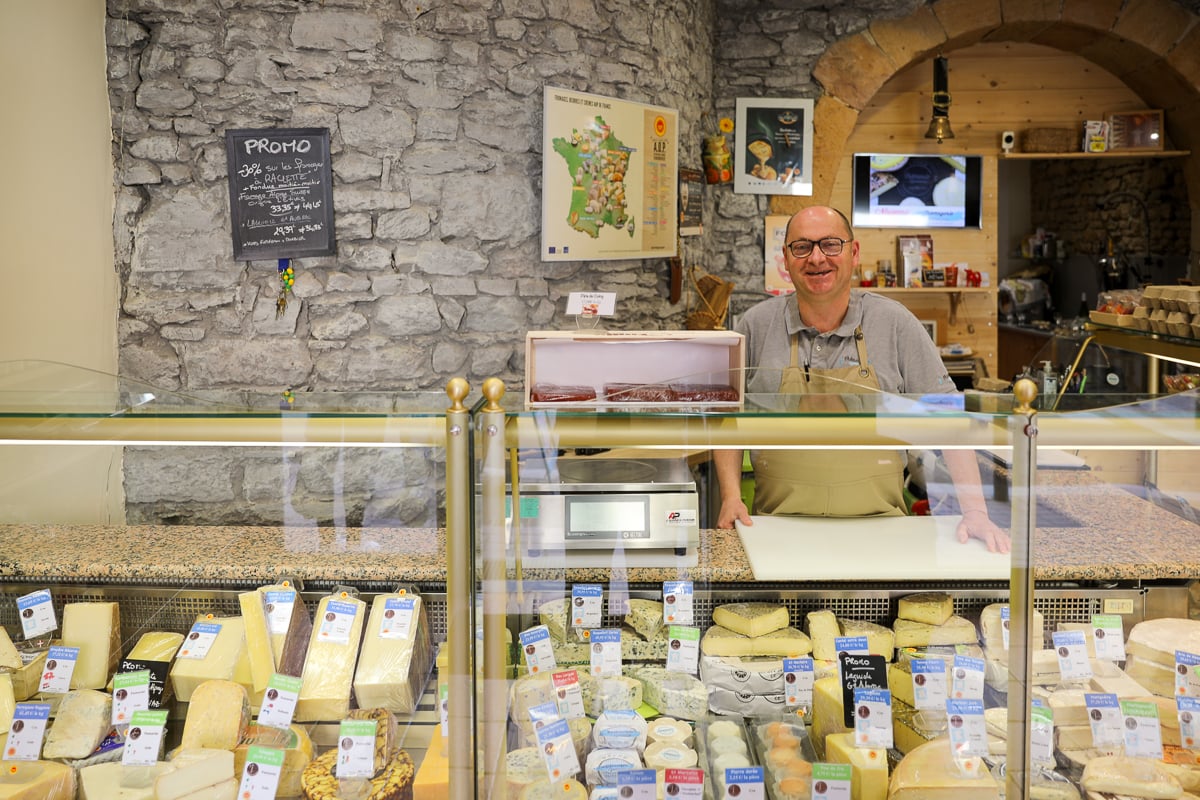
- Regional cheeses and white wine: At a small fromagerie, the cheesemonger gave us a rundown on French cheese-making and the local varieties. We sampled four cheeses – including raw goat’s milk Rigotte de Condrieu, a smoky sheep’s milk cheese, a buttery blue, and wonderfully creamy Saint-Marcellin – paired with a crisp white Apremont wine from Savoie.
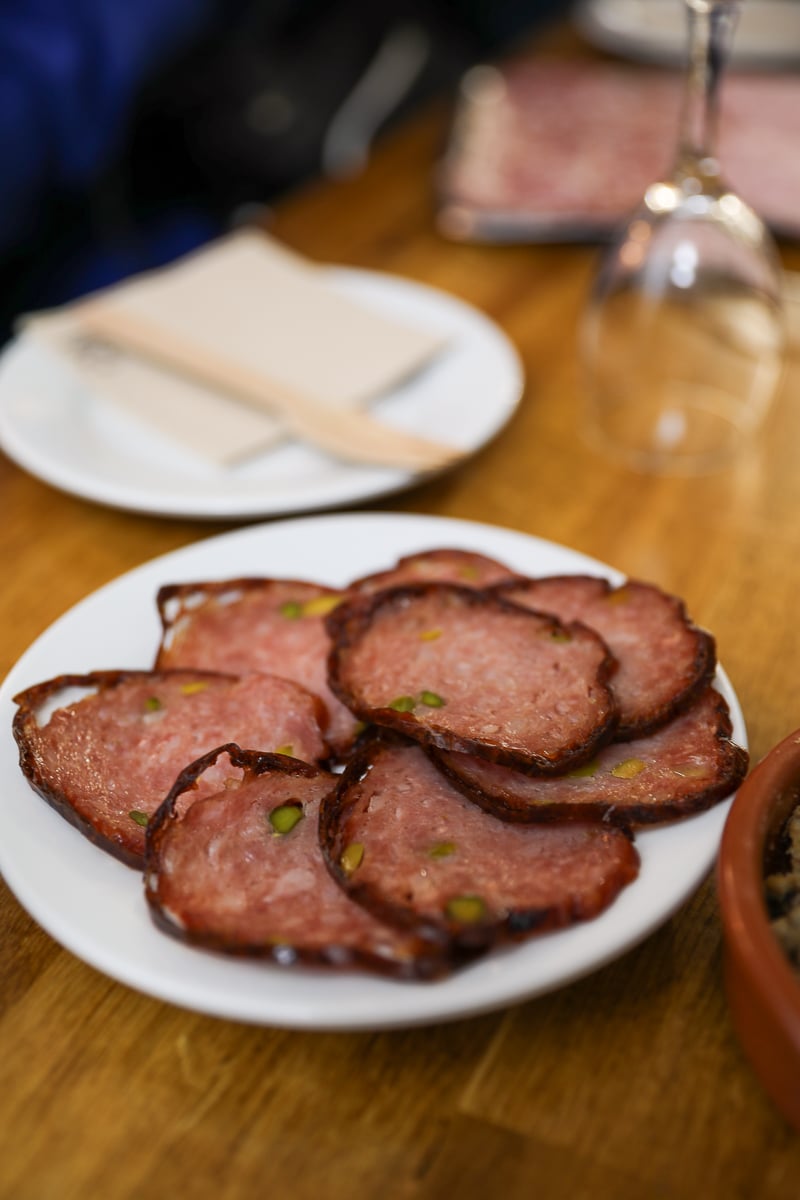
- Lyonnais charcuterie: We tried four different local cured meats, including Rosette de Lyon, a traditional dry-cured saucisson, and warm cervelas pistaché, a local sausage studded with pistachios.
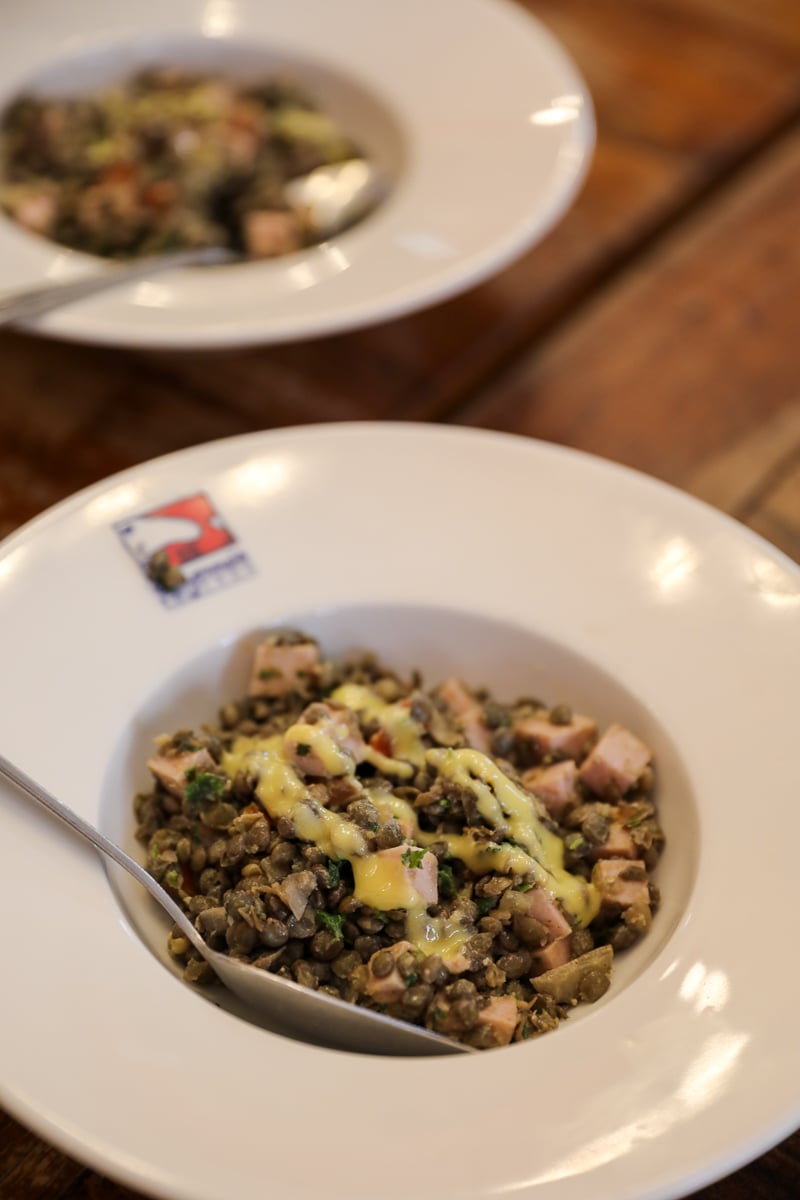
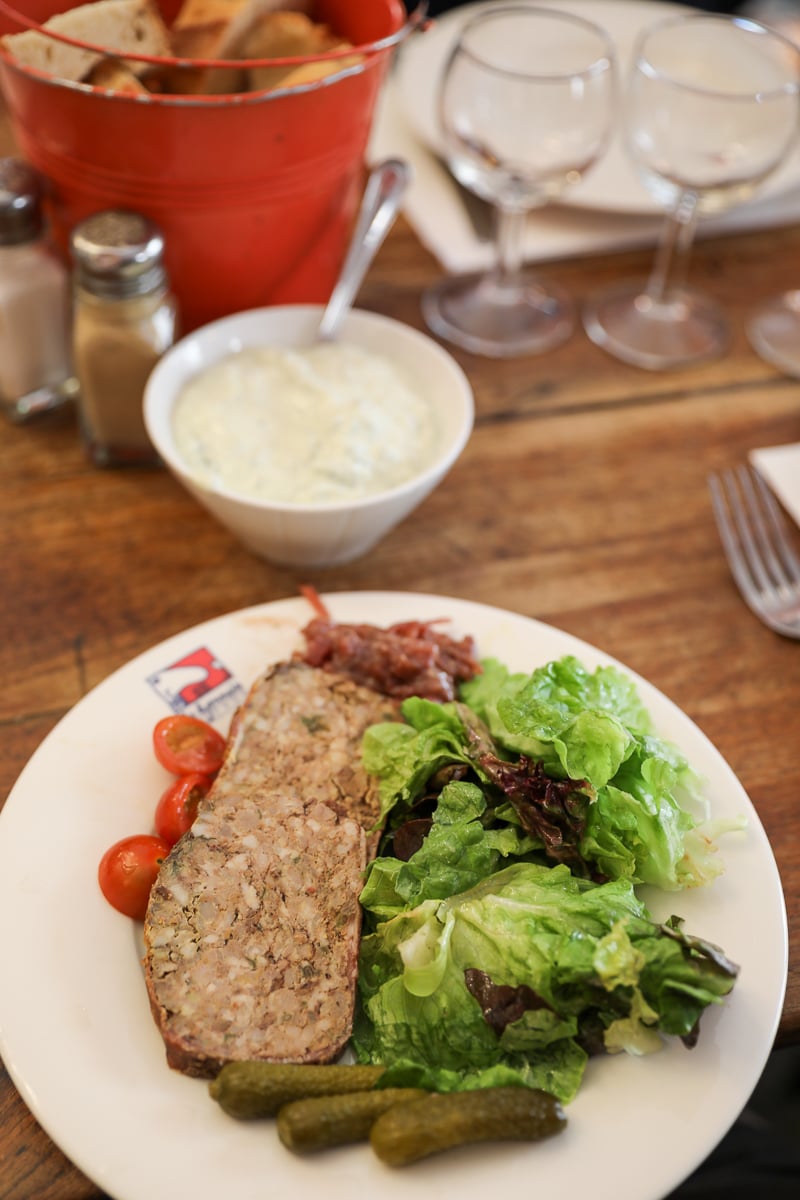
- Traditional Lyonnais cuisine and red wine: We stopped for lunch at one of Lyon’s most famous traditional bouchons (where it’s difficult to get a booking!). Over a glass of Beaujolais-Villages red, we tucked into lentil salad, rustic terrine with cornichons, and cervelle de canut. The latter literally translates to “silk workers’ brains,” but thankfully, it’s actually a creamy, tangy cheese spread with herbs and vinegar…
- Artisanal chocolates: At a local chocolaterie, we sampled handmade truffles, including hazelnut praline, walnut praline layered with salted caramel, and dark Venezuelan chocolate ganache.
- Pink praline treats: Lyon’s bright pink, sugar-coated almonds are used to make everything from buttery praline brioche to cakes and tarts. We finished up the tour with a pink praline tart and coffee!
I’d book this Lyon food tour for your first morning (it starts at 10 AM) to get acquainted with the city’s food scene right away. It’ll help you decide what else you want to try!
2. Dine at a Traditional Lyonnais Bouchon
Lyon’s traditional bouchons are cozy, convivial restaurants known for hearty, home-style cooking, generous portions, and tightly packed tables. Their roots go back to Lyon’s silk-weaving days, when workers known as canuts would gather after work for a mâchon: an oh-so-French early-morning meal of charcuterie, offal, and wine.
And today, you can expect much of the same: rustic interiors (pots hanging from the ceiling and all), red-and-white checkered tablecloths, plenty of wine, and menus featuring generations-old Lyonnais recipes.
Lyon is full of tourist traps, though. So how do you find an authentic bouchon? Look for the official Les Bouchons Lyonnais label on the restaurant’s façade, featuring Gnafron, a Lyonnais puppet who loves good food and wine. It certifies that the restaurant is dedicated to keeping traditional bouchon cooking and culture alive.
Even though I’m not crazy about bouchon-style cuisine (I much prefer Lyon’s modern food scene), I’ll be the first to say: you have to dine at at least one bouchon. Your Lyon experience would be incomplete otherwise!
My husband and I liked Daniel et Denise Saint-Jean, but some other officially recognized bouchons to add to your list include La Meunière and Le Bouchon Sully. Make reservations in advance, especially for dinner.
Lyonnais Dishes to Try
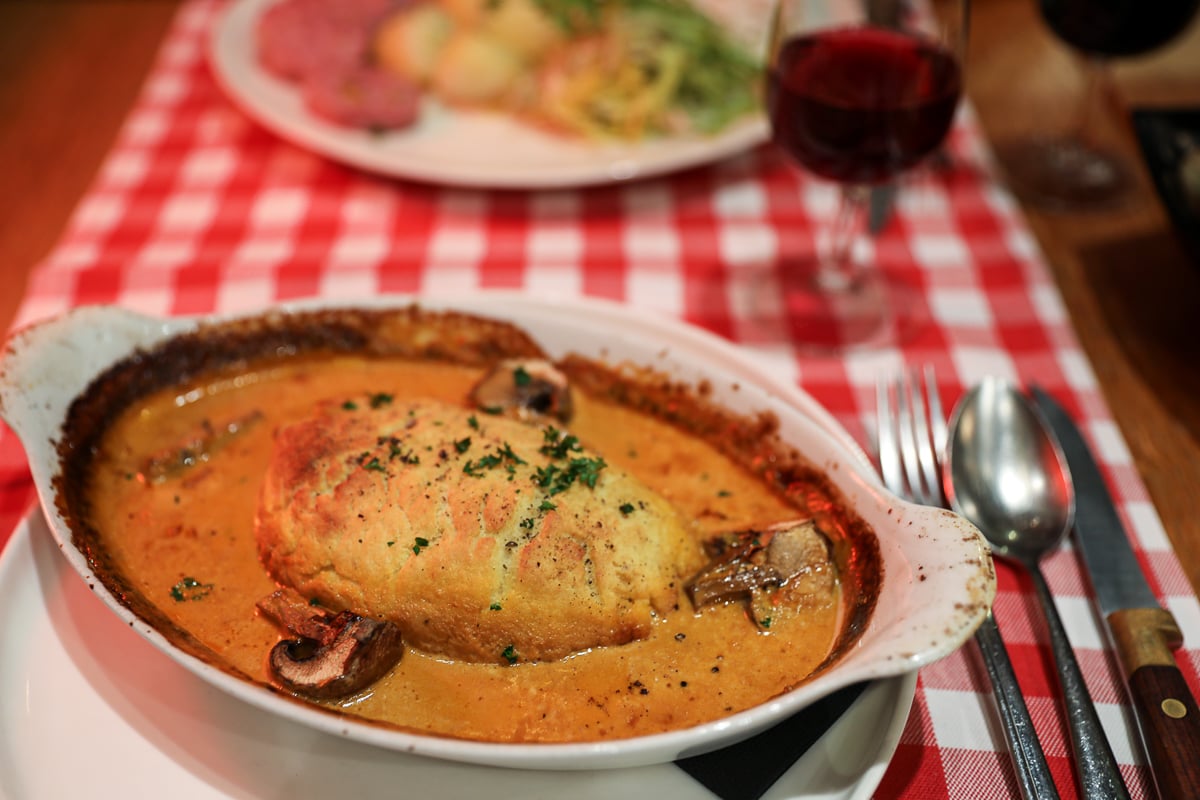
- Quenelles de brochet: Fluffy pike dumplings, typically baked in a rich, creamy sauce
- Pâté en croûte: A savory meat pâté baked inside a golden pastry crust
- Saucisson brioché: Lyonnais sausage baked inside buttery brioche
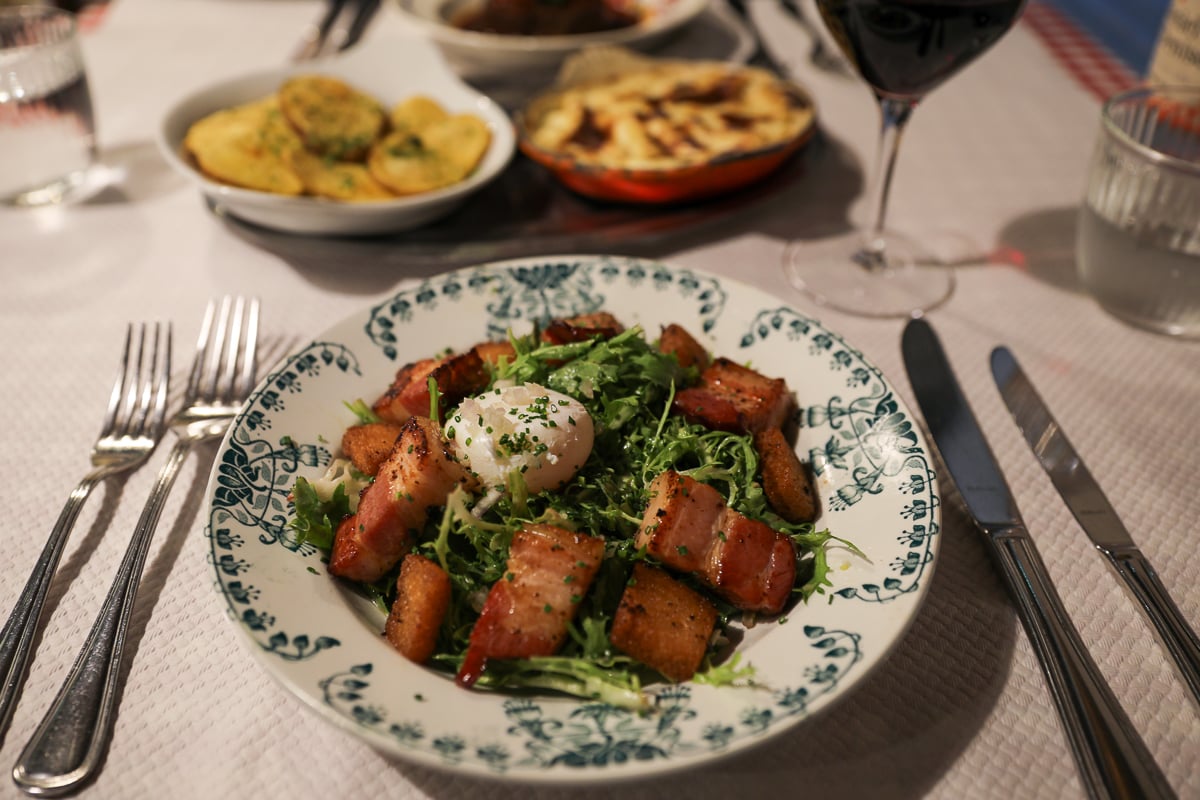
- Salade lyonnaise: Frisée with crispy lardons, croutons, and a poached egg
- Tablier de sapeur: Breaded and fried beef tripe, for the more adventurous eaters
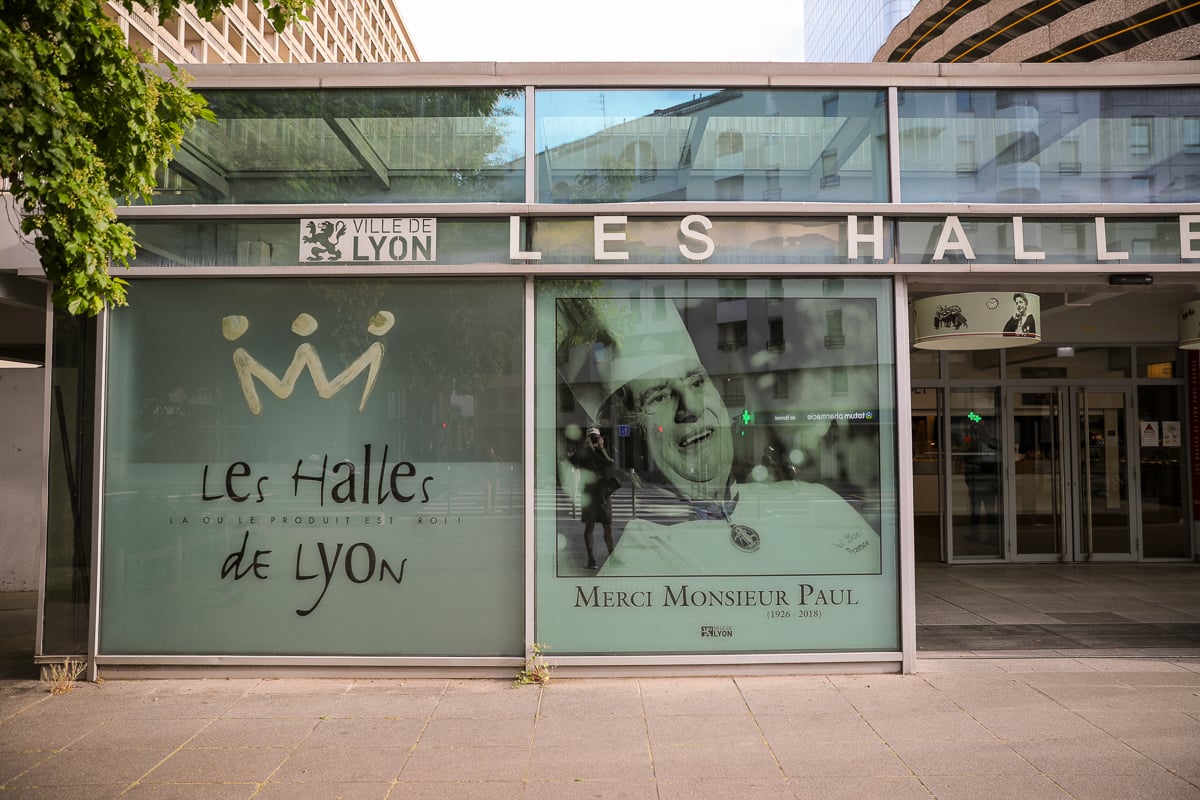
3. Visit Les Halles de Lyon Paul Bocuse
Named after Lyon’s most legendary chef, Paul Bocuse, this indoor gourmet market is a must-visit for foodies. (Paul himself used to source ingredients here!)
Les Halles de Lyon Paul Bocuse houses 56 merchants selling everything from regional cheeses, cured meats, and terrines to fresh oysters, pastries, wine, and the most beautiful pâtés en croûte I’ve ever seen.
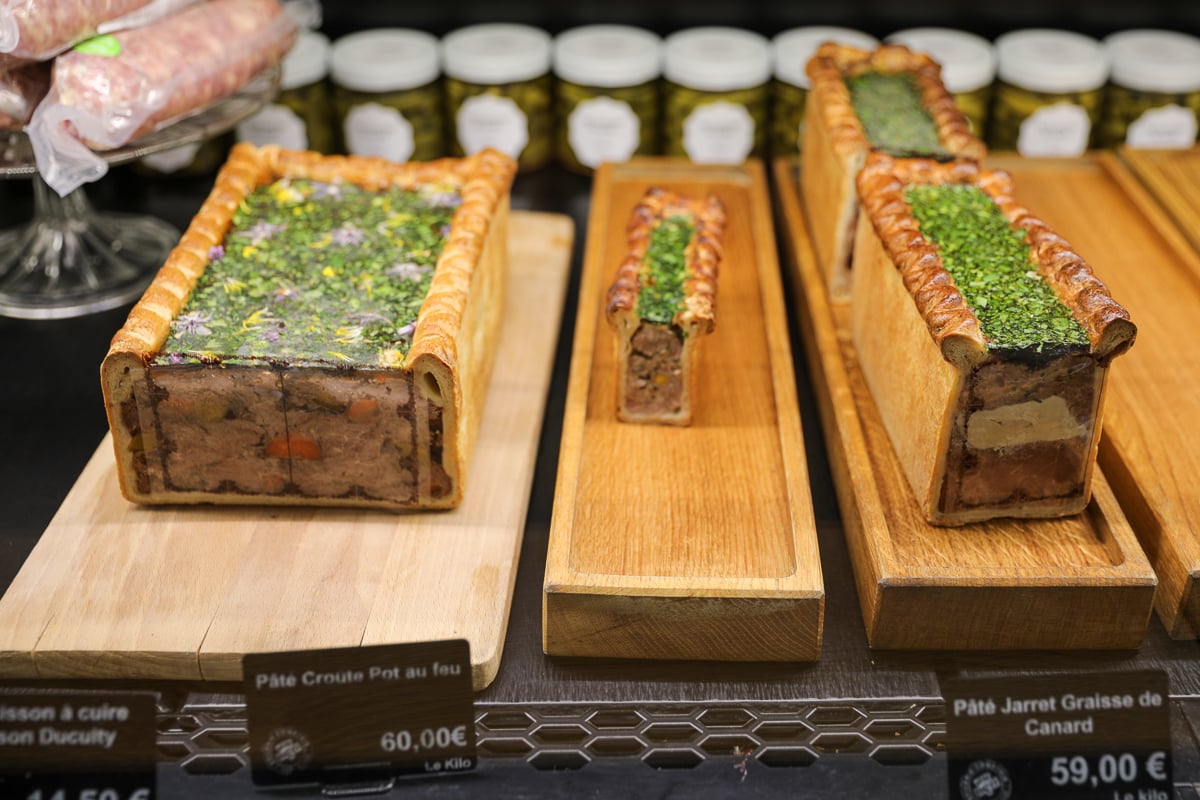
To my initial disappointment, Les Halles is not your typical lively French market… It’s more of an upscale gourmet food hall. But I still enjoyed browsing the artisanal products and discovering more of Lyon’s culinary specialties.
There are plenty of places to grab a snack or pull up a stool for freshly shucked oysters and a glass of wine. Très français!
MADDY’S TIP: Don’t be fooled by the 7:30 AM to 7:30 PM opening hours listed on Google Maps. Those are for the market as a whole, but many merchants close much earlier. The first time I went was around 4 PM when many stalls were closing or already closed. Visit Tuesday through Saturday, ideally between 11 AM and 1 PM, when the market stalls and eateries are in full swing. Many merchants close on Mondays, and Sunday hours are shorter.
GETTING THERE: Les Halles is in the Part-Dieu district, just a five-minute walk from Lyon Part-Dieu train station. You can easily get there by metro or tram. Use Google Maps to plan your route!
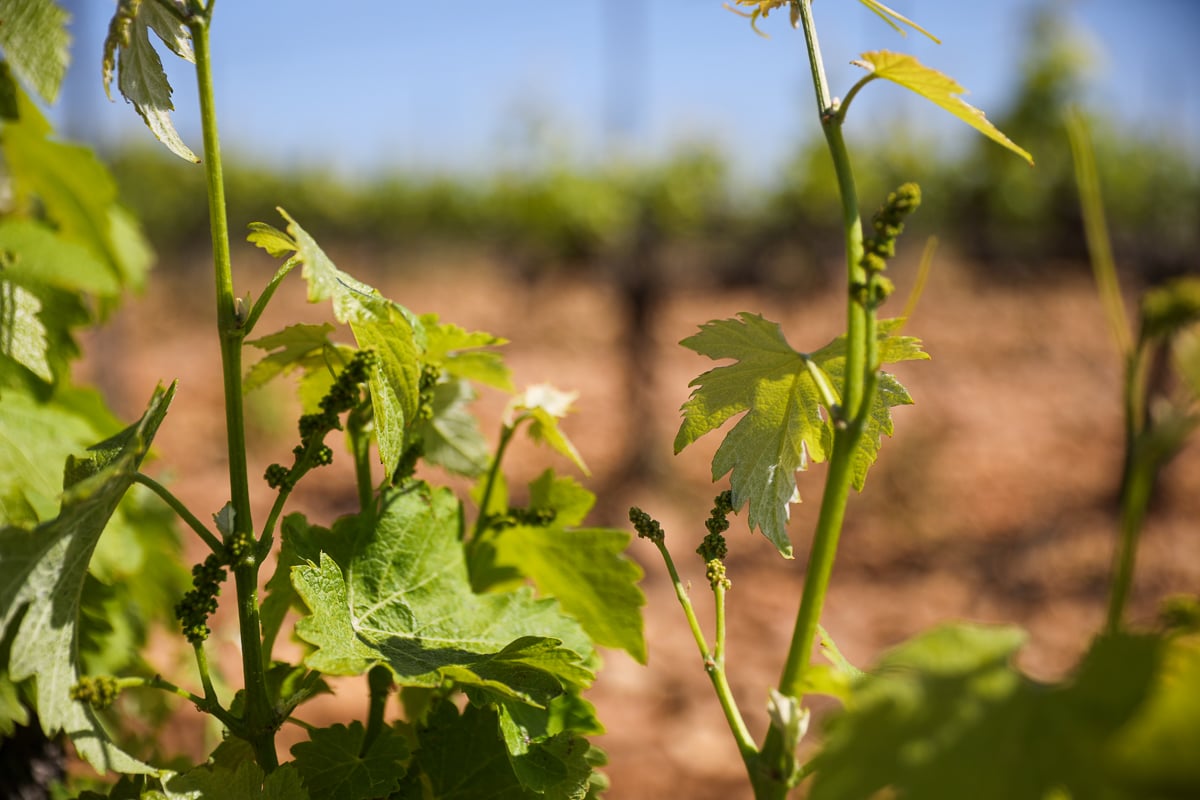
4. Take a Wine Tour of the Northern Rhône Valley
Just south of Lyon, the steep, terraced vineyards of the Northern Rhône Valley produce some of France’s most celebrated wines – and this Northern Rhône Valley Wine Tour from Lyon is the best way to experience it. Think bold, elegant, peppery Syrah reds from Côte-Rôtie and aromatic Viognier whites from Condrieu.
Over about four hours, you’ll travel through the beautiful Rhône Valley countryside, stopping in Condrieu, Chavanay, and Ampuis while learning what makes the region’s wines so distinctive. And of course, you’ll also visit two wineries, meet local wine producers, and taste roughly 10 wines, accompanied by cheese and charcuterie!
This is a small-group tour, and transportation is included. It’s just a half-day experience, so you can easily fit it into your Lyon itinerary.
Book your Northern Rhône Valley Wine Tour! 🍷
MADDY’S NOTE: Planning a wine-focused trip around France? Don’t miss nearby wine destinations like Beaune (to take wine tours in Burgundy) and Avignon (to go wine tasting in Châteauneuf-du-Pape). You can reach both easily by direct train from Lyon!
Best Historic Things to Do in Lyon
5. Take a Guided Walking Tour of Lyon
Did you know that Lyon was once the capital of Roman Gaul? With more than 2,000 years of history, there’s a lot to uncover…
I booked this three-hour Lyon Highlights and Secrets Walking Tour and it was probably the best thing I did in Lyon. Our amazing guide Toni shared so many fascinating stories, took us to most of the must-sees, and made our time in Lyon so much richer.
Starting at Place des Terreaux, home to the magnificent Bartholdi Fountain and Lyon’s City Hall, we explored La Presqu’île (the city center) before crossing the Saône into Vieux Lyon (Old Town).
Along the way, Toni told us all about Lyon’s history, from its Roman origins and Renaissance wealth to its silk-weaving industry and significant role in the French Resistance during WWII.
We also rode the funicular up Fourvière Hill to admire the magnificent Basilica of Notre-Dame de Fourvière and panoramic city views.
This is a small-group tour, and funicular tickets are included. Book this tour early on in your stay – you’ll want all the background info you can get!
6. Explore Vieux Lyon (Old Town)
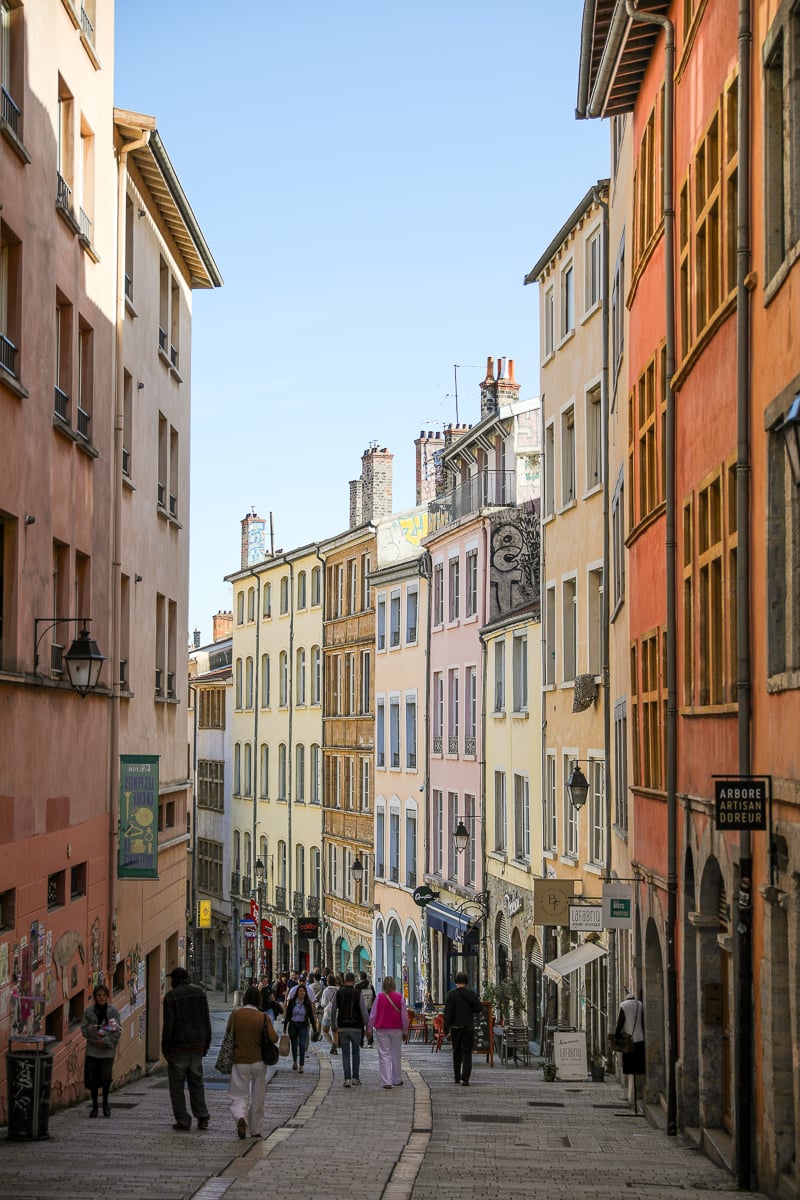
With its narrow cobblestone streets, colorful Renaissance buildings, and hidden courtyards, Vieux Lyon (Old Town) is the prettiest part of Lyon to explore on foot.
Mostly built in the 15th and 16th centuries, it’s one of Europe’s largest Renaissance neighborhoods – thanks in part to the Italian merchants and bankers who settled here (particularly those from Florence).
Old Town stretches along the Saône River and is divided into three historic quarters: Saint-Jean, Saint-Paul, and Saint-Georges. You’ll need about two hours to explore it all.
Here’s what not to miss in Old Town:
- Rue Saint-Jean: Old Town’s bustling main pedestrian street, lined with Renaissance buildings, restaurants, boutiques, and souvenir shops. It’s very touristy though, so wander the side streets too.
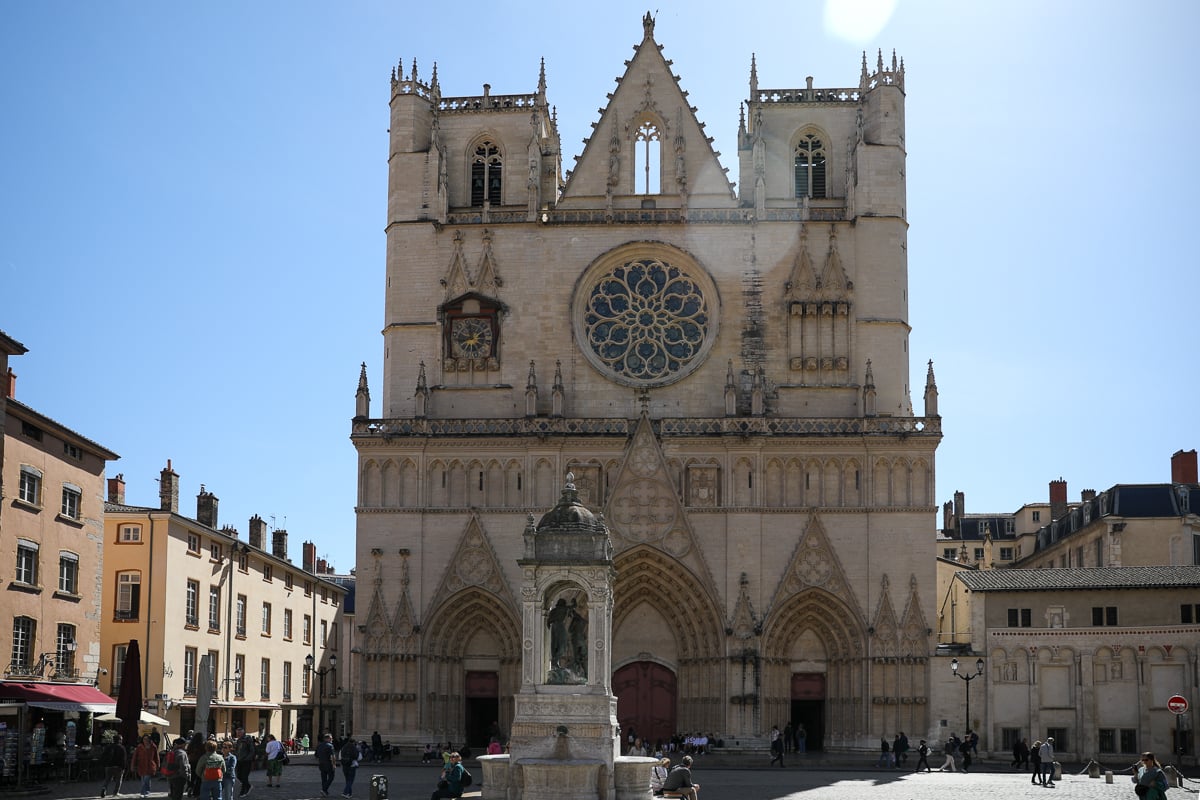
- Cathédrale Saint-Jean-Baptiste: This magnificent Romanesque-Gothic cathedral houses an incredible 14th-century astronomical clock. Go inside to see it!
- Rue du Bœuf: One of Lyon’s prettiest streets, lined with Renaissance buildings and some of the city’s best restaurants. You’ll find bouchons, creative bistros, and even Michelin-starred restaurants like Les Loges and Au 14 Février. Avoid the Rue Saint-Jean tourist traps and beeline it here instead!
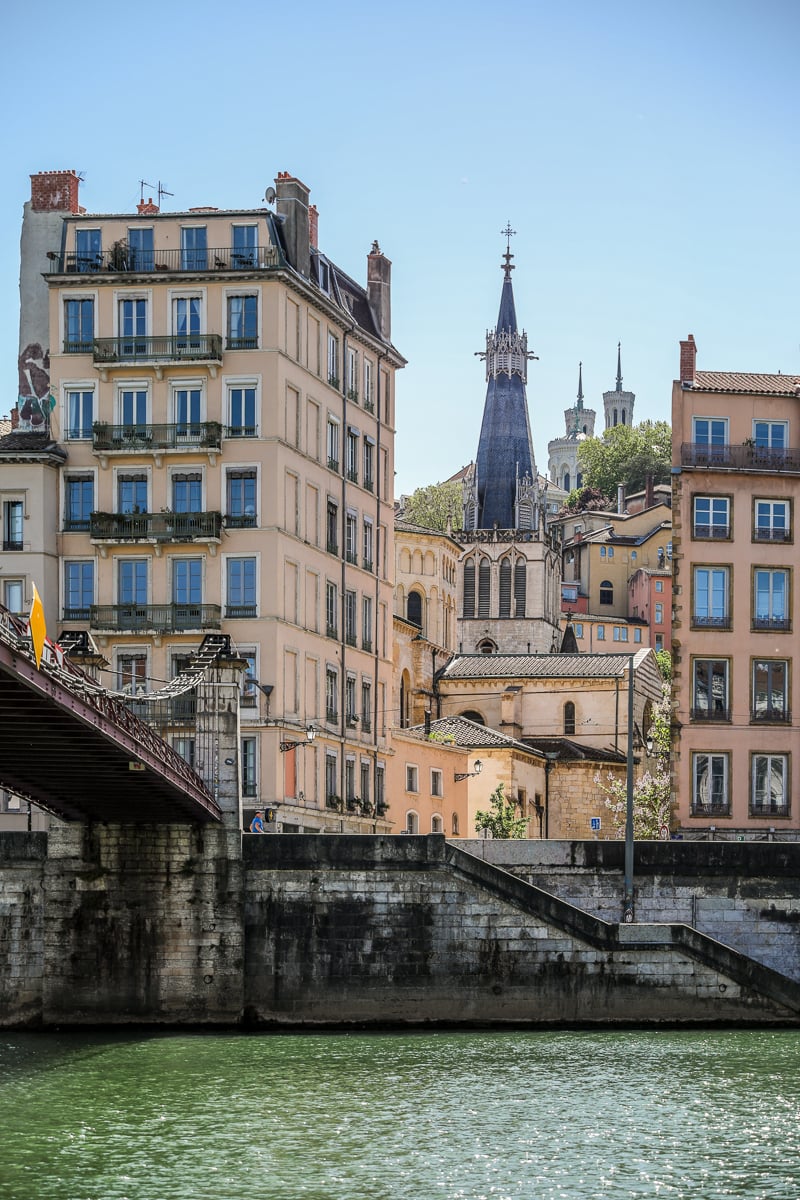
- Église Saint-Georges: Overlooking the Saône, this striking 19th-century neo-Gothic church was designed by Pierre Bossan, the architect behind Fourvière Basilica. Its riverside setting is especially picturesque.
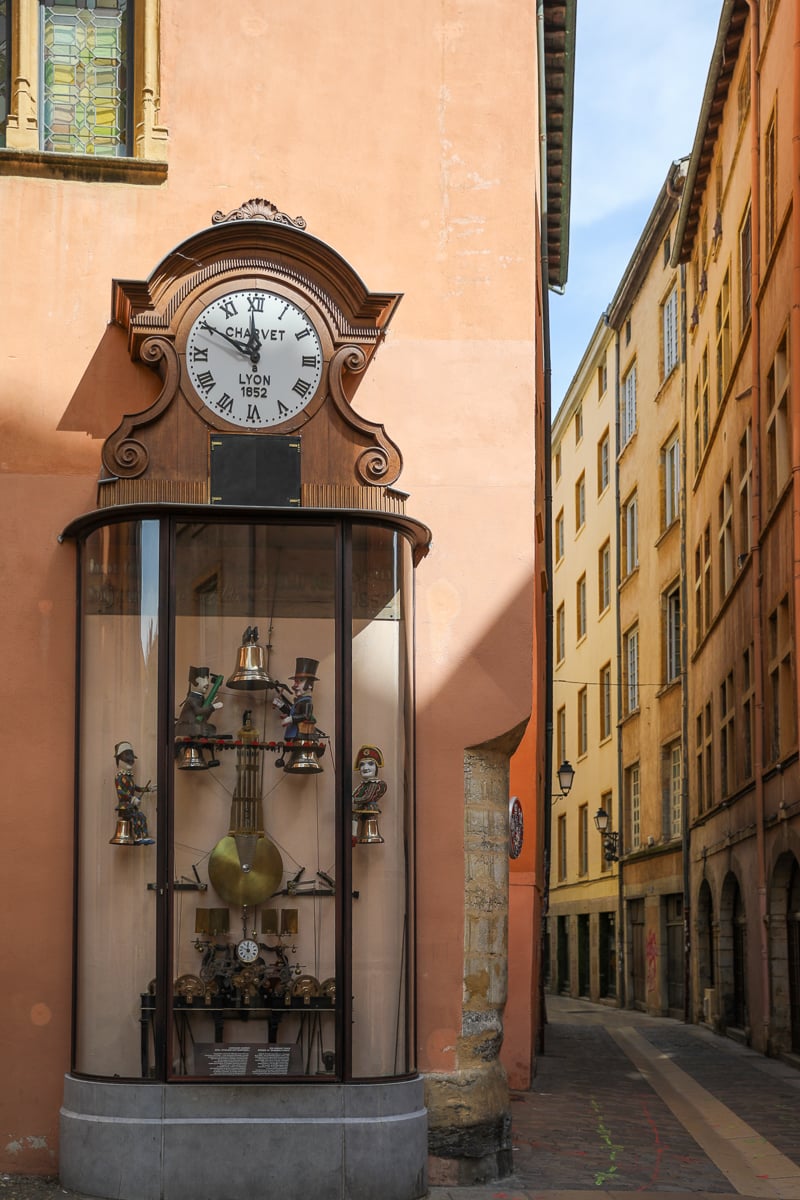
- Horloge aux Guignols: This quirky 19th-century mechanical clock outside Musée Gadagne is worth a quick look as you pass by. Every 15 minutes, traditional puppets ring the bells in a little show.
MADDY’S TIP: Don’t miss Café Gadagne. Hidden away on the top floor of Musée Gadagne, this little café features a beautiful rooftop terrace and garden. You don’t need a museum ticket to visit!
7. Discover Lyon’s Secret Traboules
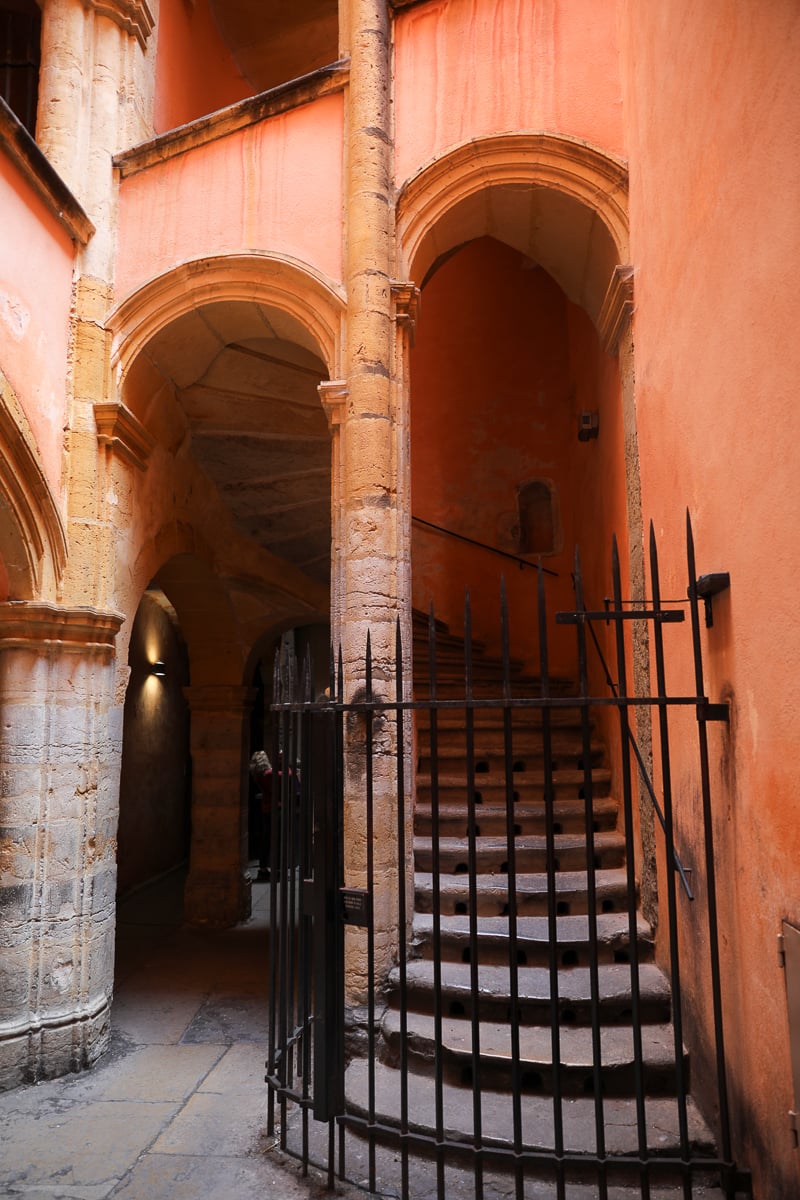
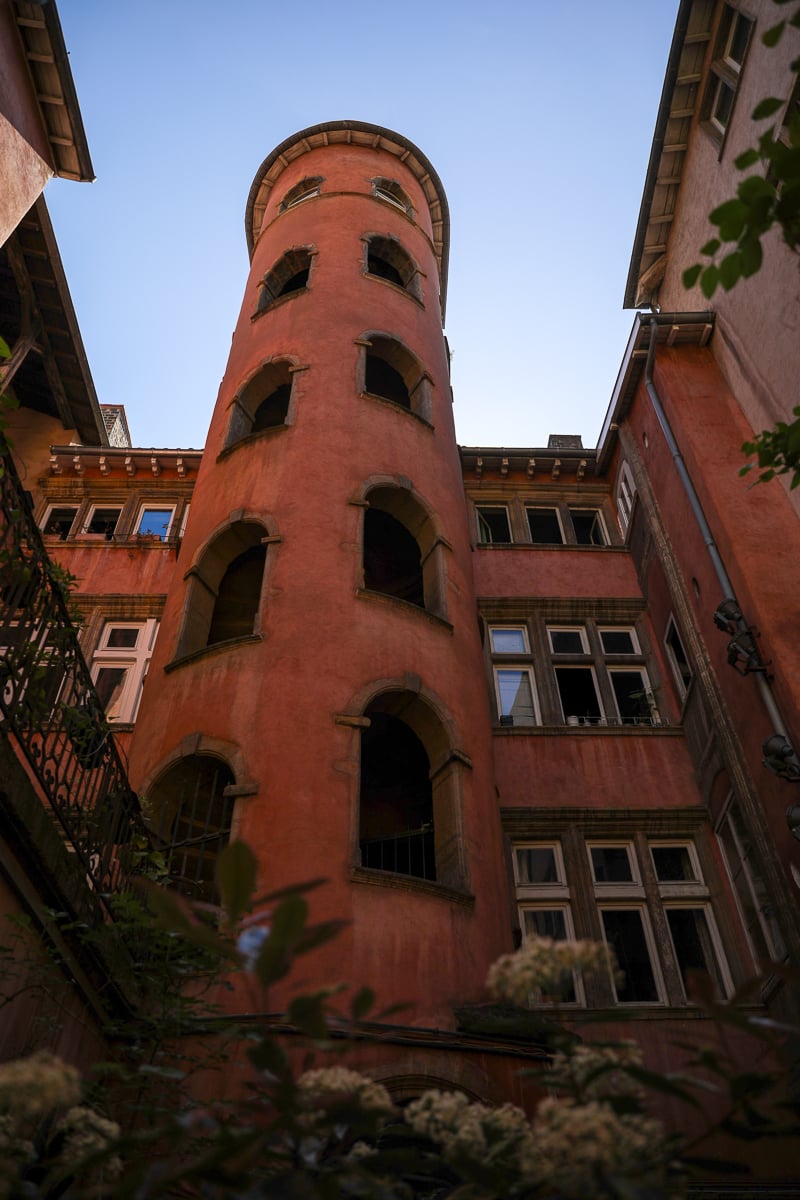
One of the coolest things about Lyon is its traboules. They’re secret passageways hidden behind ordinary doors, leading to beautiful Renaissance courtyards, spiral staircases, and sometimes entirely different streets!
I discovered them during this Lyon Highlights and Secrets Walking Tour – but without our guide, I wouldn’t have even known they existed!
Originally used as shortcuts through town and to access the Saône River, these centuries-old passageways took on new uses over time. In the 19th century, they helped Lyon’s silk workers transport textiles without getting them wet. During WWII, they enabled members of the French Resistance to move discreetly through the city, right under the Nazis’ noses.
Lyon has around 500 traboules, mostly in Vieux Lyon and Croix-Rousse, and about 50 of them are publicly accessible.
If you’re exploring on your own, start with the three most famous traboules: La Longue Traboule, 27 Rue Saint-Jean, and Cour des Voraces.
MADDY’S NOTE: All of the publicly accessible traboules are free to explore, but many pass through residential buildings, so remember to keep quiet and respect residents’ privacy.
8. Visit the Basilica of Notre-Dame de Fourvière
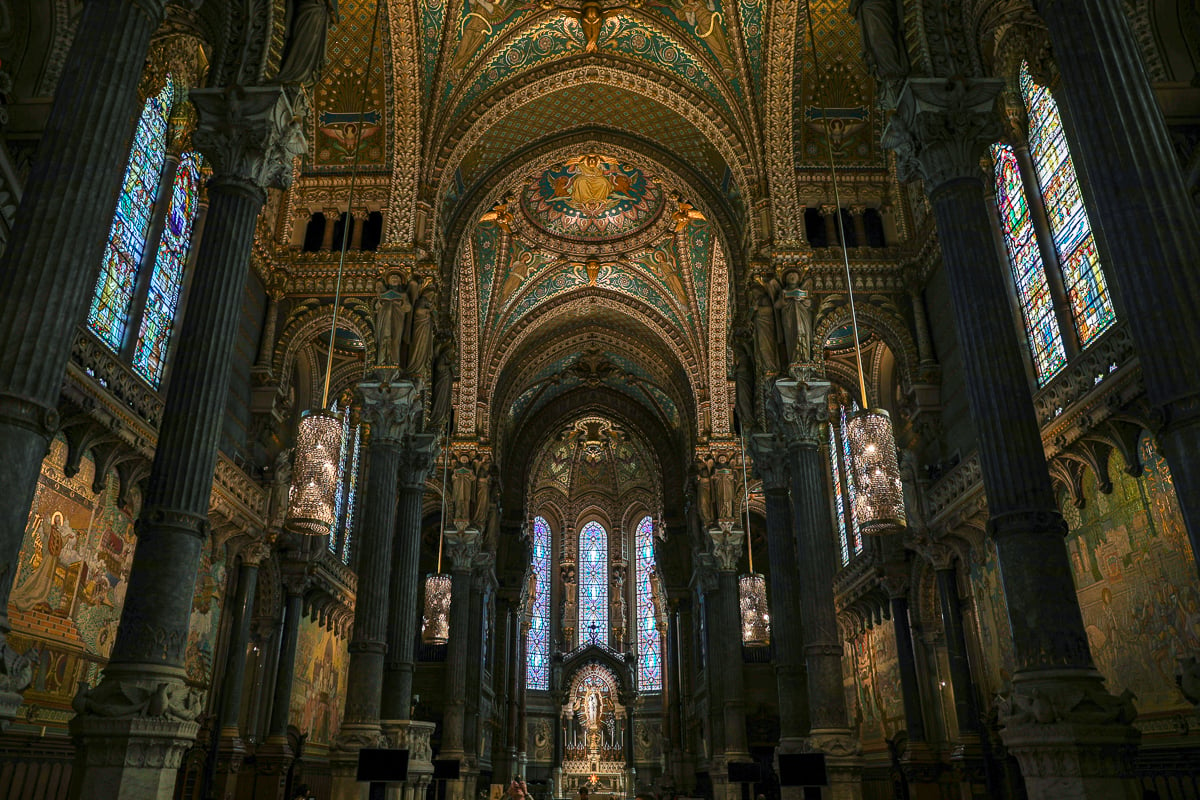
Perched high above Lyon on Fourvière Hill, the Basilica of Notre-Dame de Fourvière is one of the city’s most iconic landmarks. And, to put it lightly, it’s incredible. An absolute must-visit.
This magnificent basilica combines Romanesque, Gothic, and Byzantine architectural influences, and interestingly, it was funded by donations from Lyon’s residents, so neither the Catholic Church nor the French government own it.
The best part is the inside – it completely blew me away. The incredibly elaborate golden mosaics throughout, the colorful stained-glass windows, marble columns, and vaulted ceilings are second to none. Oh, and you shouldn’t miss the beautiful lower crypt, either.
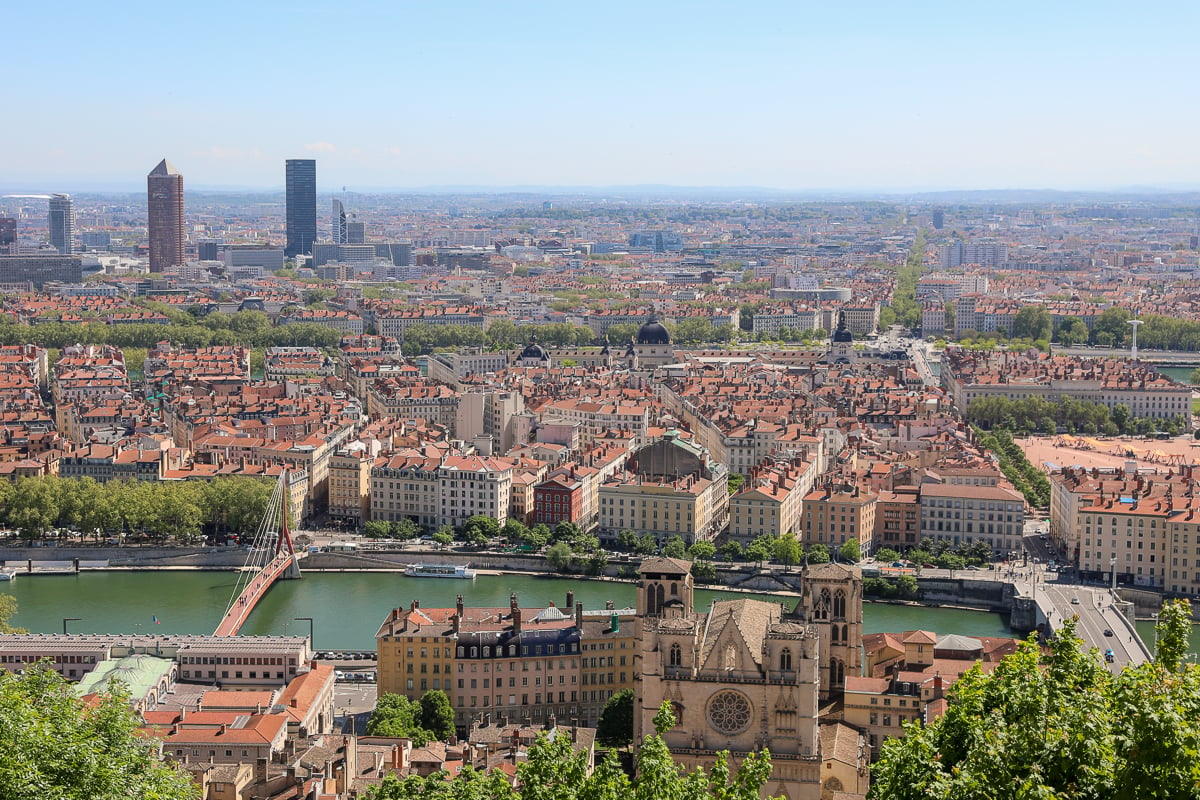
Outside, the basilica’s esplanade offers some of the best panoramic views of Lyon, with the city’s rooftops, rivers, and landmarks stretching out below. On super clear days, you can even see the Alps and Mont Blanc in the distance.
MADDY’S TIP: Admission to the basilica and crypt is free! The best way to get up there is on the F2 funicular from Vieux Lyon. You can just tap to pay with your phone or credit card. After, I recommend walking downhill through the Jardins du Rosaire back toward Old Town.
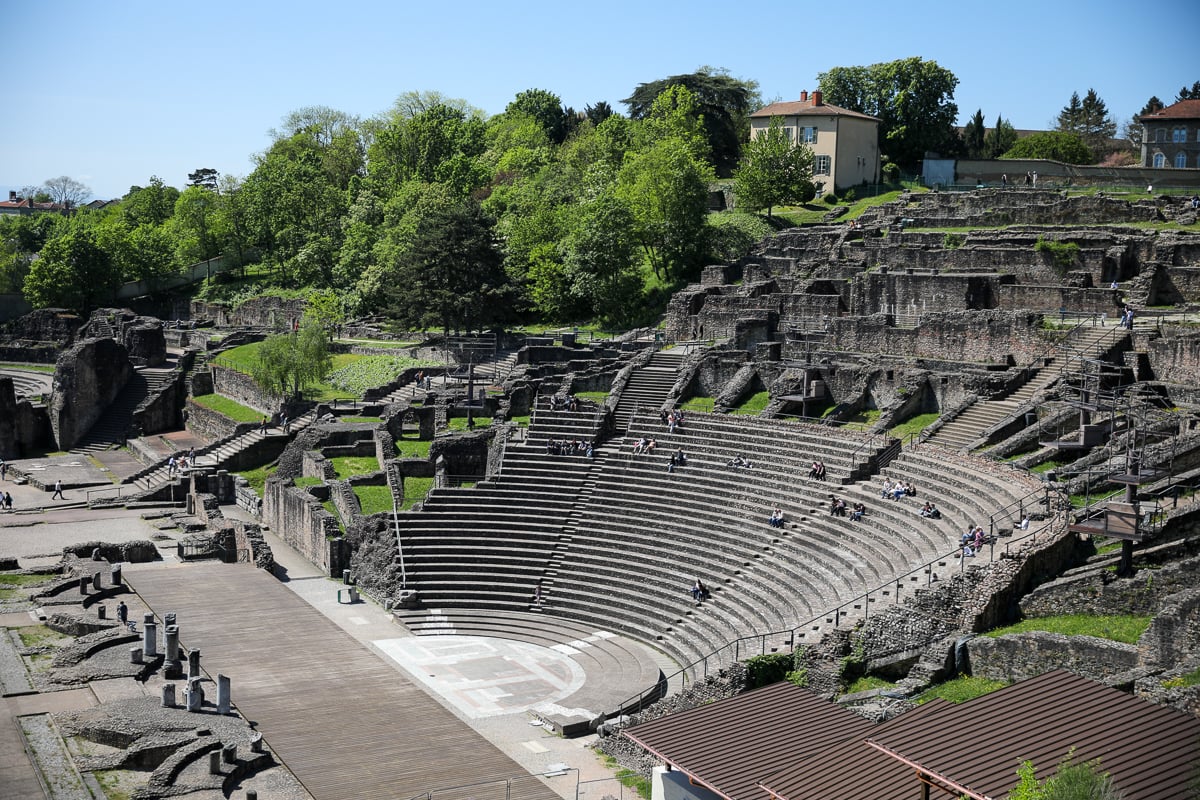
9. Visit Lyon’s Ancient Roman Theaters
Lyon was founded by the ancient Romans in 43 BC, when it was called Lugdunum. Just a short walk from the basilica, two ancient Roman theaters still stand on Fourvière Hill.
Lyon’s Grand Théâtre (Ancient Theatre of Fourvière) dates back to around 15 BC. It once accommodated roughly 10,000 spectators in its tiered stone seating, and today, it plays host to Lyon’s annual Les Nuits de Fourvière performing arts festival… Arctic Monkeys, Sting, Jack White, Kool & the Gang, Patti Smith, and so many other huge acts have played here – why not try to grab tickets if you’re in town in June or July?
Anyway, right next door is the smaller theater, Odéon, which seated around 3,000 people for musical performances, poetry, and public readings.
I visited during my Lyon Highlights and Secrets Walking Tour, but you can easily visit independently. The ruins are free to walk around, but you’ll need a ticket for the Lugdunum Museum, which is filled with Roman mosaics, sculptures, and other archaeological finds. Note: the museum is free on the first Sunday of each month.
Best Outdoor Things to Do in Lyon
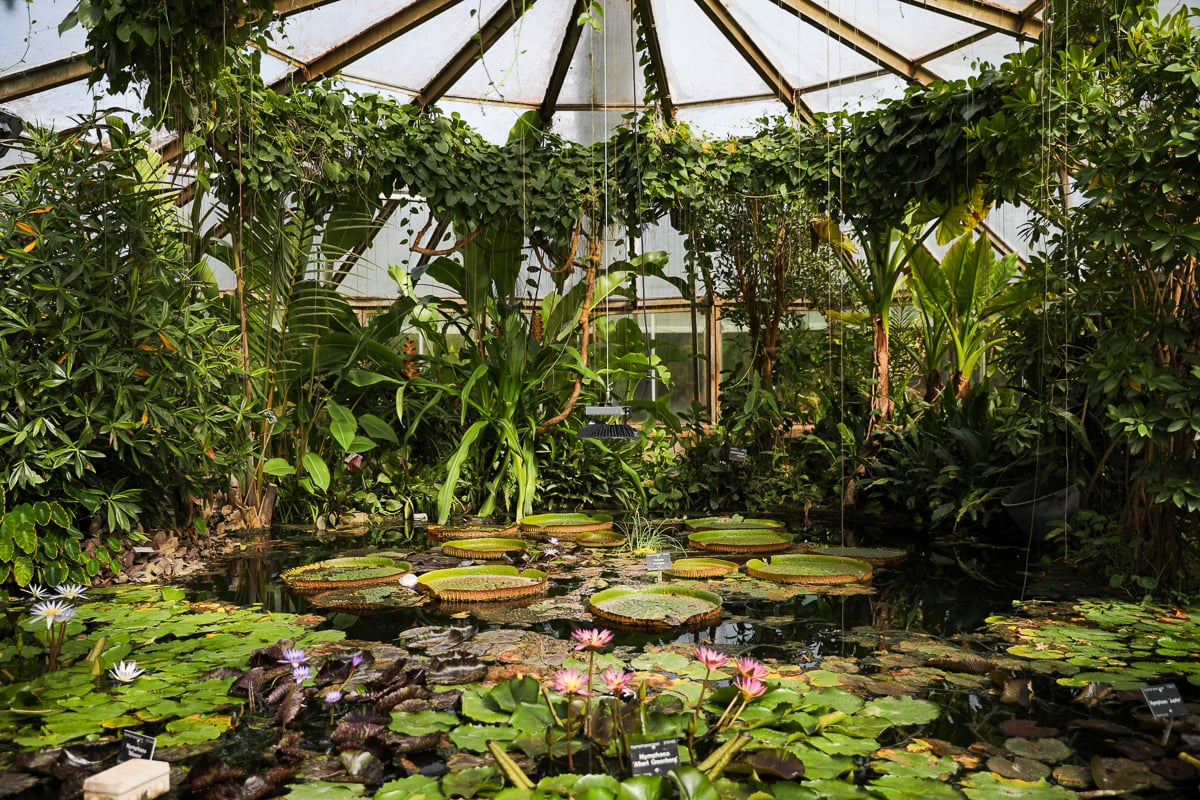
10. Explore Parc de la Tête d’Or
The enormous Parc de la Tête d’Or gets my vote for the best public park in the world.
Opened in 1857, the park is famous for its beautiful lake, enormous lawns, tree-lined paths, and many spectacular gardens. You can rent a boat on the lake or wander around to experience all the park has to offer…
For starters, there’s France’s largest botanical garden, covering eight hectares, with tropical greenhouses and thousands of plant species.
There are also three spectacular rose gardens filled with hundreds of varieties. My husband and I visited in late April, when everything was starting to bloom. Stunning!
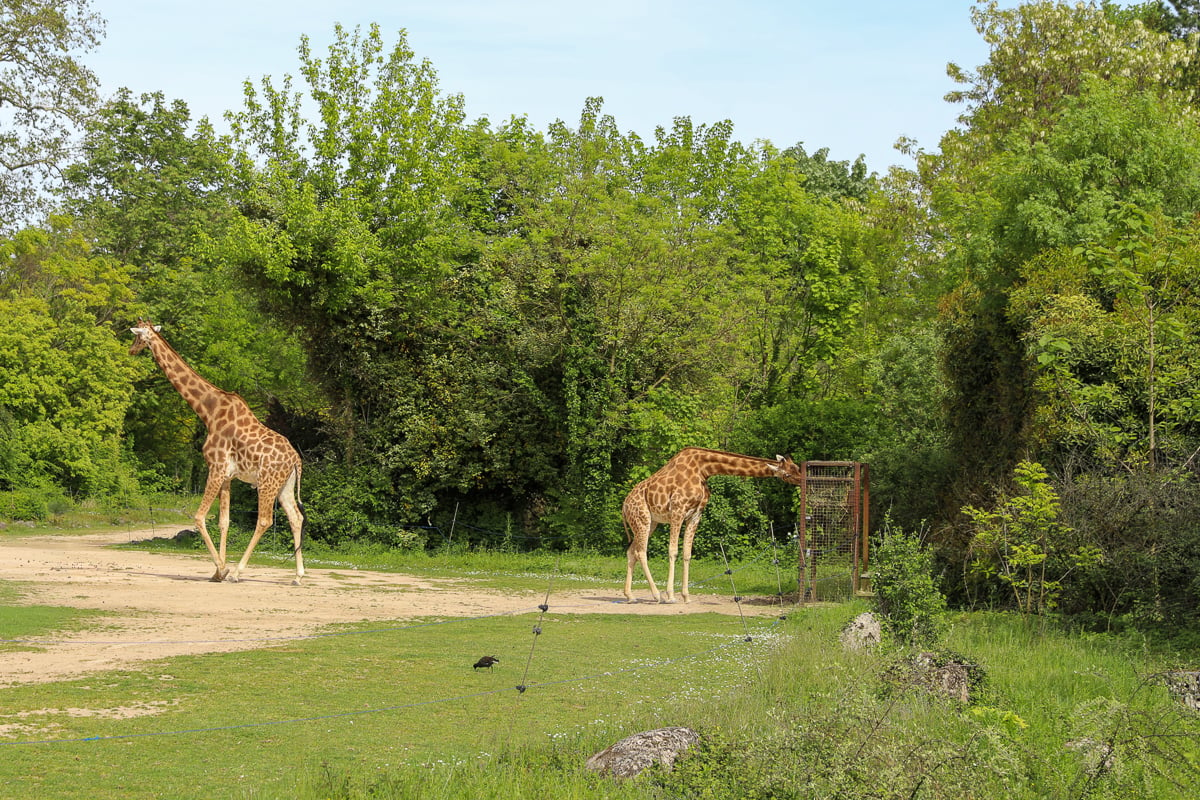
There’s even the Zoo de Lyon, which houses roughly 60 species of animals. (I’m not a zoo person, but it’s there and totally free…)
In the open-air African Plain section of the park, we saw animals like giraffes, zebras, and flamingos. And in the Forests of Asia, we loved watching the gibbons and tapirs! There are also reptile enclosures, South American primate habitats, and more…
MADDY’S TIP: The park and the zoo are completely free to visit, but the zoo is closed on Tuesdays. Allow at least a couple of hours to explore this huge park – and wear comfy walking shoes! We spent about three hours meandering and there was still more to see…
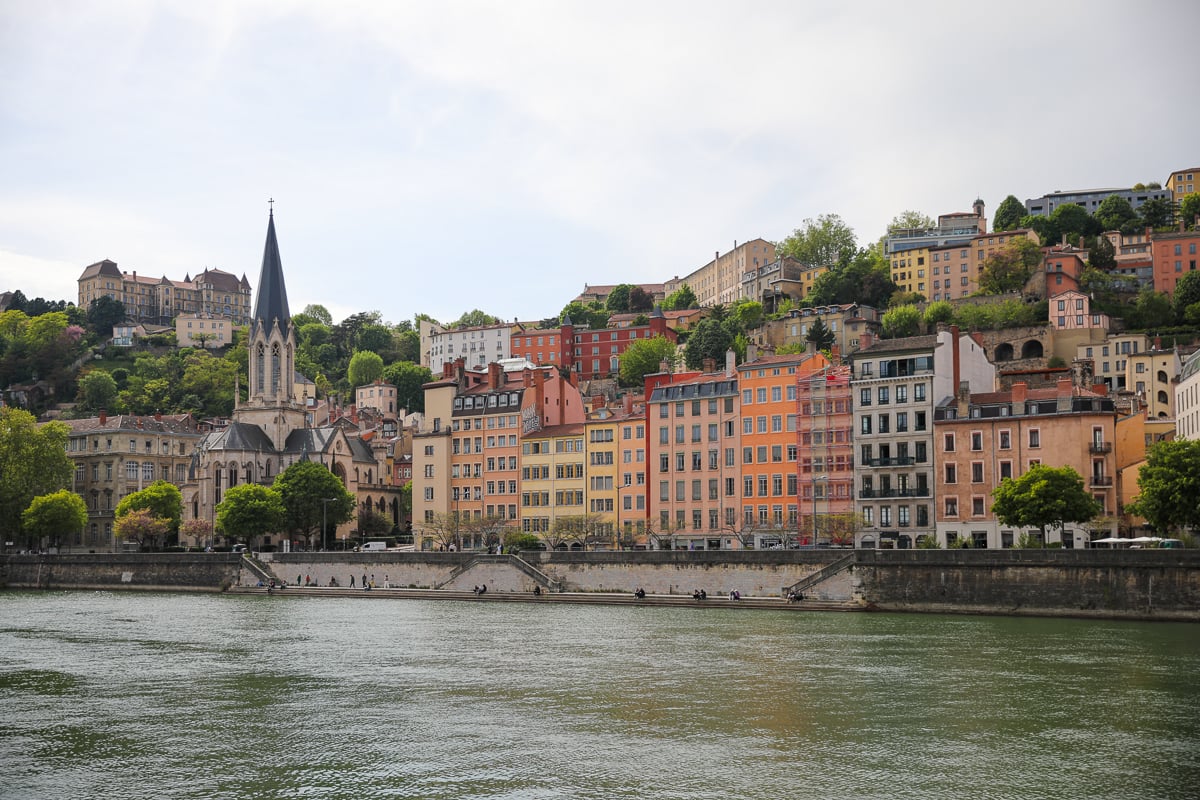
11. Stroll Along the Saône & Browse the Market
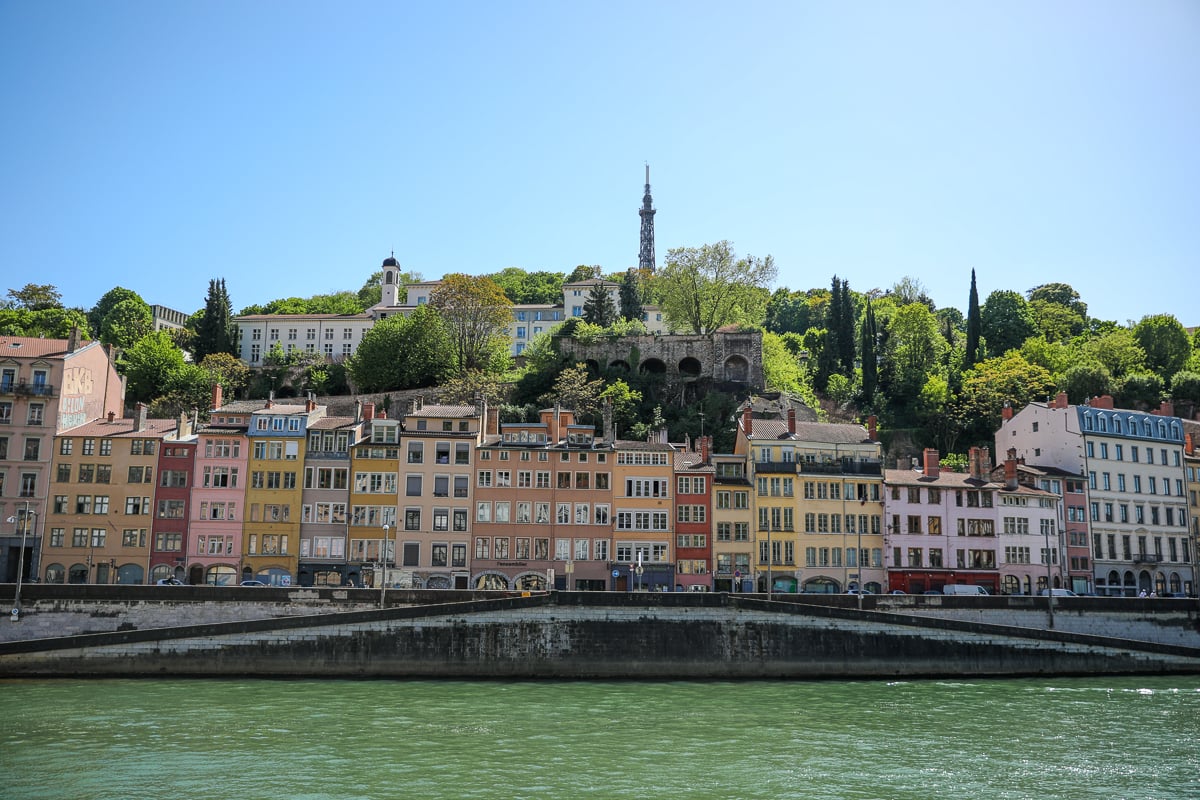
A stroll along the Saône River is one of the simplest ways to enjoy Lyon. You’ll pass colorful historic buildings and beautiful bridges, with the basilica and Tour Métallique (Lyon’s Eiffel Tower lookalike) peeking out of the trees on Fourvière Hill.
And if you love a bustling outdoor French market like I do (the total opposite of Les Halles!), then don’t miss Marché Saint-Antoine Célestins.
Every morning (except Mondays), it stretches along the riverfront, on La Presqu’île side of the Saône – the stalls overflowing with seasonal produce, regional cheeses, cured meats, freshly baked baguettes, pastries, flowers, and more… Visit on Friday, Saturday, or Sunday for the biggest selection of stalls.
MADDY’S TIP: Want more market action? Add Marché Alimentaire de la Croix-Rousse (open daily, except Mondays) and Marché de la Place Guichard (open Tuesdays and Sundays – but Sunday is biggest and best) to your Lyon itinerary too!
Best Cultural Things to Do in Lyon
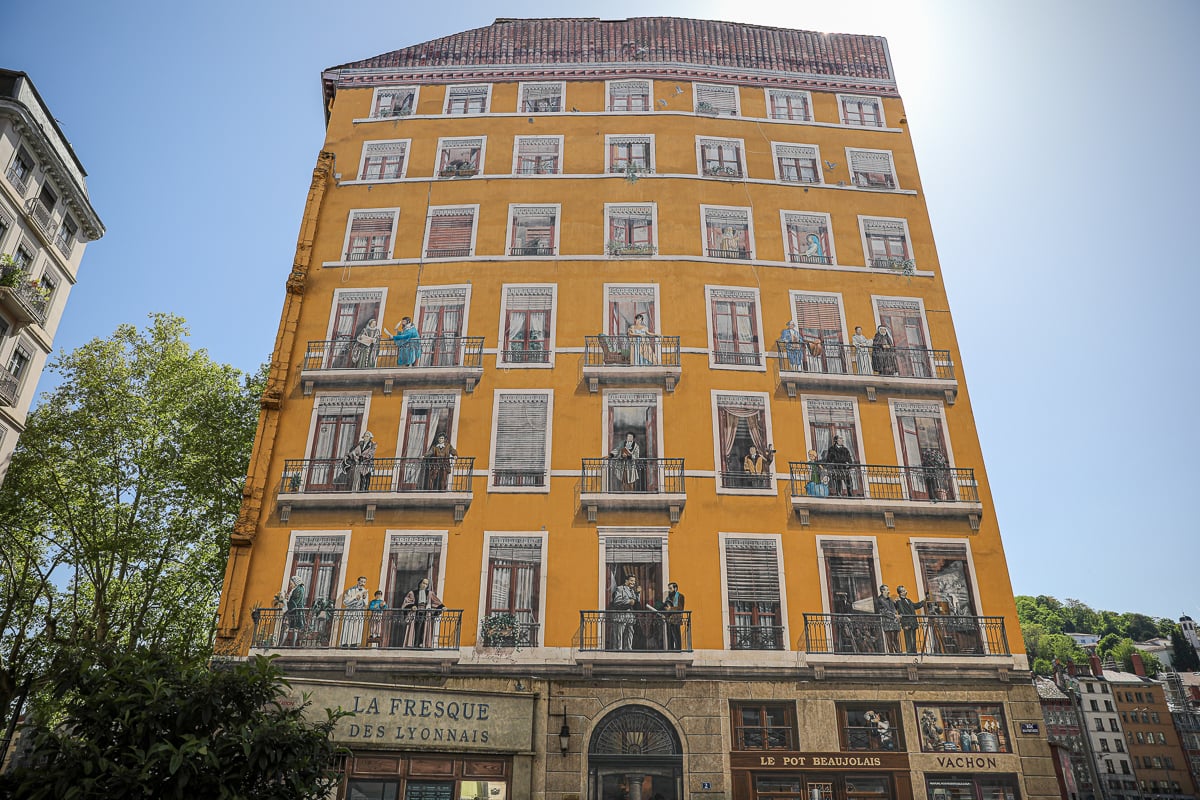
12. Admire Lyon’s Murals
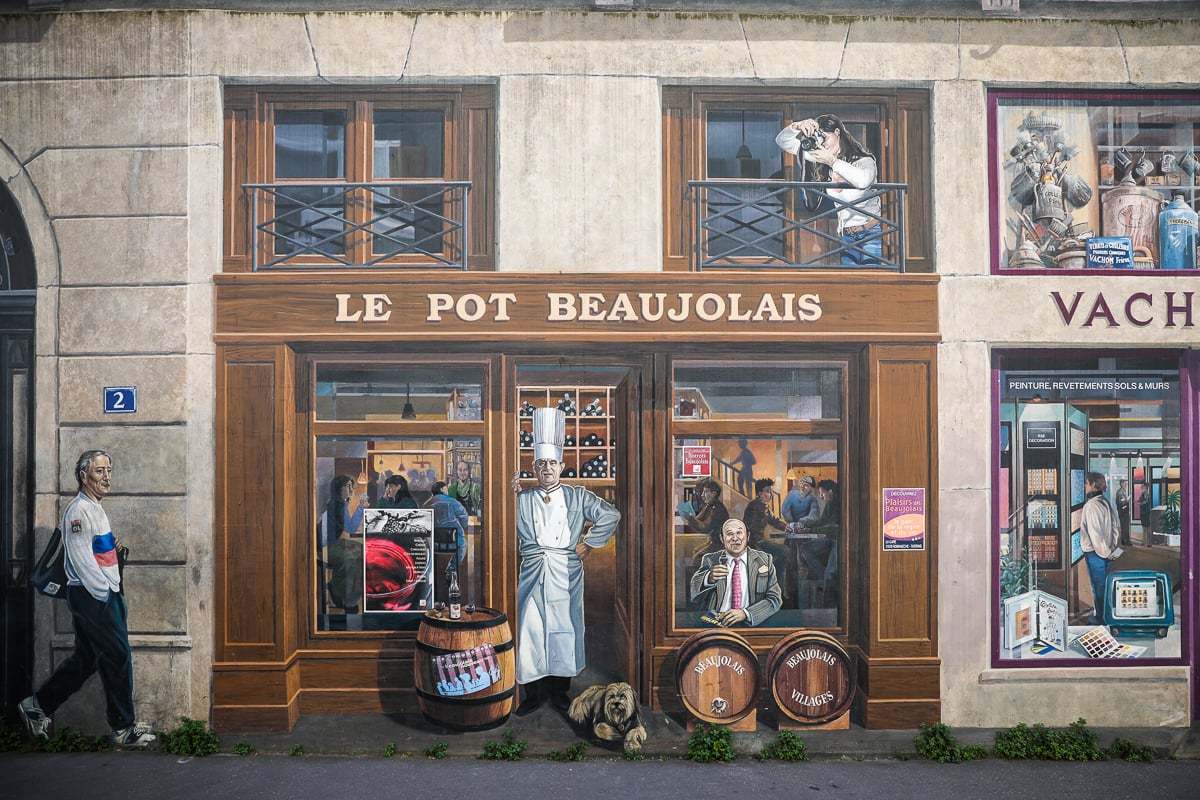
Another thing I love about Lyon is its enormous trompe-l’œil murals!
These incredibly detailed paintings cover entire building façades, creating the illusion of real windows, staircases, shops, balconies, and people. They depict Lyon’s history and culture – and some are so convincing that you just might double-take!
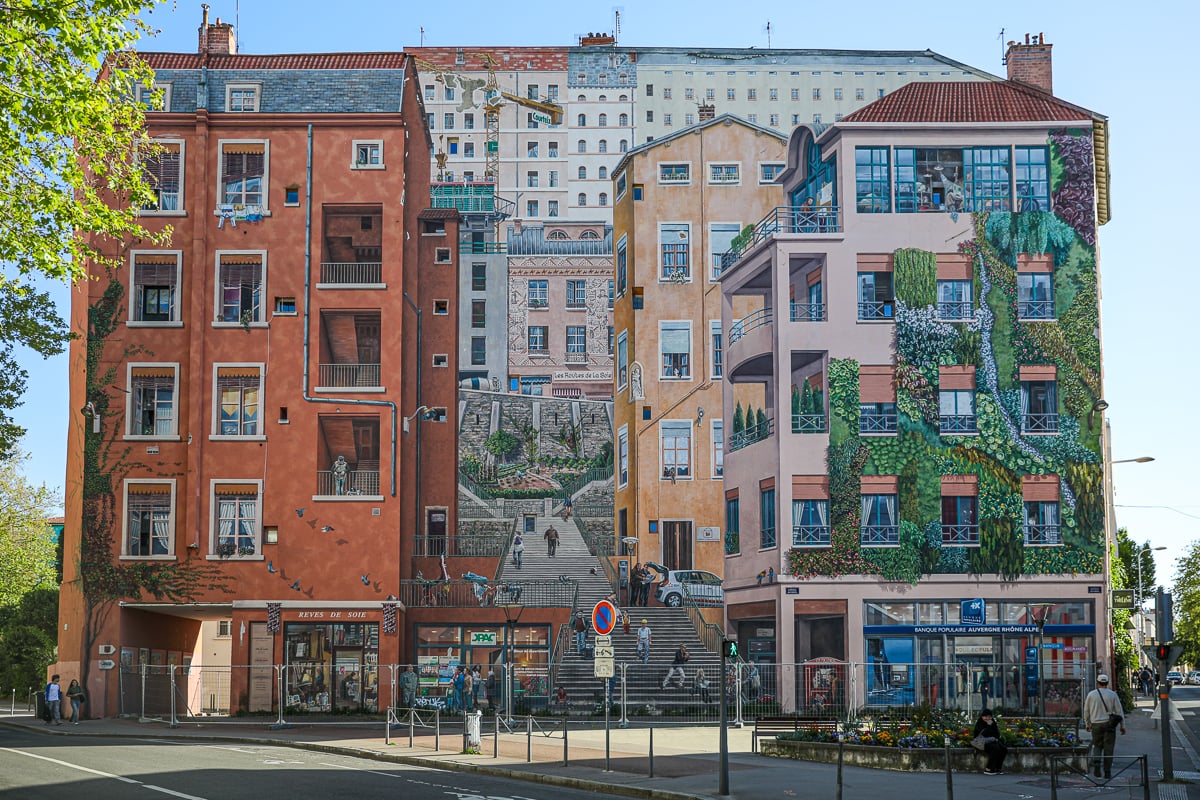
Both of these murals are free to admire – and well worth seeking out:
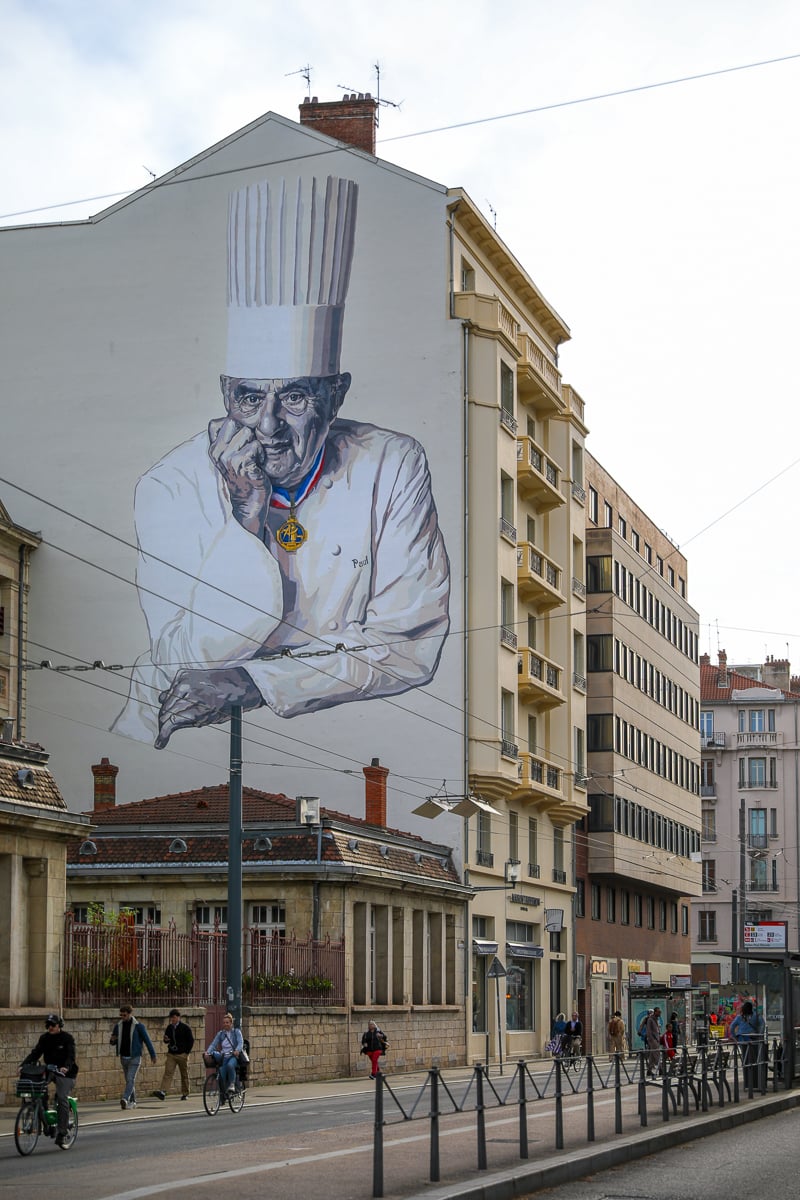
- Fresque des Lyonnais: At the corner of Quai Saint-Vincent and Rue de la Martinière, this huge mural celebrates 30 influential Lyonnais figures, including chef Paul Bocuse, the Lumière brothers, and The Little Prince author Antoine de Saint-Exupéry.
- Fresque des Canuts: Located on Boulevard des Canuts in Croix-Rousse, this mural depicts an entire neighborhood street, complete with shops, staircases, and residents going about their day. It’s been repainted over the years to reflect how the neighborhood has changed.
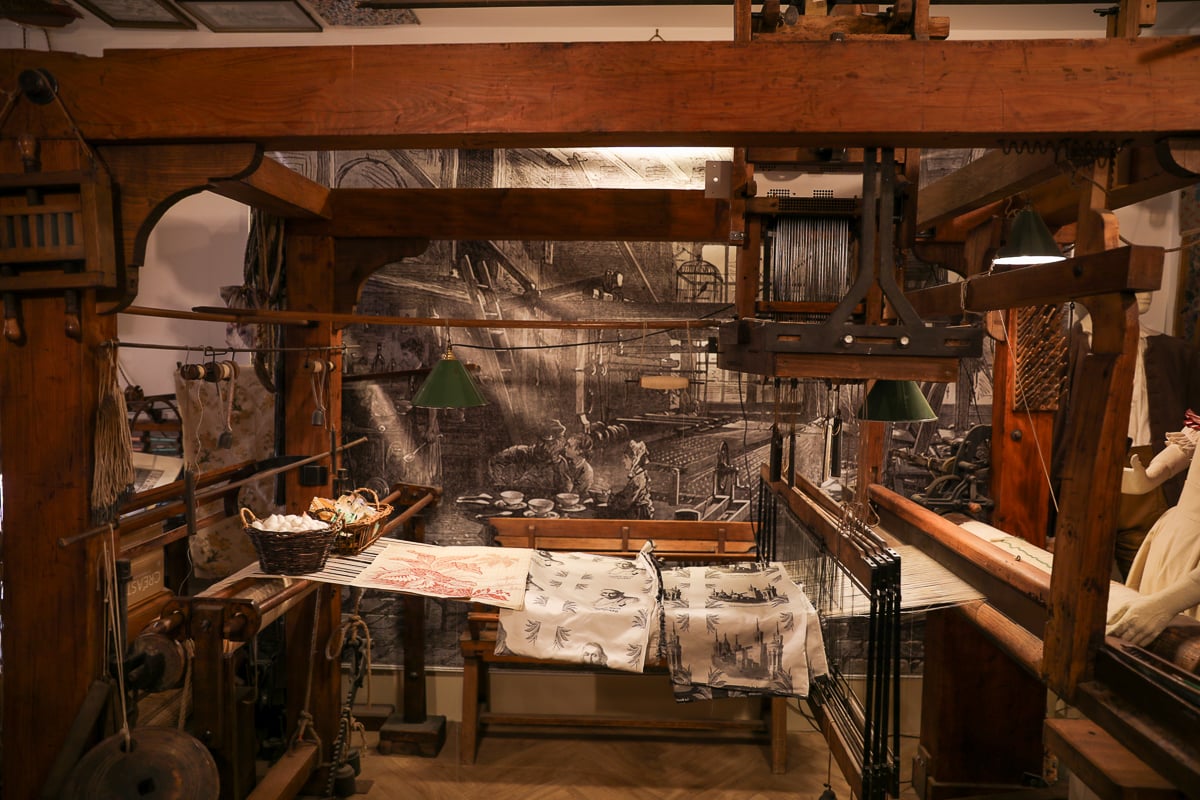
13. Discover Lyon’s Silk-Weaving History
Silk is a big part of Lyon’s story! Once known as the Silk Capital of Europe, Lyon’s silk-making heritage goes all the way back to the Renaissance.
By the 19th century, thousands of canuts (silk workers) were operating enormous looms throughout the city, producing luxurious fabrics for European nobles.
And while those days are long gone, a few workshops are keeping Lyon’s centuries-old silk-making traditions alive.
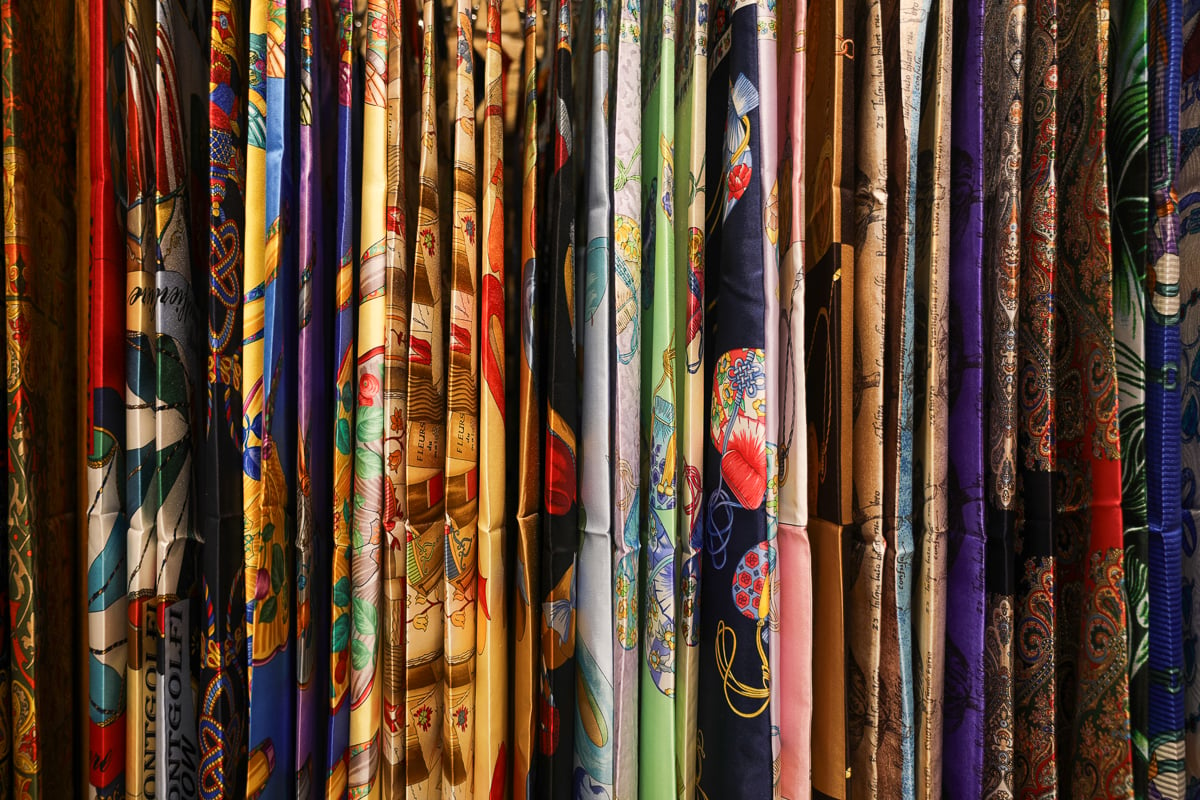
We visited a local boutique called Soierie Saint-Georges in Vieux Lyon, where it was so cool to see the historic weaving equipment, including 19th-century Jacquard looms, old photos, and even silkworm cocoons.
Sophie Guyot Soies and Brochier Soieries are two other authentic silk boutiques to shop for beautiful scarves, shawls, and ties.
And if you want to learn even more about Lyon’s silk-making history, you can visit the Maison des Canuts in Croix-Rousse. This small museum and workshop offers demonstrations on traditional Jacquard looms.
MADDY’S TIP: If you’re in the market for Lyonnais silk, always double-check that the piece was made locally – and whether its pattern was woven or printed. Not everything sold in Lyon is made there… or worth the asking price.
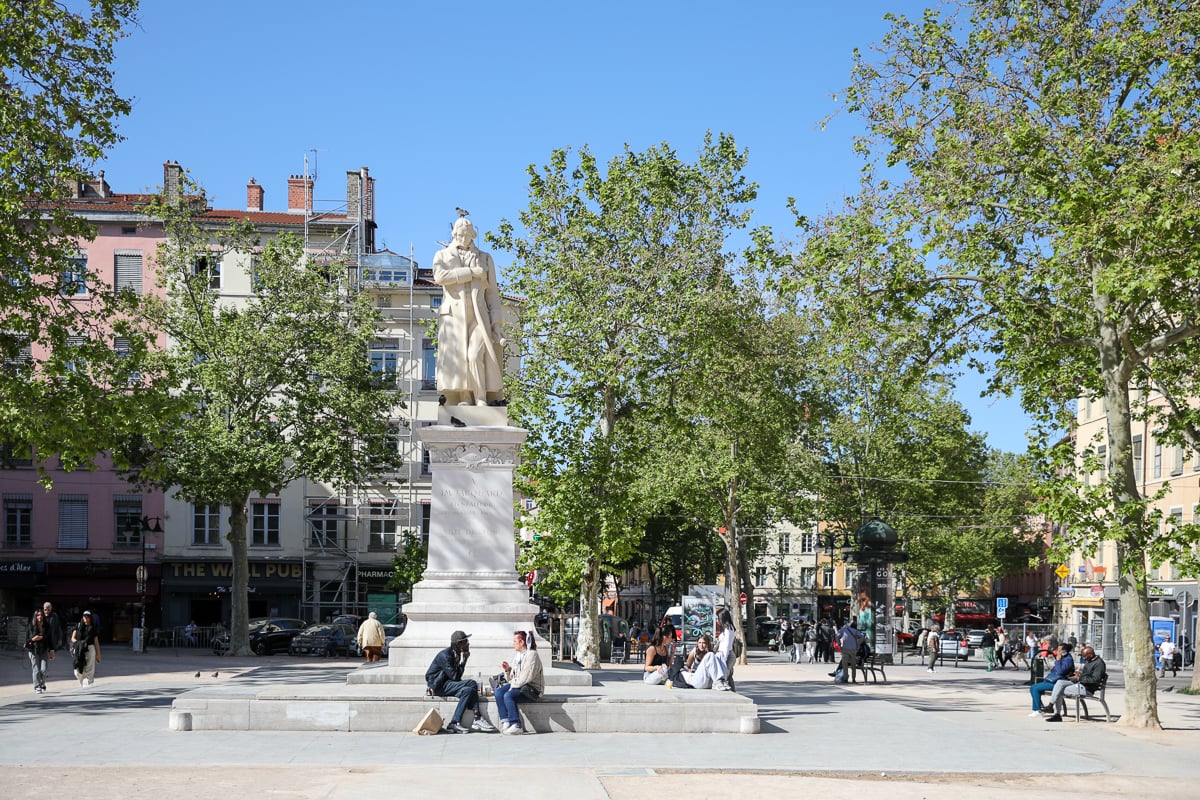
14. Explore Croix-Rousse
Once the heart of Lyon’s booming silk industry, Croix-Rousse is now the coolest neighborhood in Lyon.
Perched high on a hill overlooking the city, it’s got all the good stuff: colorful cobblestone streets, independent boutiques, specialty coffee, craft beer and wine bars, modern French restaurants, bouchons, international eateries, quaint squares where old men play pétanque, sunny viewpoints, and plenty of street art. It feels way more local than Old Town, and it’s a must-visit in my book!
As you explore, don’t miss Place de la Croix-Rousse (the main square, with cafés, shops, and a lively outdoor market nearby) and Montée de la Grande-Côte (a steep pedestrian street with independent boutiques and great views as you climb).
The walk uphill to Croix-Rousse isn’t that bad, but if you’d rather, you can hop on metro line C up to Croix-Rousse station.
MADDY’S TIP: Stop at Carousel, my favorite craft beer bar in Lyon, located on peaceful Place Marcel Bertone. They have a rotating selection of beers on tap and a lovely outdoor terrace.
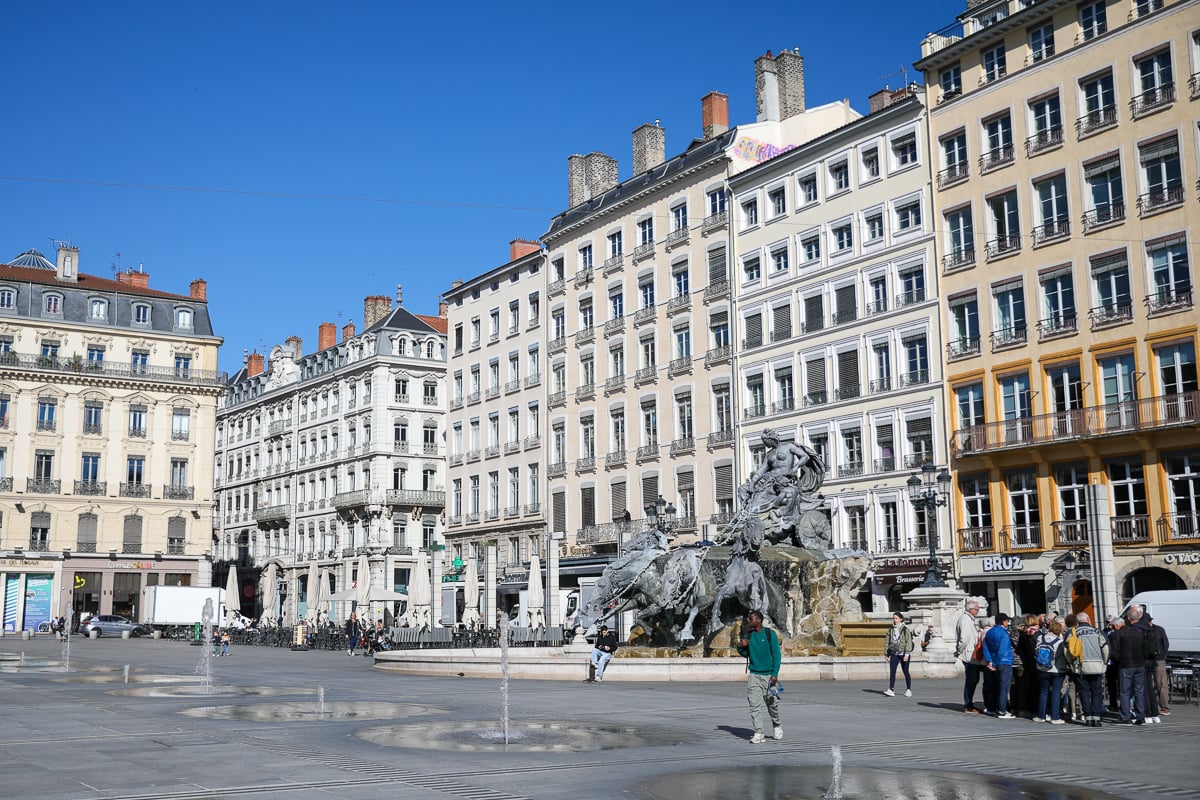
15. Wander Through La Presqu’île
Sandwiched between the Rhône and Saône, La Presqu’île (“almost an island”) is Lyon’s bustling city center, filled with grand squares, beautiful fountains, historic buildings, shops, and brasseries.
I explored a lot of La Presqu’île’s highlights during the Lyon Highlights and Secrets Walking Tour I booked. But it’s a beautiful neighborhood to walk around, shop, and grab a coffee, too (I like Celsius Roasters near Place des Terreaux).
As you wander, check out these historic sites:
- Place des Terreaux: A grand square featuring the magnificent Bartholdi Fountain, Hôtel de Ville (City Hall), and Musée des Beaux-Arts.
- Place des Jacobins: A beautiful square with an elaborate 19th-century marble fountain.
- Place Bellecour: One of Lyon’s largest squares, featuring a statue of King Louis XIV and views toward Fourvière Hill.
- Grand Hôtel-Dieu: A former hospital transformed into a beautiful complex of shops, restaurants, and courtyards.
- Rue de la République: A lively pedestrian shopping street connecting the city’s main squares.
16. Visit Lyon’s Museums
If you have extra time in Lyon – or if it’s raining – there are a few fantastic museums to check out:
- Musée des Beaux-Arts: Housed in a former abbey on Place des Terreaux, this art museum features Egyptian antiquities and European paintings, including works by Picasso and Matisse.
- Centre d’Histoire de la Résistance et de la Déportation: Discover Lyon’s role in the French Resistance during WWII, inside a former Gestapo headquarters.
- Musée Lumière: Explore the birthplace of cinema, where the Lumière brothers developed their groundbreaking cinematograph and filmed one of the world’s first movies in 1895.
- Musée des Confluences: This striking futuristic-looking museum, where the Rhône and Saône meet, explores natural history, evolution, and human societies.
More France Travel Inspiration
- Where to Eat in Paris: Best Restaurants, Cafés, Food Experiences
- Best Paris Cooking Classes (All Tried & Tested by Me!)
- 7 Best Day Trips from Paris, France + Helpful Tips
- Bayeux, France: Best Things to Do, Where to Eat, Must-Know Tips
- Beaune, France Travel Guide: Best Things to Do, Eat & Drink
- 12 Best Things to Do in Avignon, France + Must-Know Tips