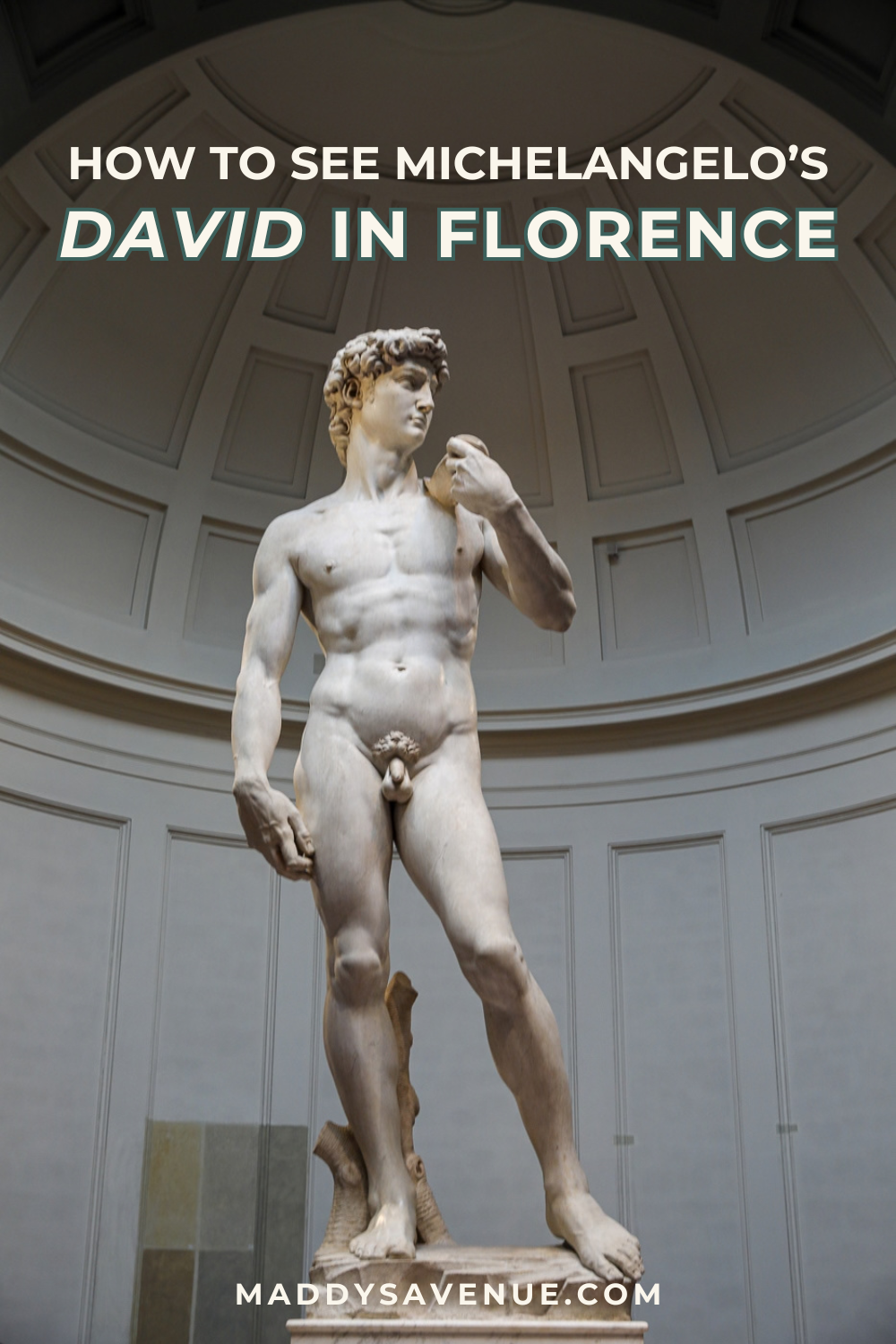

How to See Michelangelo’s David at Accademia Gallery, Florence
Disclosure: This post may contain affiliate links; more info here.
After seeing hundreds of photos of Michelangelo’s David online, I wasn’t convinced the real thing in Florence could possibly be that impressive.
But I was so wrong. He’s so much better in person!
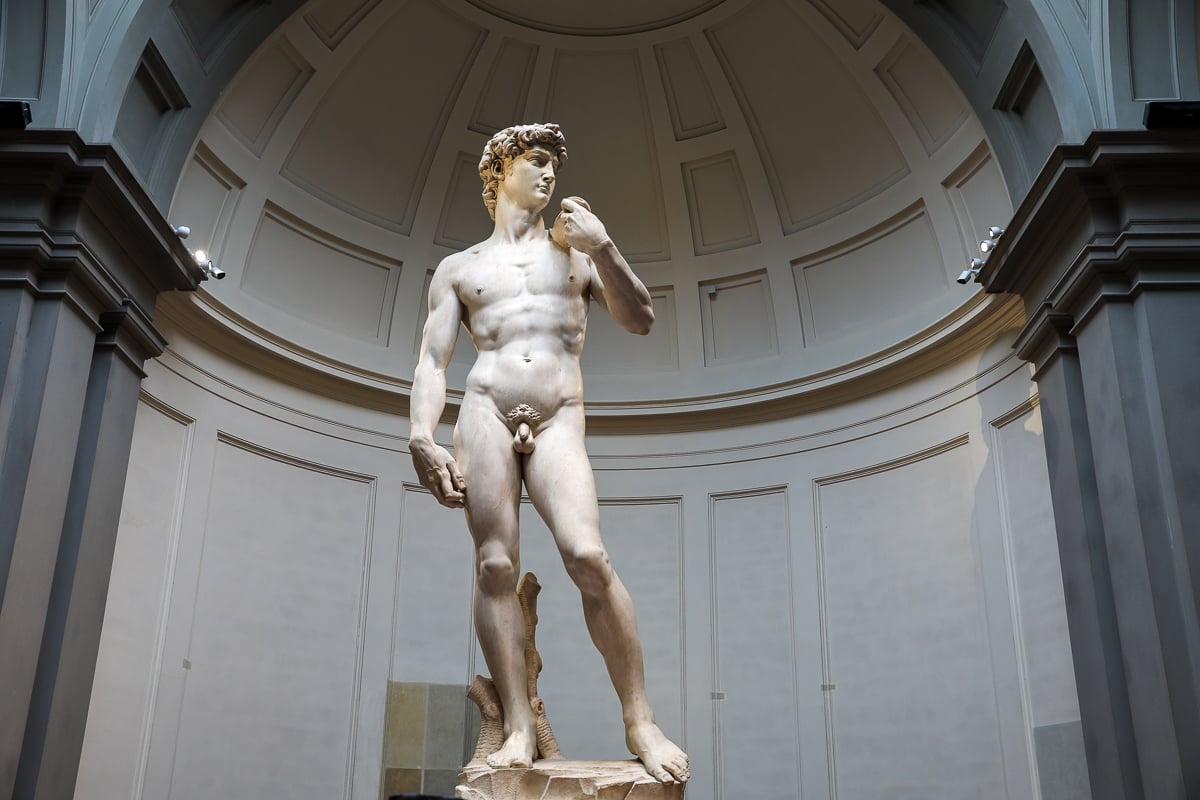
Standing 17 feet tall beneath the soaring dome of Florence’s Galleria dell’Accademia, the statue of David is a masterpiece that you have to see in person to fully understand and appreciate. (I promise, he won’t underwhelm you like a certain tiny world-famous painting in the Louvre does!)
Tickets and tours to see David usually sell out weeks in advance, so careful planning is required – especially if you’re trying to fit him into a busy Florence itinerary! That is, unless you’re happy waiting hours in line to get tickets on arrival…
I booked this David & Accademia Guided Tour with Timed-Entry Tickets, and I highly recommend you do the same! David is impressive on his own, but visiting with a guide to learn all about Michelangelo, his sculpting process, David’s anatomy, and the Medici family made the experience so much more interesting.
In this guide, I’ll cover how to see Michelangelo’s David in Florence, how to get Accademia Gallery tickets online, the best David and Accademia Gallery tours and everything else you should know before you go.
Quick Tips for Visiting David & the Accademia Gallery
Short on time? Here’s what you need to know before visiting Michelangelo’s David in Florence.
Best Accademia Gallery & David Guided Tours
Each tour below includes timed-entry (“skip-the-line”) tickets, so all you need to do is choose the type of experience you’re after:
- David & Accademia Guided Tour: This tour is solely focused on the Accademia Gallery, Michelangelo, and David, so you get all the context without committing half your day to a huge Florence sightseeing tour. This is what I booked – and my top pick for first-time visitors!
- Best of Florence Small-Group Tour: This option combines David, the Duomo (Florence’s spectacular cathedral), and the highlights of Florence’s historic center (including the Palazzo Vecchio and Ponte Vecchio) into one small-group walking tour. Ideal if you want to knock out several of Florence’s must-sees in one go!
- Accademia Gallery & Uffizi Gallery Combo Tour: Want to see Florence’s two most important art museums in one day? This tour combines the Accademia Gallery and David with a guided visit to the Uffizi Gallery, plus a walking tour of the historic center in between! Best for art lovers short on time.
Must-Know Tips for Visiting the Academia Gallery
- Location: David is on display in the Accademia Gallery, NOT the Uffizi Gallery. This trips up many first-time visitors.
- Closures: The Accademia Gallery is closed on Mondays.
- When to get tickets: Visiting without a tour? Book your timed-entry tickets from the official Galleria dell’Accademia di Firenze website well in advance! For visits between April and October, and over holiday periods, book 4 to 6 weeks in advance. For the rest of the year, book 2 to 3 weeks ahead.
- Bring your ID: Bring a valid government-issued photo ID (driver’s license or passport) that matches the name on your ticket. You may be refused entry without it.
- Getting same-day tickets on arrival: I don’t recommend this! It’s possible to buy tickets in person, but hours-long waits are common! Also, there is limited availability for in-person tickets; they often sell out during peak periods.
- When to visit: For the smallest crowds, aim for the first time slot of the morning (8:15 to 8:30 AM). Otherwise, choose what fits best into your Florence itinerary.
- How long it takes: If you visit with timed-entry tickets, you can expect to spend 1 to 1.5 hours at the Accademia Gallery.
- What not to bring: Don’t bring luggage or large backpacks. Only small bags/backpacks are allowed. There’s no cloakroom either.
- Free admission: The Accademia is free on the first Sunday of each month, but reservations aren’t available – so expect a long line. (I’d avoid this.)
- Guided tour vs. independent visit: If it’s your first visit, I recommend booking this David & Accademia Guided Tour with Timed-Entry Tickets for the richest (and most convenient!) experience.
Where is Michelangelo’s David in Florence?
Michelangelo’s original David is housed inside the Galleria dell’Accademia di Firenze, or Accademia Gallery, in the Historic Center of Florence.
So, no, he is not in the Uffizi Gallery! (Members of my Let’s Travel Italy Facebook group sometimes assume this, since the Uffizi is Florence’s biggest and most famous art museum.)
These museums are a 15-minute walk from each other – and have completely separate ticketing systems. That said, if you love Renaissance art, you should make sure to visit both!
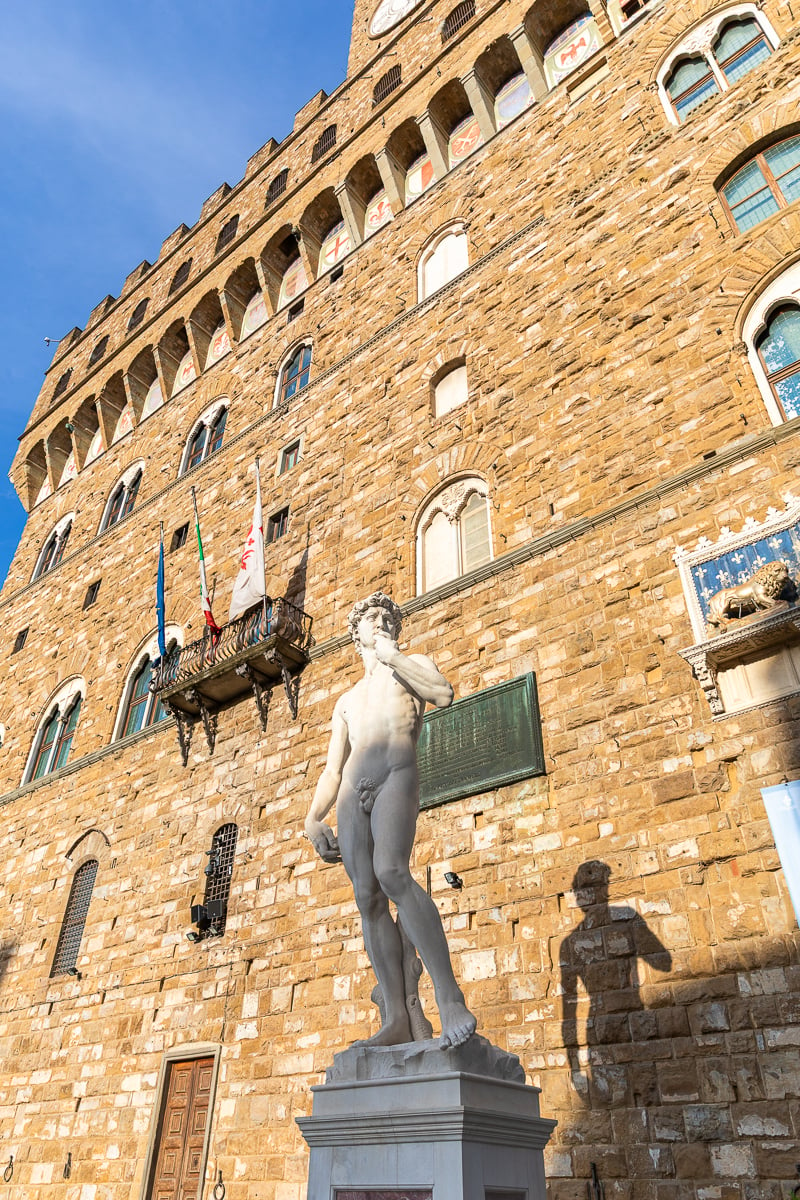
You’ll also come across plenty of replicas of David around Florence – including the marble one in Piazza della Signoria and the bronze one in Piazzale Michelangelo (one of Florence’s best sunset spots).
But to marvel at Michelangelo’s original masterpiece, you’ll need to visit the Accademia Gallery. And he’s entirely worth going out of your way for!
How to Get Tickets to See Michelangelo’s David
David is one of Florence’s top attractions, so get your tickets as soon as you can. Tickets are limited and often sell out weeks in advance.
If you’re visiting between April and October, or over a holiday period, I recommend booking 4 to 6 weeks in advance. For all other times, booking 2 to 3 weeks ahead is wise.
Here are the three main ways to get Accademia Gallery tickets:
1. Book a Guided Accademia Gallery Tour (Best Overall Option)
If you’re visiting the Accademia Gallery for the first time, I recommend booking this David & Accademia Guided Tour, which comes with timed-entry (“skip-the-line”) tickets. This is the exact tour I booked and loved.
Of course, the main perk is visiting with an expert guide who will explain exactly what you’re looking at, the history behind it all, and why it matters.
But also, the tour company handles the ticketing process for you – which is especially helpful for last-minute bookings, since tour operators secure tickets way in advance. So even if the official site is sold out, you can often still book a tour. Book your David & Accademia Guided Tour here!
If you want to combine the Accademia with Florence’s other must-sees, this Best of Florence Small-Group Tour is a popular option. It includes a walking tour of the historic center, along with skip-the-line entry to the Duomo (you can also upgrade to include the Dome Climb and Terrace Access!).
Or, if you’re short on time and want to see both of Florence’s major art museums in one day, book the Accademia Gallery & Uffizi Gallery Combo Tour.
2. Buy Timed-Entry Accademia Tickets Online (Best Independent Option)
Prefer to explore independently?
To book your own timed-entry ticket, head to the official Galleria dell’Accademia di Firenze website. From there, you’ll be redirected to B-Ticket, the only official online ticketing website, authorized by the Italian Ministry of Culture.
The regular admission price is currently €20 (plus a per-ticket €4 online booking fee). Children under the age of 18 enter free, though the €4 booking fee still applies.
And as I mentioned, book your tickets as soon as possible. (As I sit here writing this guide, it’s shoulder season, and the soonest-available time slots are 2.5 weeks from now!)
3. Buy Accademia Tickets in Person (Not Recommended)
If online tickets and tours are all sold out for your dates, you may still have a shot at buying same-day tickets at the museum.
But let’s call this your back-up-plan-only plan.
Without a reservation, you’ll join the non-reserved line. During busy periods, waits can stretch for hours.
My advice? The museum opens at 8:15 AM, so aim to arrive by about 7:50 AM and jump in the standby line.
Don’t even try to get tickets in person mid-day between May and September… Most likely, you’ll have a very long wait, in the heat. (Do something fun instead, like one of these day trips from Florence!)
What to See Inside the Accademia Gallery
Unlike the Uffizi, you don’t need to dedicate a half-day to wandering room after room, masterpiece after masterpiece. The Accademia is surprisingly small, and the main event is really Michelangelo – especially David and his unfinished Prisoners.
That said, there are a few other works and galleries worth seeing while you’re there, too…
Michelangelo’s David
Let’s start with the man himself: David. The guy we all came to see.
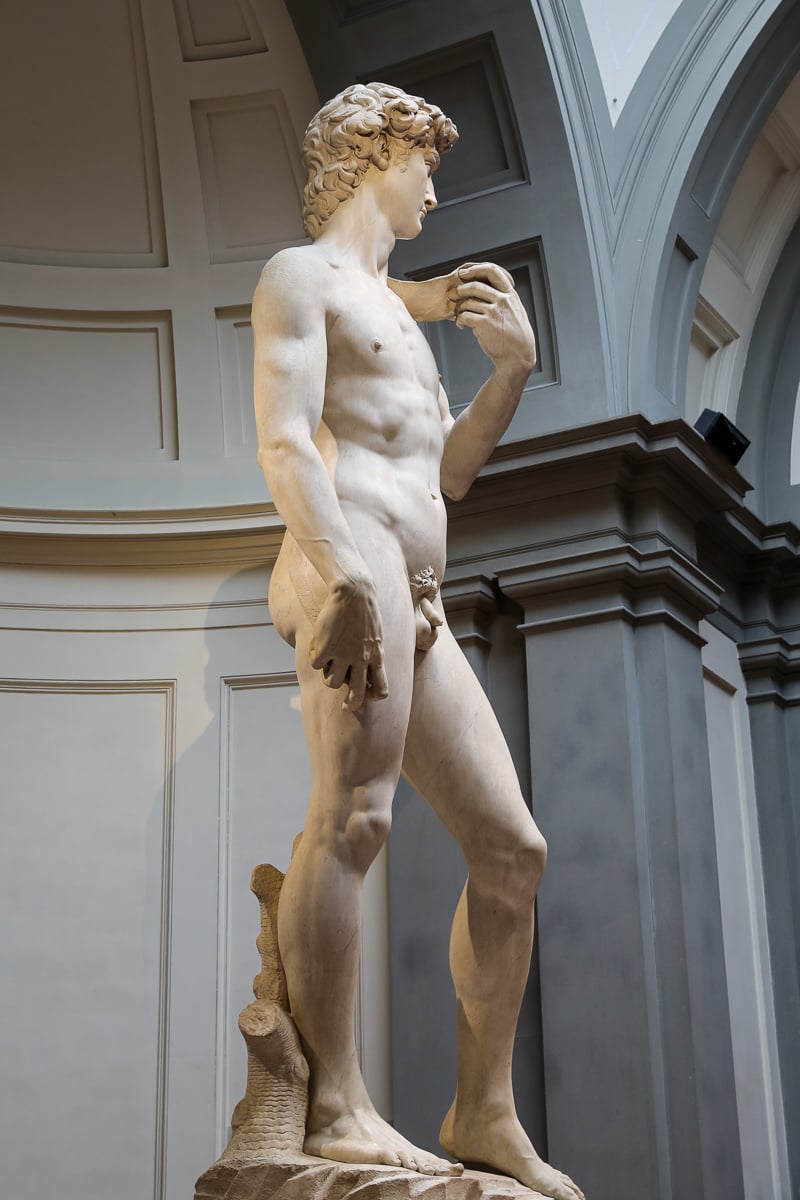
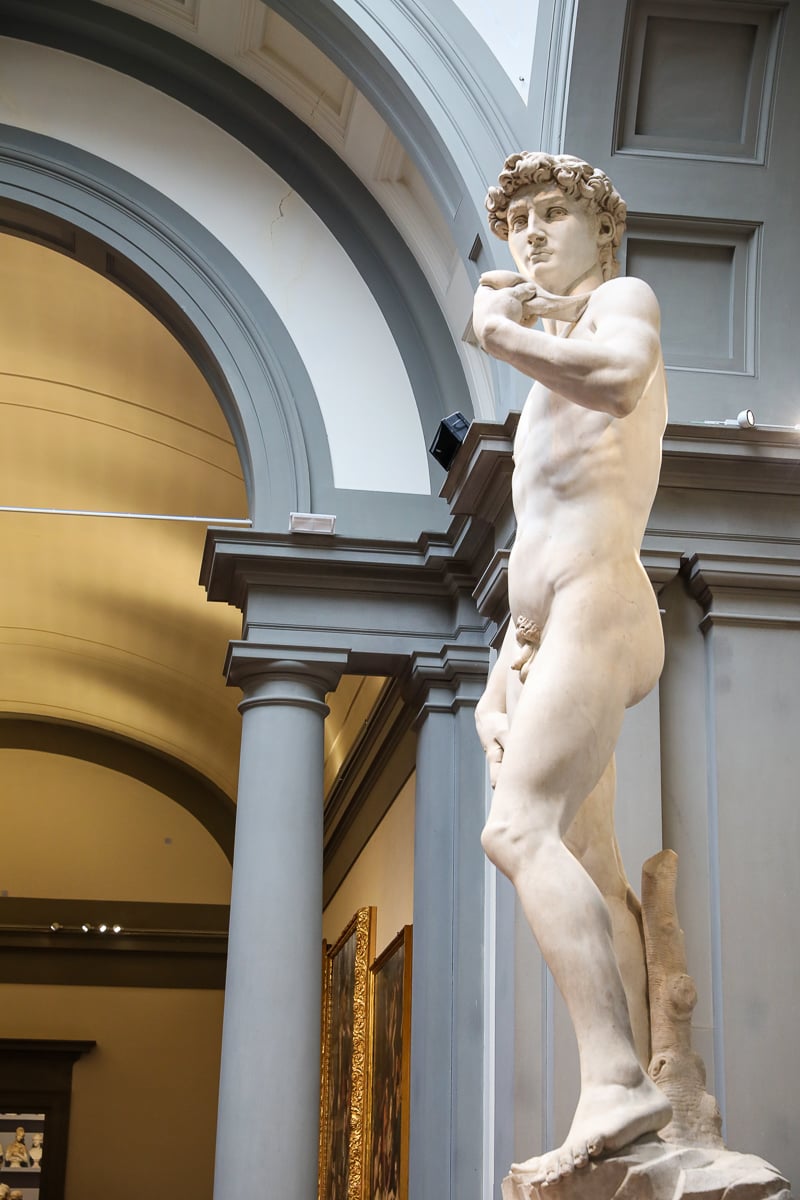
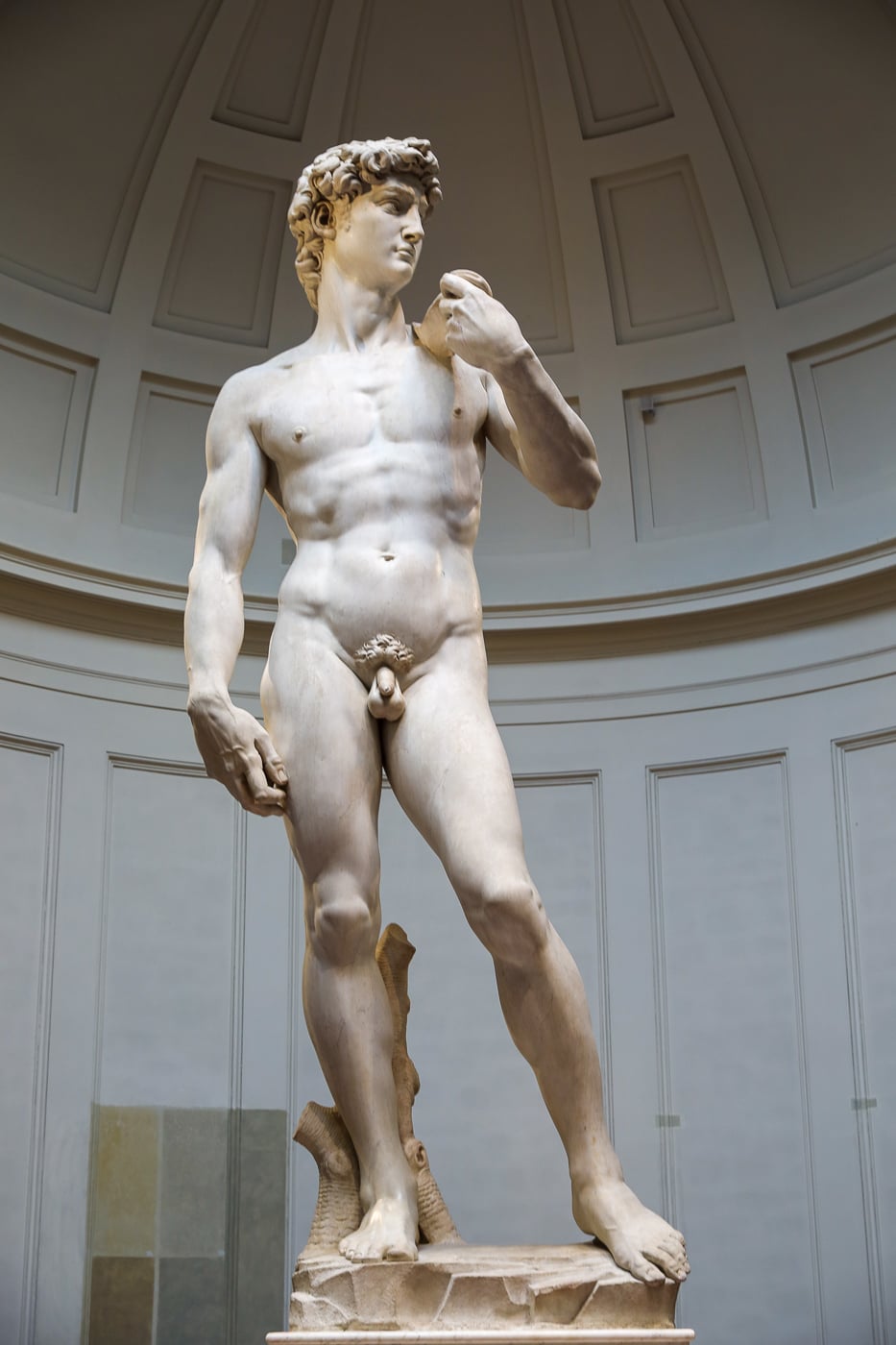
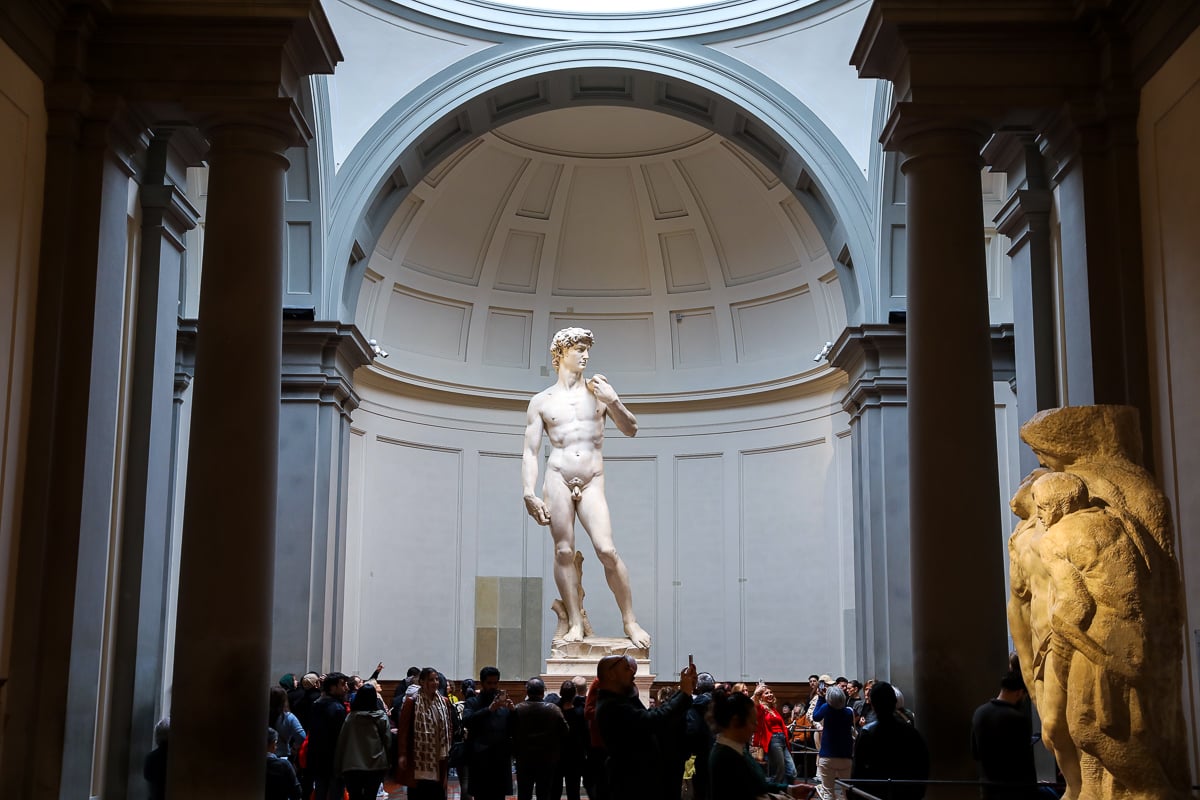
Michelangelo sculpted David between 1501 and 1504, and at more than 17 feet (~5.2 meters) tall, he’s way bigger – and much more imposing – in person than I expected. Photos online just don’t communicate his scale properly. It really is just… wow.
But once you get over the sheer size of him, it’s the anatomical detail that’ll really blow you away. (Especially when your guide explains it all to you.)
Did you know that Michelangelo studied anatomy through cadaver dissections? When you’re standing in front of David, that deep knowledge is obvious.
You might first notice that David stands in contrapposto, with his weight loaded onto one straight leg while the other bends and relaxes. That movement continues naturally through his hips and torso. Then, you start noticing the smaller details. His muscles, tendons, veins, hands…
Michelangelo didn’t start with a pristine block of marble either. The huge, imperfect piece of stone had already been attempted – and abandoned – by two other sculptors before Michelangelo took it over.
Also, David wasn’t originally created to stand at eye level inside a museum. He was commissioned for an elevated position on Florence’s Duomo, meaning he was intended to be viewed from far below. That helps explain why certain parts of his body are proportionally larger than others when you see him up close.
You can walk in, look at David, take a photo, and leave thinking he’s incredible. But learning all of this – and a whole lot more – made me appreciate him so much more.
Michelangelo’s Unfinished Prisoners
Before you reach David, you’ll walk down a long gallery lined with four of Michelangelo’s unfinished sculptures known as the Prisoners or Slaves (or Prigioni in Italian). And they were one of my favorite parts of our visit!
They were originally intended for the enormous tomb of Pope Julius II (who is buried in Vatican City), but when the plans for the tomb were eventually scaled back, the Prisoners remained unfinished in Michelangelo’s studio. After his death, they passed to Cosimo I de’ Medici and were eventually moved to the Accademia in 1909.
Some parts of the sculptures are still rough marble, while in other parts, bodies, limbs, and muscles emerge straight out of the stone.
You can see his tool marks, partially defined forms, and different stages of the carving process – essentially, you’re seeing Michelangelo’s masterful work in progress.
Cool, right? So resist the urge to rush past them to see David. They make the moment you reach him at the end of the gallery even more dramatic.
Other Accademia Gallery Artworks
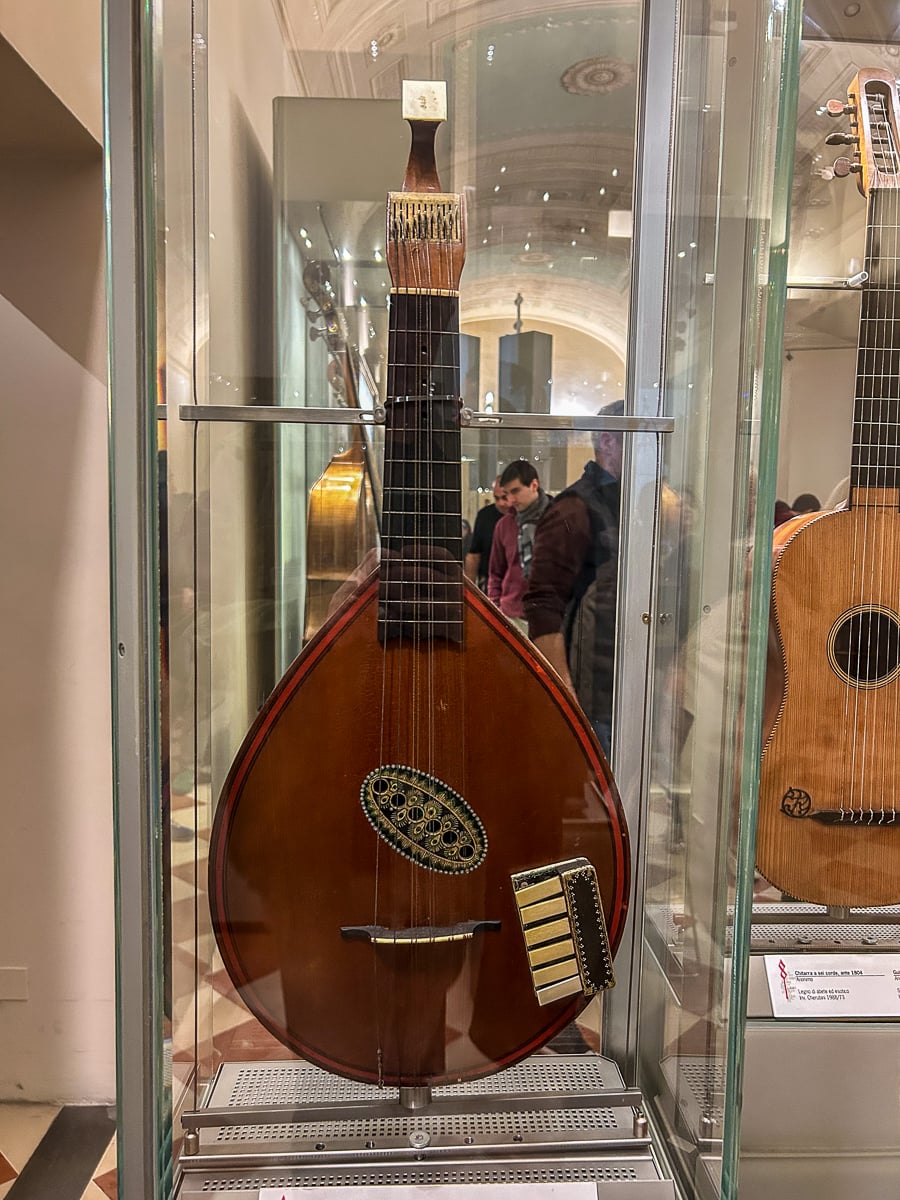
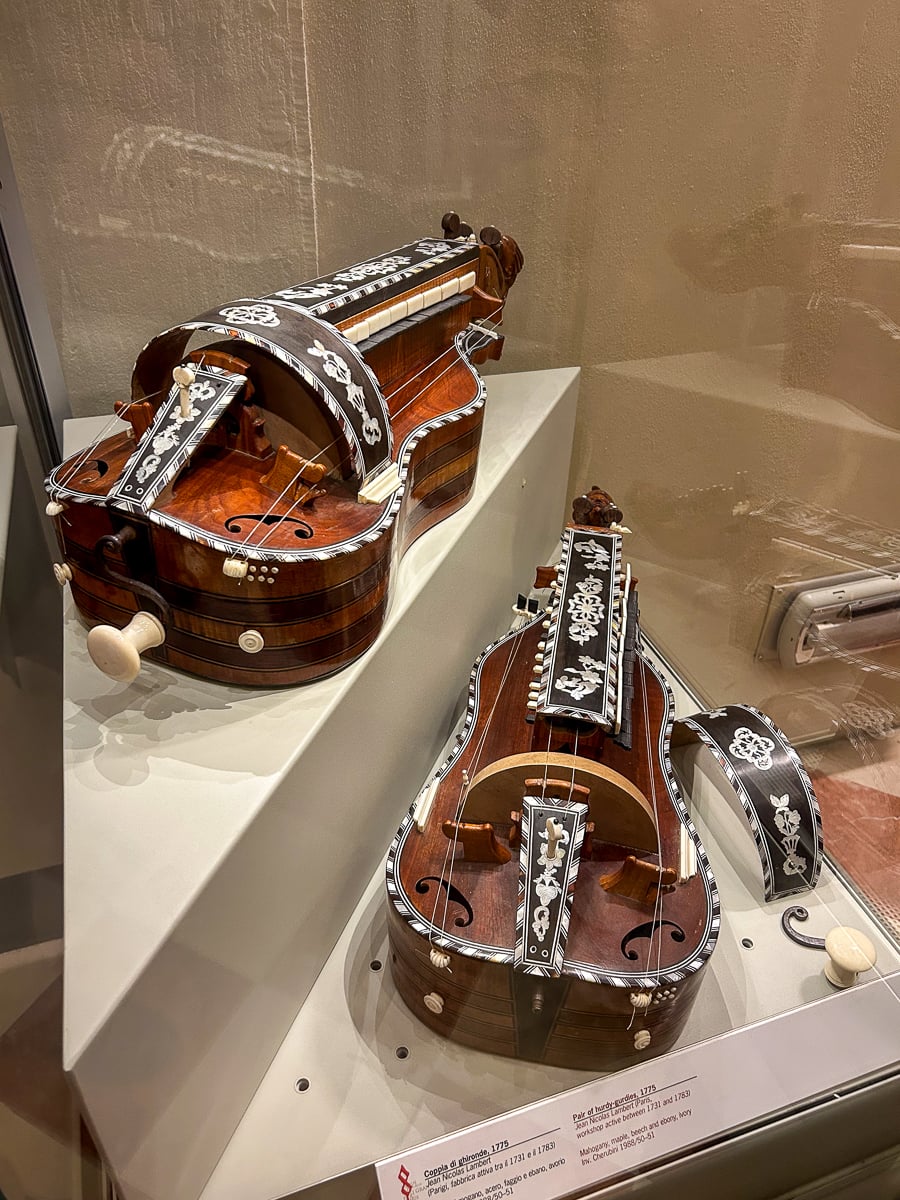
The Accademia also houses collections of Florentine paintings, sculptures, plaster casts, and historic musical instruments.
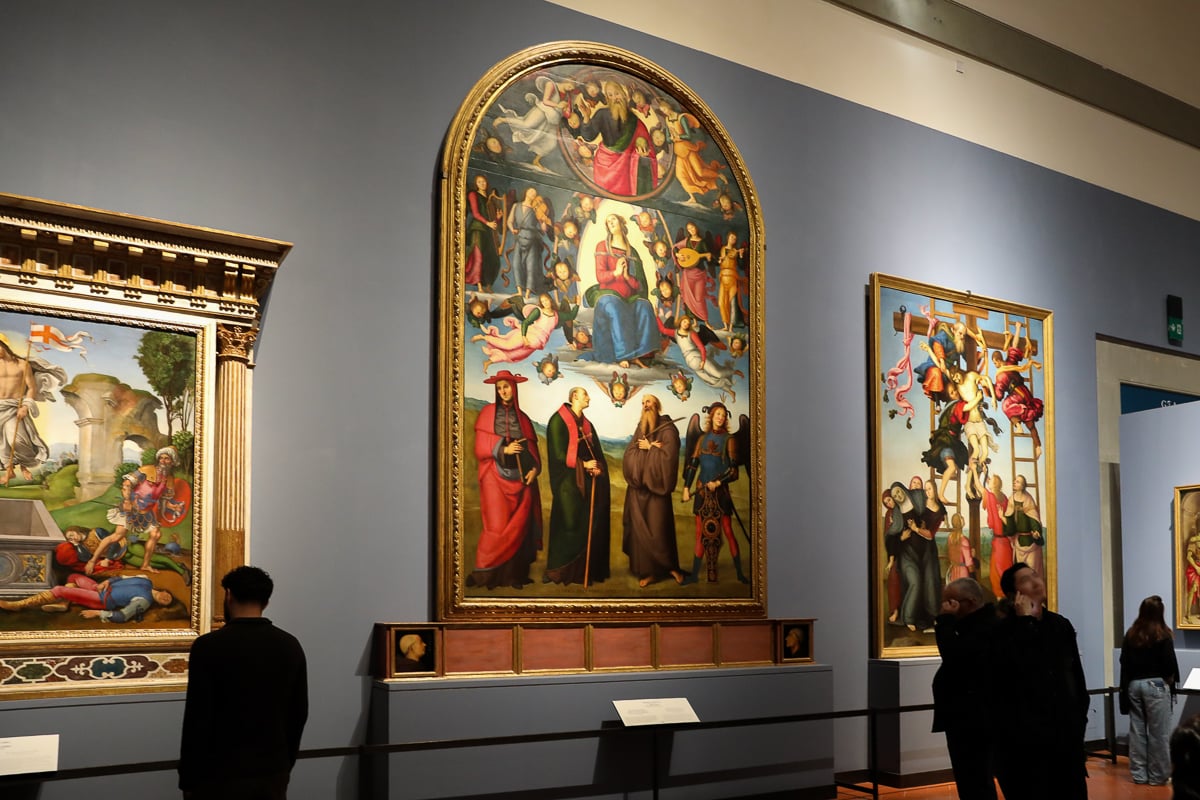
You’ll see plenty of Medieval and Renaissance paintings, including works by artists such as Botticelli, Perugino, and other Florentine masters. They’re worth a quick look, but for most visitors, it’s all about Michelangelo.
That said, my husband and I especially enjoyed seeing the precious, meticulously crafted instruments on display – including types we’d never seen before. One standout is an original tenor viola crafted by Antonio Stradivari for Grand Prince Ferdinando de’ Medici in 1690. It’s extraordinary.
Is a Guided Accademia Gallery Tour Worth It?
If it’s your first visit, yes – I think a guided Accademia tour is absolutely worth it.
The David & Accademia Guided Tour I recommend isn’t much more expensive than visiting independently anyway, which makes the decision pretty easy.
I’m really glad my husband and I visited with a guide. Even though the Accademia is small enough to wander independently, see David, and be back outside within an hour or so, I would’ve missed so much that way.
Our guide pointed out details in David’s anatomy I never would’ve noticed on my own, helped us understand the unfinished Prisoners and Michelangelo’s sculpting process, and explained the stories behind the works.
She gave us a lot of context around Michelangelo’s relationship with Florence and the Medici family, who helped foster his artistic development.
That bigger picture made seeing David way more meaningful – rather than just checking a famous sculpture off my bucket list.
And for context, our group was small – about 10 people on the day we visited. Our guide already had our timed-entry tickets ready and helped us navigate the entry and security lines, so the whole process was very easy.
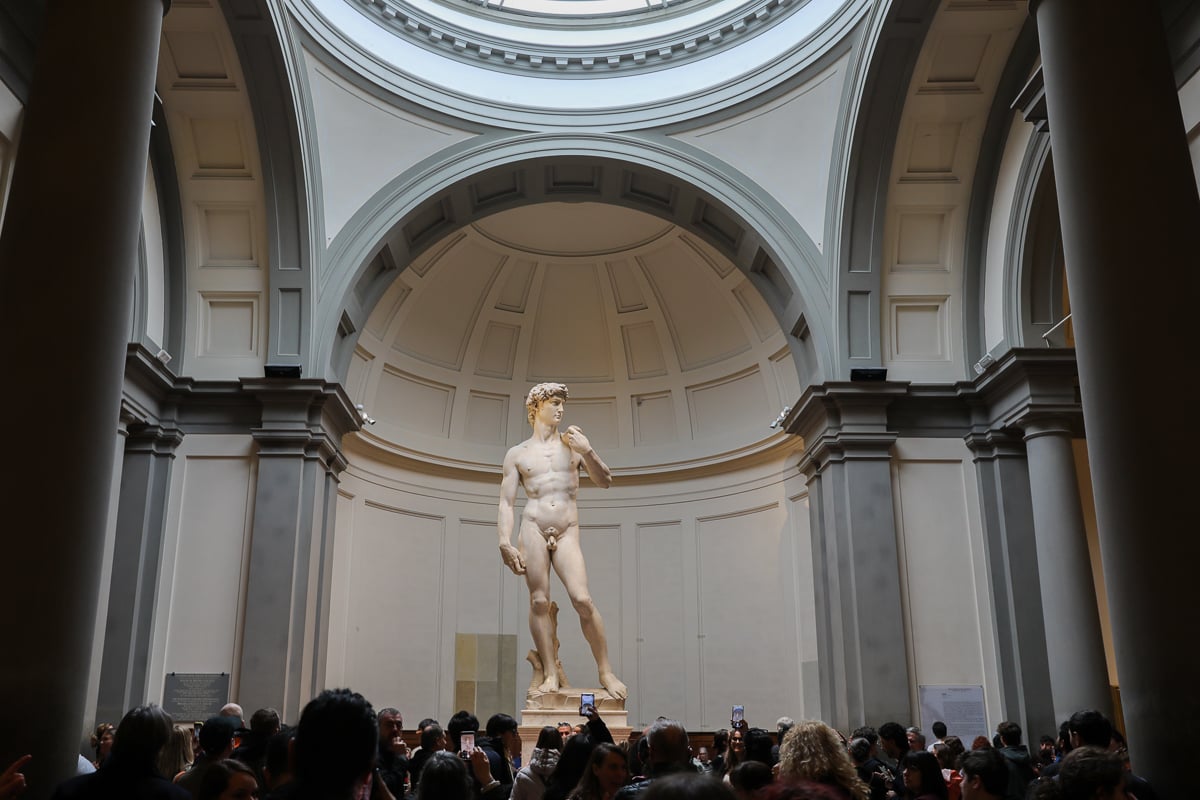
We took the 9:30 AM tour, and while the gallery was definitely busy, it wasn’t overwhelmingly crowded. The tour lasted about 1.5 hours, leaving us the rest of the day to enjoy Florence!
Book your David & Accademia Guided Tour with Timed-Entry Tickets here.
How Long Do You Need at the Accademia Gallery?
You should plan to spend 1 to 1.5 hours inside the Accademia Gallery.
You’ll have time to see Michelangelo’s unfinished sculptures, spend a good amount of time admiring David, and wander through whichever other galleries interest you.
That said, you can stay as long as you want! It really just depends on your interest level. Your timed-entry ticket only dictates when you enter.
After our David & Accademia Guided Tour ended, my husband and I spent another ~20 minutes exploring the sculpture gallery, but our guide had already covered almost everything else during our ~1.5 hours together.
Best Time to Visit the Accademia Gallery
You’re never going to have David completely to yourself – he’s one of Florence’s most popular attractions after all. But if smaller crowds are your priority, book a tour or timed-entry slot in the morning. The earlier, the better!
That said, I wouldn’t really obsess over finding the “perfect” time. Just make a reservation that fits best with the rest of your day.
We visited at 9:30 AM (even though the museum opens at 8:15 AM), and it was great! Busy, yes. But not overwhelmingly get-me-out-of-here busy.