
Best Things to Do in Palermo, Sicily + Must-Know Tips
Disclosure: This post may contain affiliate links; more info here.
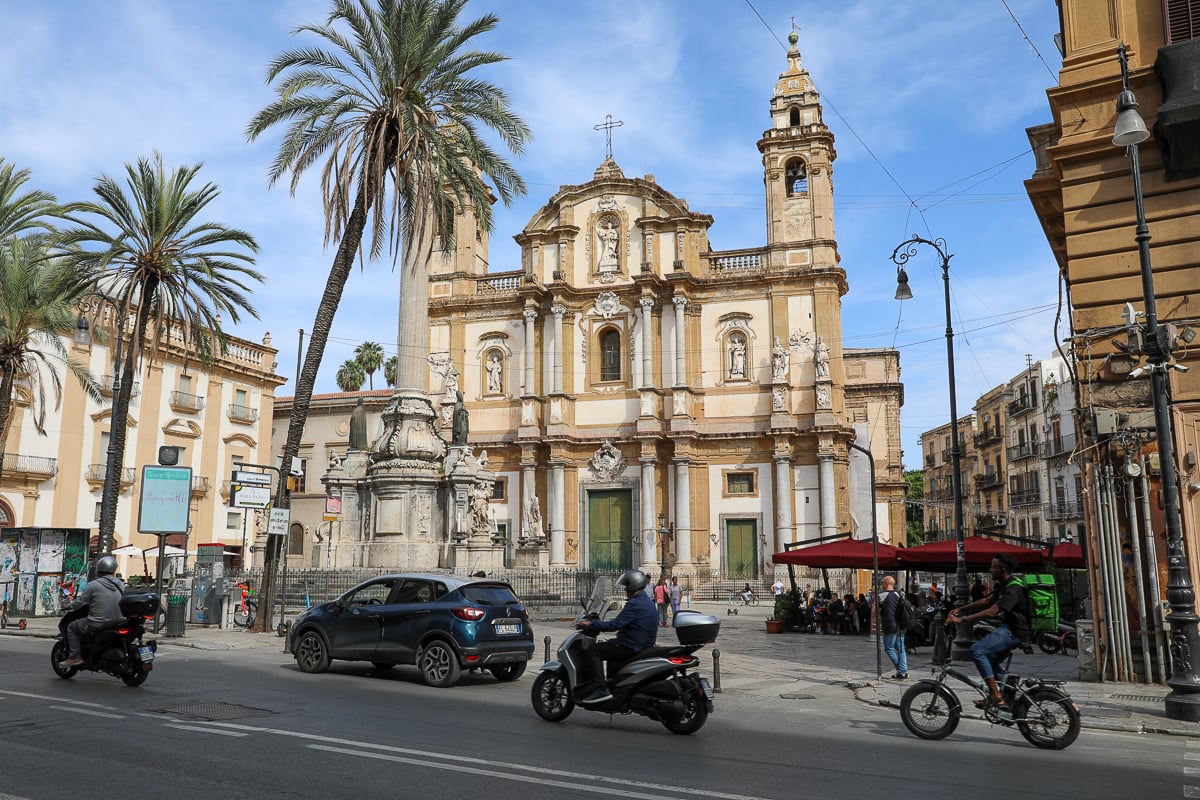
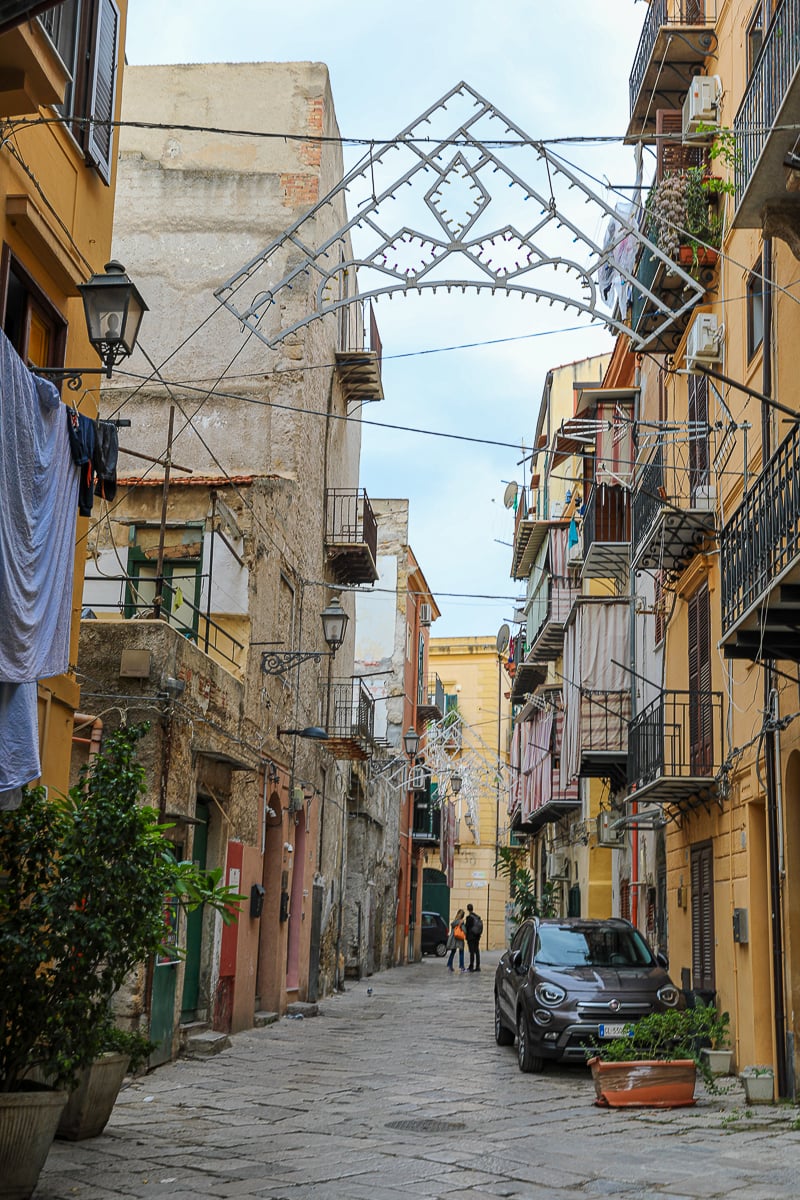
Let’s face the facts: Palermo, Sicily is loud, dirty, colorful, and chaotic. And it has nothing to do with the beachy, spritzy, relaxing Sicilian vacation you’re probably picturing.
But for me, Palermo was love at first bite.
Because, without a doubt, the best things to do in Palermo start with a fork – and end with a cannolo.
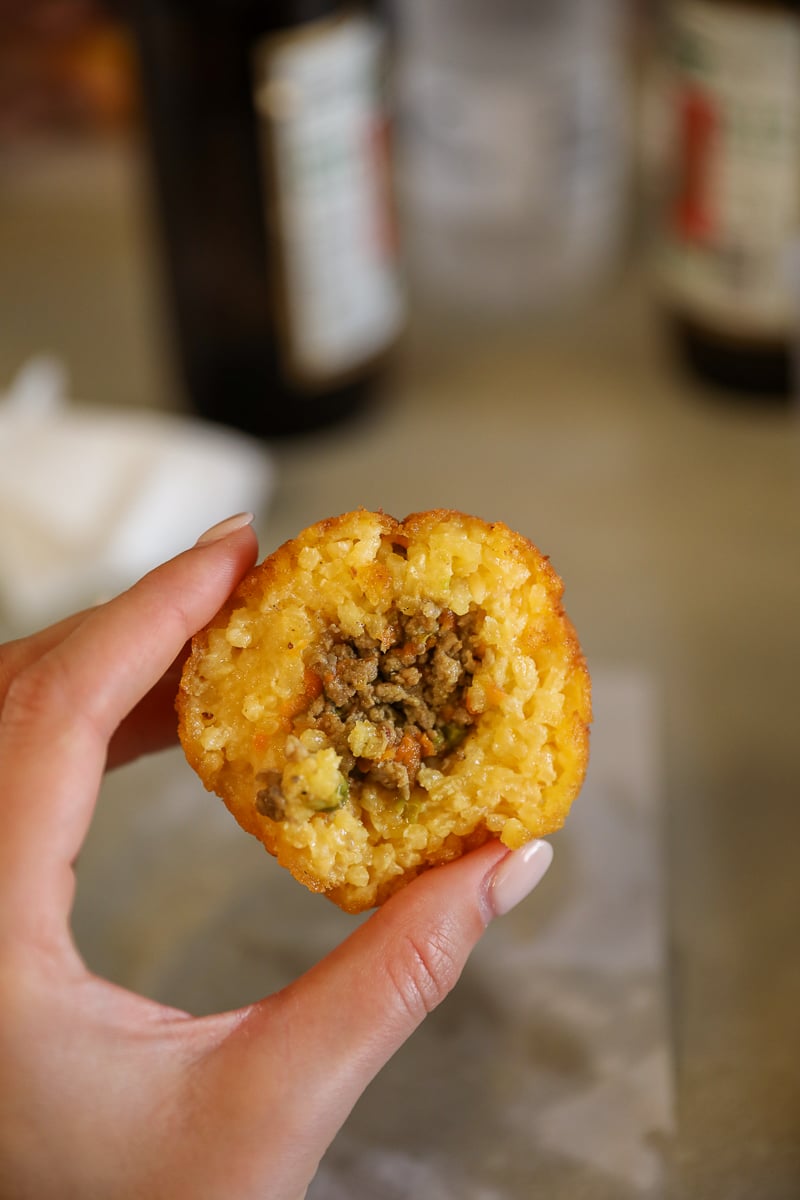
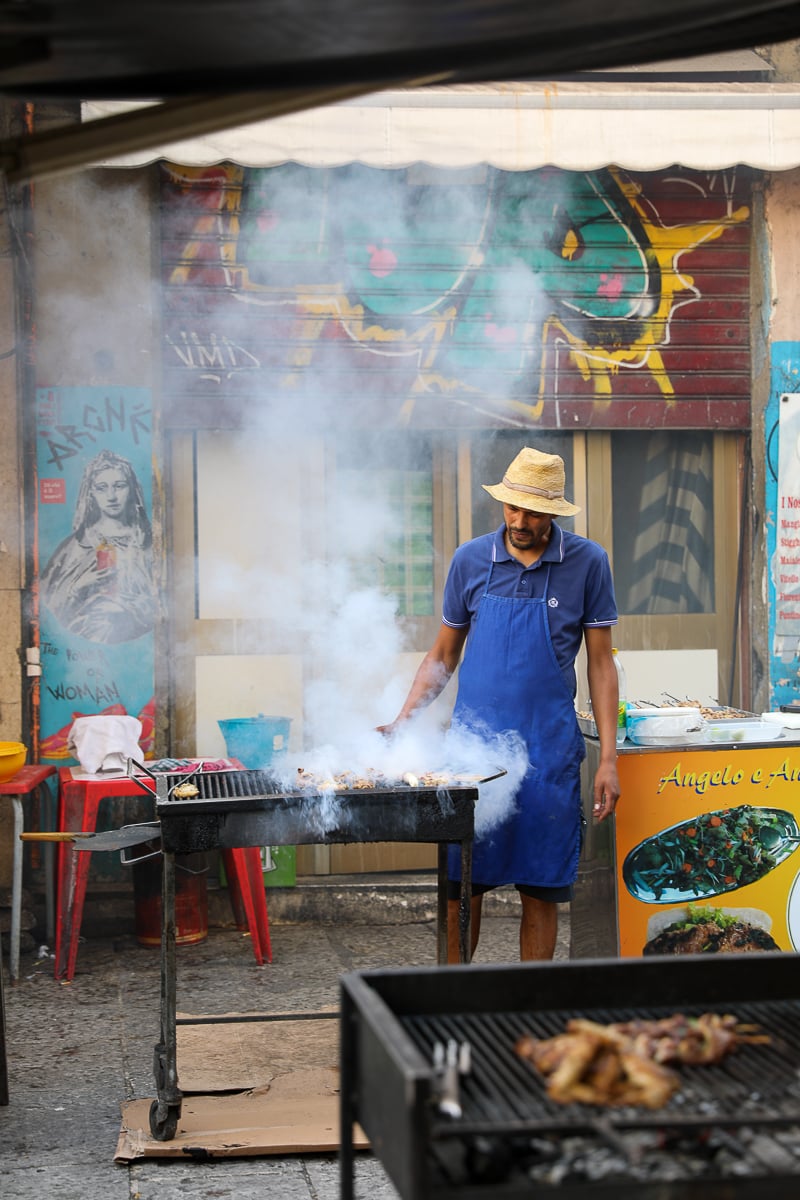
Palermitana food culture is pretty special. In particular, the street food. The arancine (notice I did not write arancini). The vibrant markets. And the fresh seafood. The little taverne slinging plates of citrusy homemade pasta. The local cheeses, too. The obsession with sweet and sour (hello, caponata). And the enoteche pouring natural Etna wines.
Plus, locals eat brioche con granita for breakfast, so you can too…
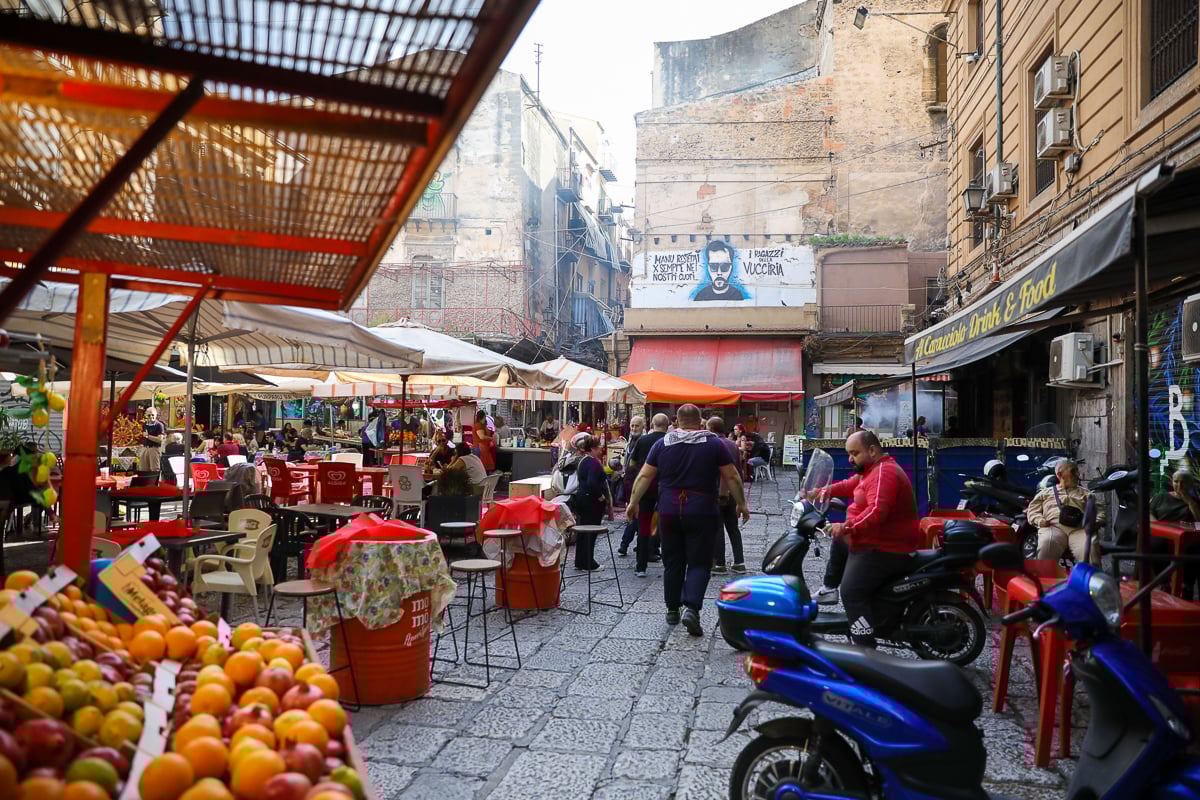
Beyond the food, though, Palermo is a fascinating city – with 10,000 years of layered, complicated history. You can see it, feel it around every crumbling street corner. And, as the infamous birthplace of the Mafia, you’ll hear stories of extortion, infiltration, fear, and hope.
From taking the “No Mafia” tour, tasting your way through the markets during a Palermo street food tour, and stopping by the Palermo Cathedral, to sipping aperitivi in Kalsa and day-tripping to Cefalù, there are enough interesting things to do in Palermo to fill two or three days.
So here’s my thesis: if you skip Palermo, your trip to Sicily will be incomplete. You might not love – or even like – Palermo. But chances are, you’ll appreciate it. And if nothing else, I promise you’ll love the food.
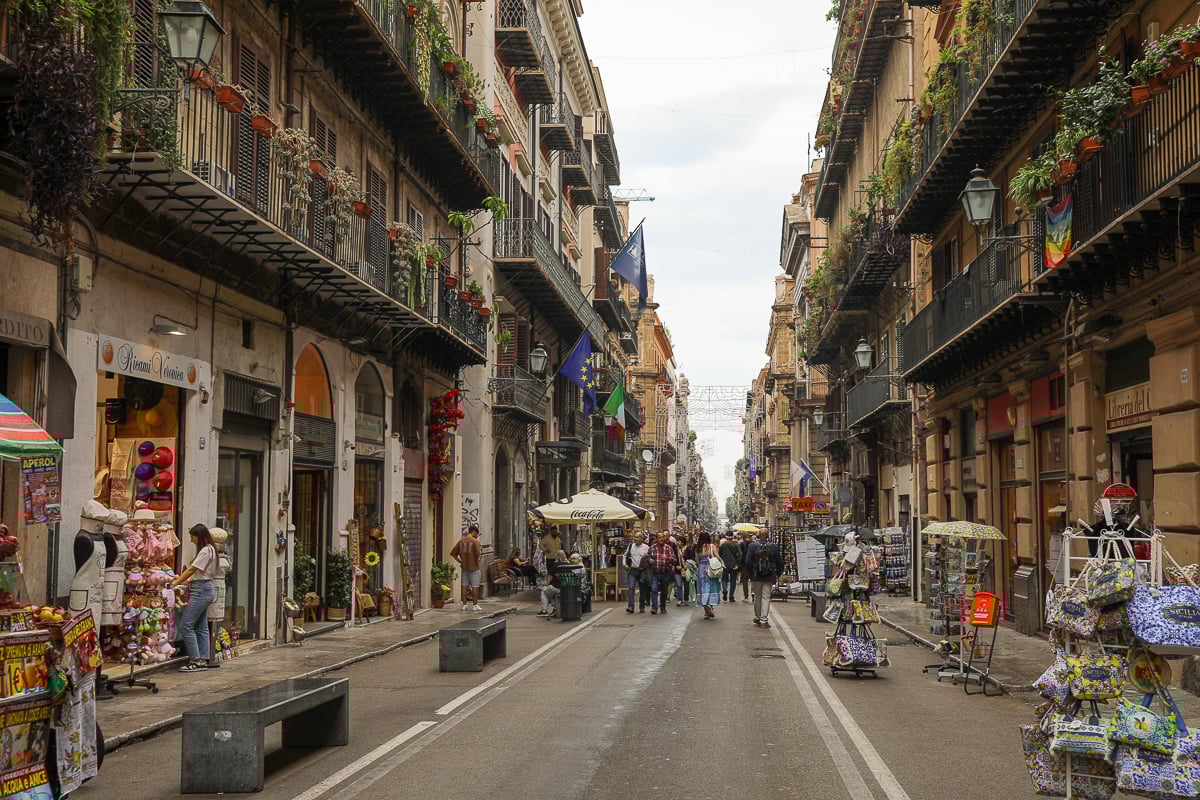
I recently spent a week uncovering the best things to do, see, and eat in Palermo, along with Palermo’s best hotels and neighborhoods, and must-know tips to make your trip go smoothly.
Follow my guide to get as close to “I loved Palermo!” as possible.
Palermo, Sicily: Quick Picks, Tips & Must-Dos
Short on time? Here’s a quick roundup of what I think you should know before visiting Palermo, Sicily.
- Must-book experiences: Street food tour of Palermo and “No Mafia” walking tour – these two are non-negotiable!
- Must-see monuments: Palermo Cathedral, Fontana Pretoria, Palazzo dei Normanni and Cappella Palatina, Quattro Canti, Teatro Massimo, and Palazzo Conte Federico
- Top hotels picks: Hotel Politeama ($$), Bastione Spasimo Boutique Hotel ($$$), Palazzo Liberty Unique Hotel ($$$), Grand Hotel et Des Palmes ($$$$)
- Favorite restaurants: Quattro Mani and Le Angeliche – make reservations.
- Ideal for: Foodies, culture lovers, and travelers who don’t mind a little grittiness and authenticity. (If you want picture-perfect Sicily, head east to Taormina instead!)
- Time needed: 2 to 3 full days, or longer if day-tripping.
- Best day trips: For a stunning beach town, take a 45-minute train or a guided day trip to Cefalù. For ancient history and archaeological sites, book a day trip to the Valley of the Temples.
13 Best Things to Do in Palermo, Sicily
From stopping by the stunning Arab-Norman Palermo Cathedral to browsing its bustling foodie markets, here are my picks for the best things to do in Palermo, Sicily.
1. Take a Palermo Street Food Walking Tour
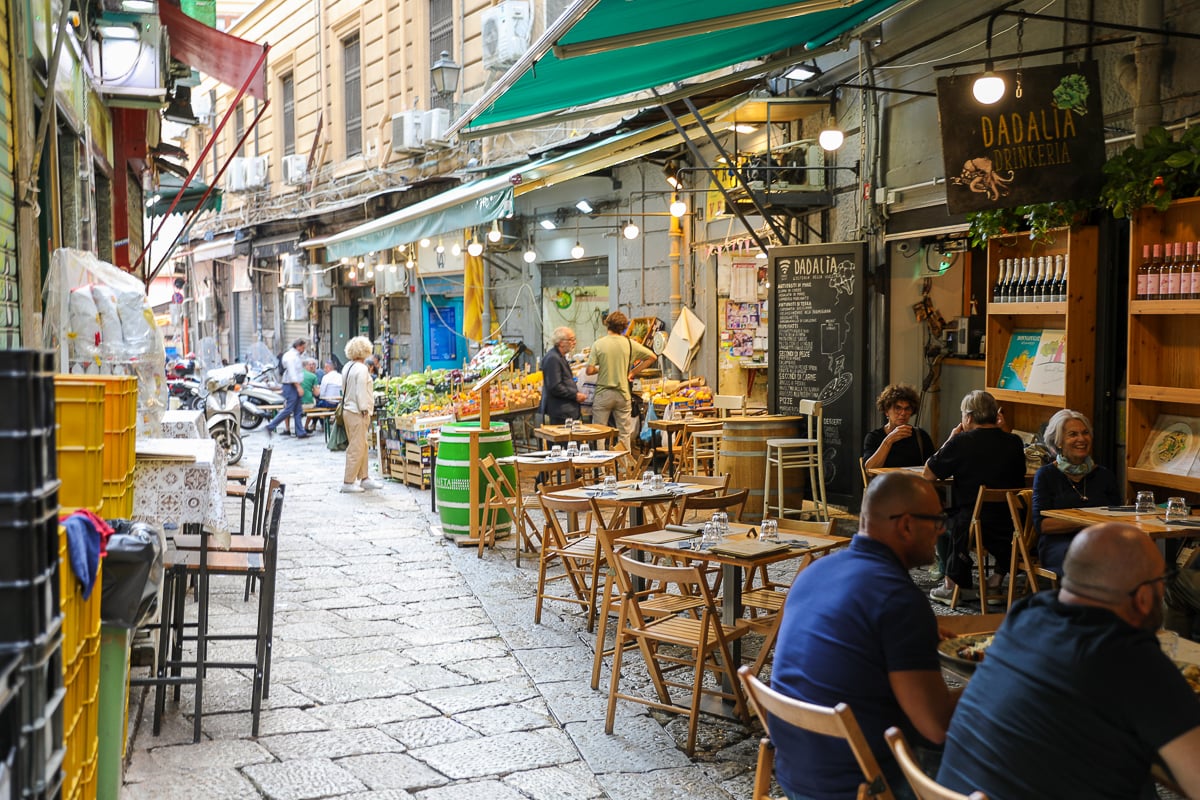
This Palermo Street Food Walking Tour is easily the best thing you can do in Sicily’s capital.
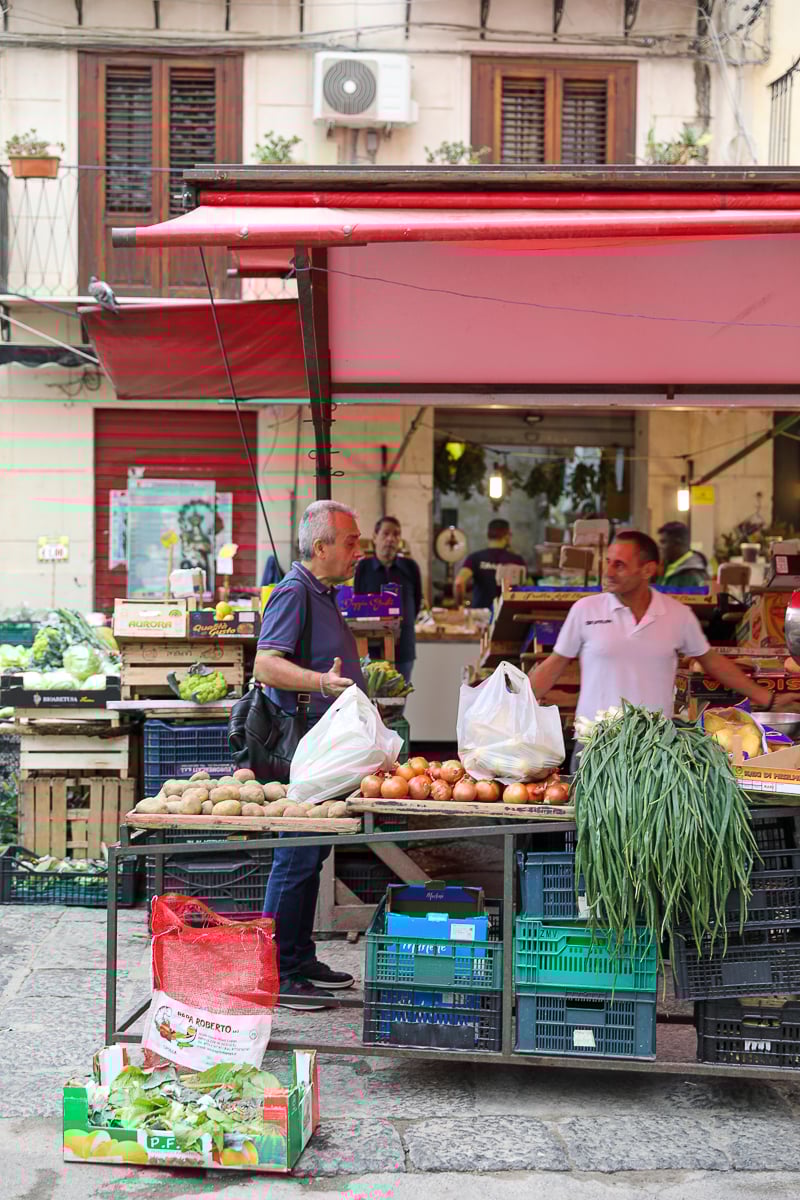
During our tour, we explored two vibrant markets where locals actually shop, wandered through colorful side streets, and learned about Palermitana street food culture. By my count, we stopped at six local eateries to try eight iconic Palermitana dishes (plus a few local drinks along the way).
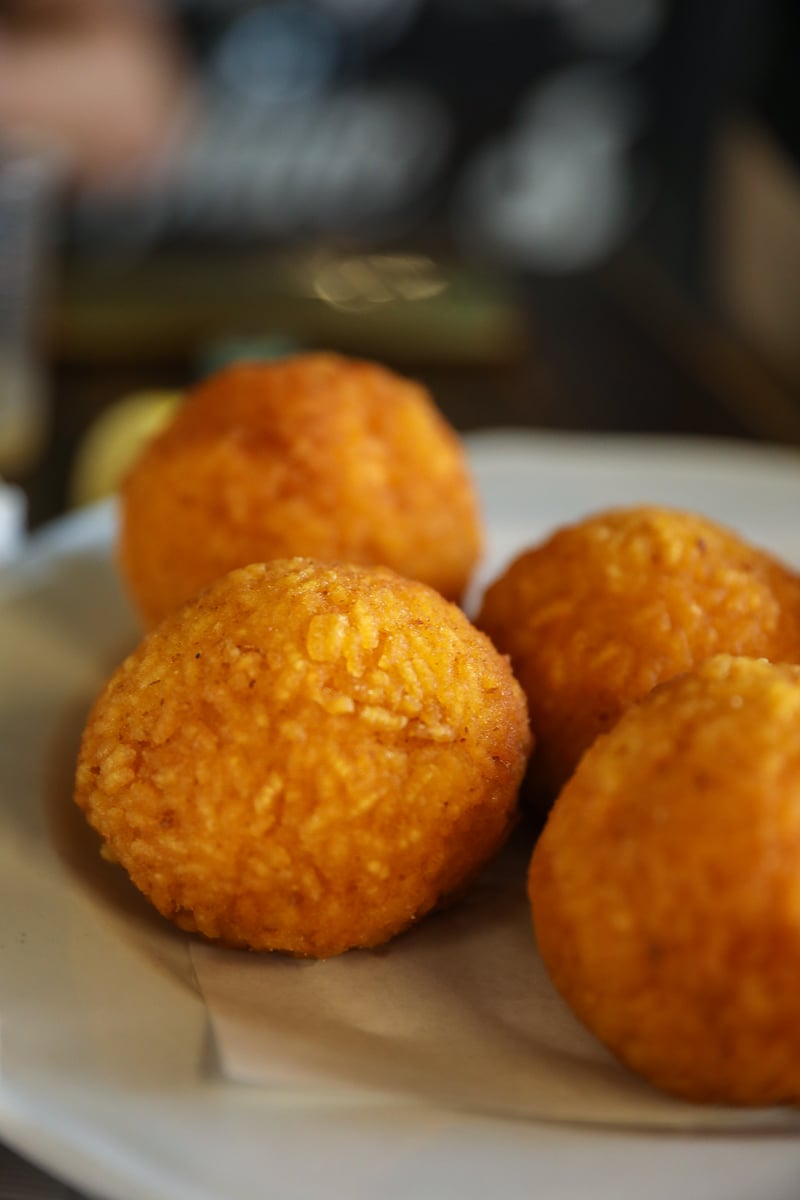
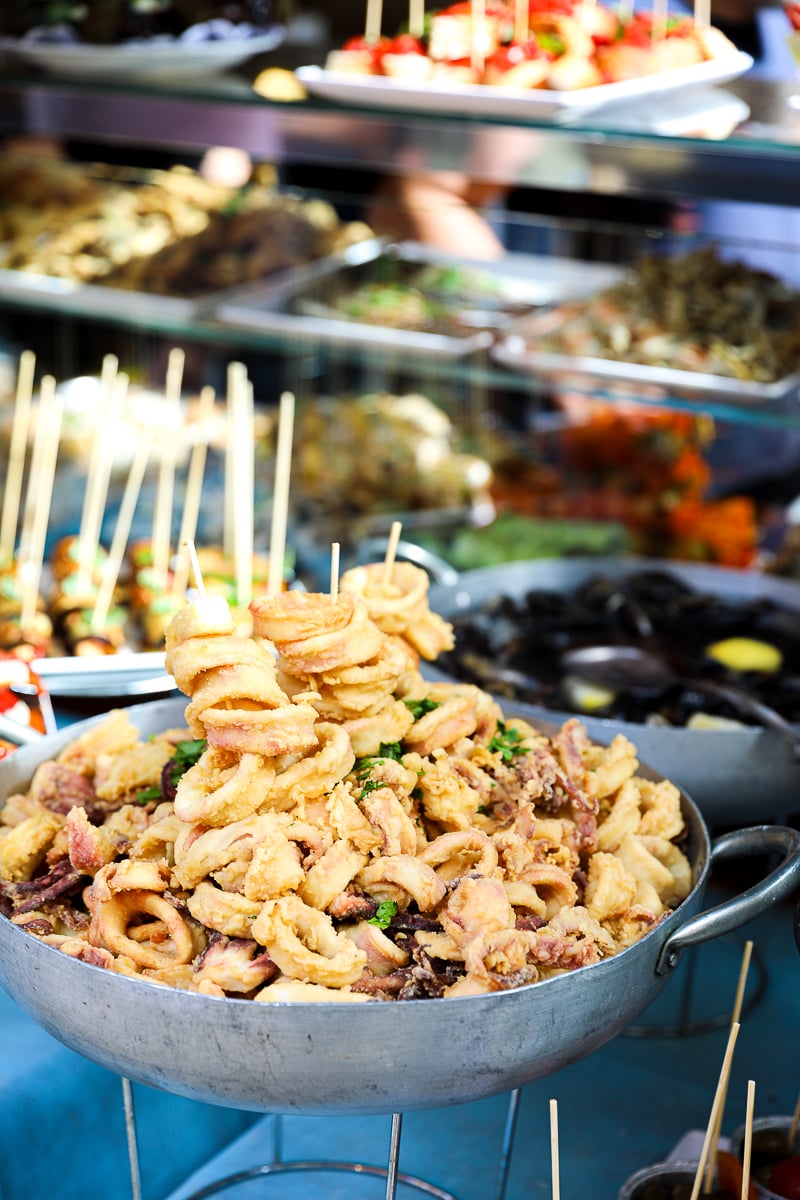
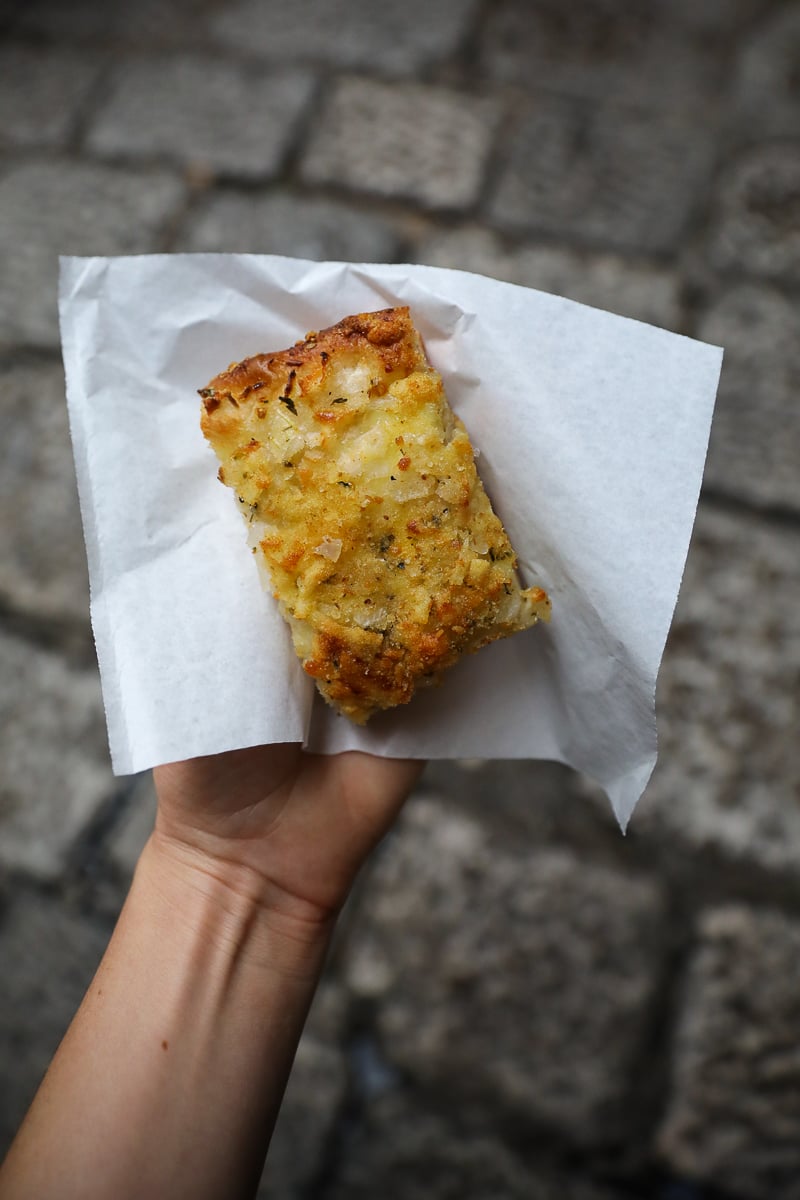
I won’t spill every delicious detail from our Palermo Street Food Walking Tour, but a few of my favorite bites were:
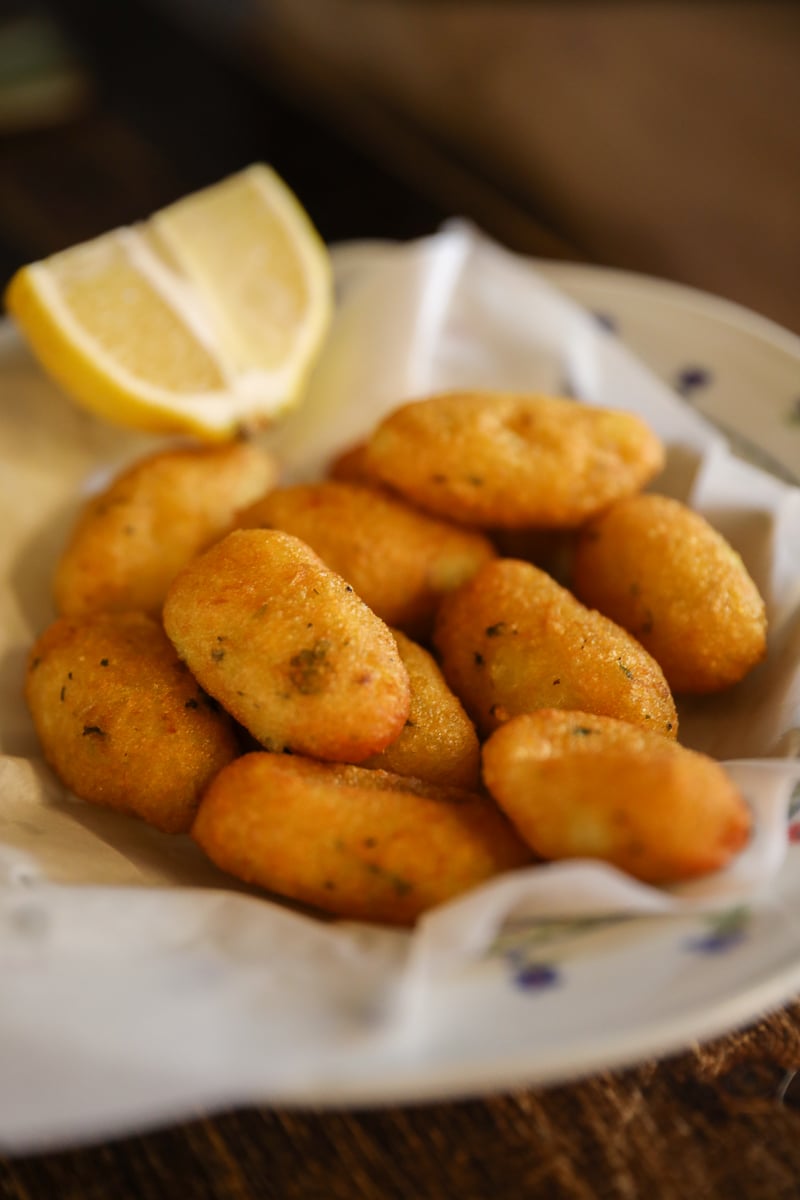
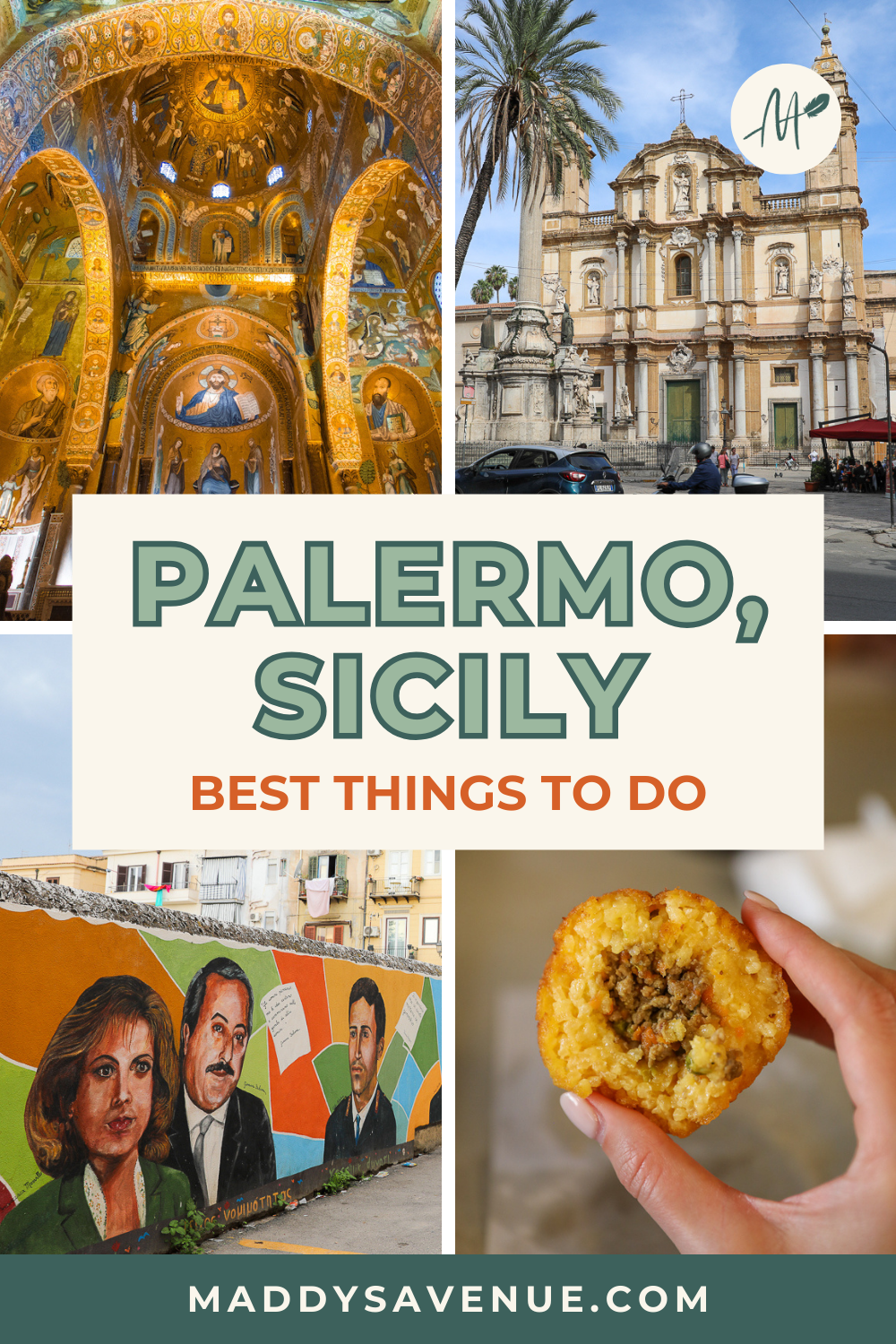
- In Il Capo Market, we sat down at a friggitoria (fried food stall) to try arancine (rice balls – and the best ones I’ve ever had!), cazzilli (potato croquettes), and panelle (chickpea fritters).
- In a quiet piazza, we tried mangia e bevi. This translates to “eat and drink,” but in Palermo’s streets, it equates to something a lot more specific: eating grilled pancetta-wrapped spring onions with a cold beer in hand.
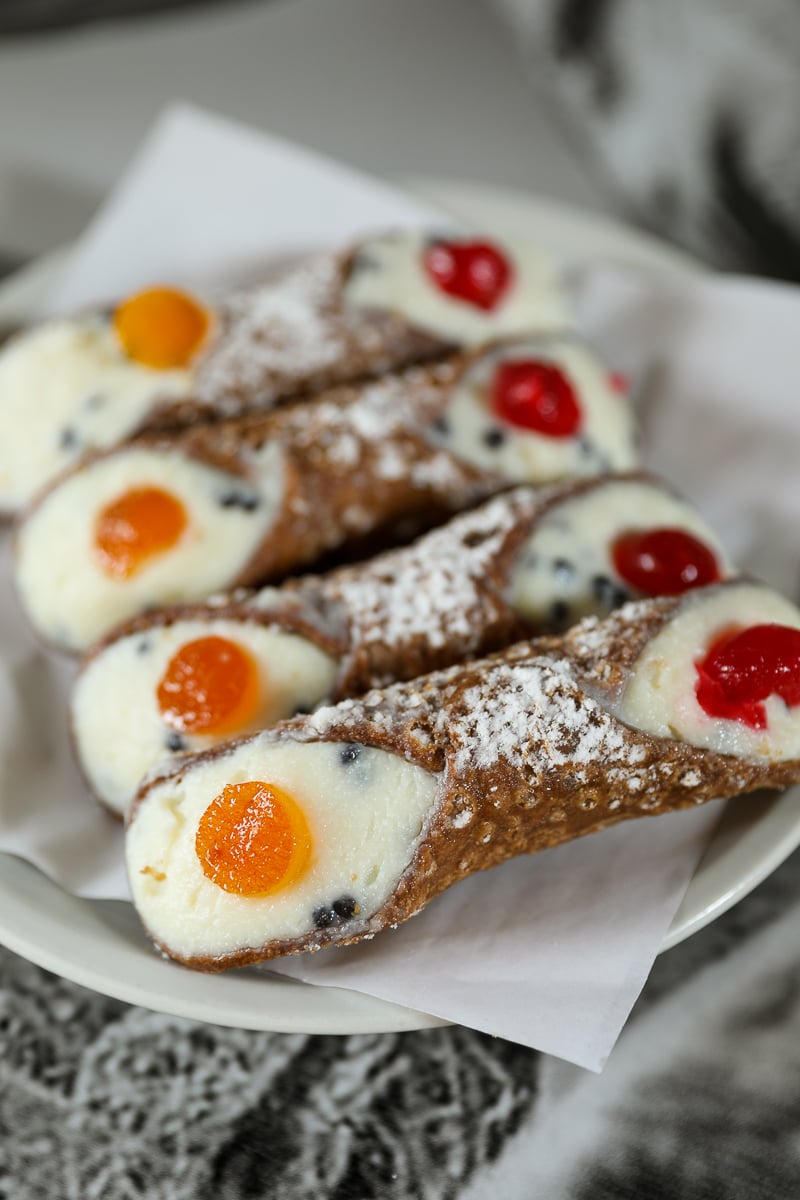
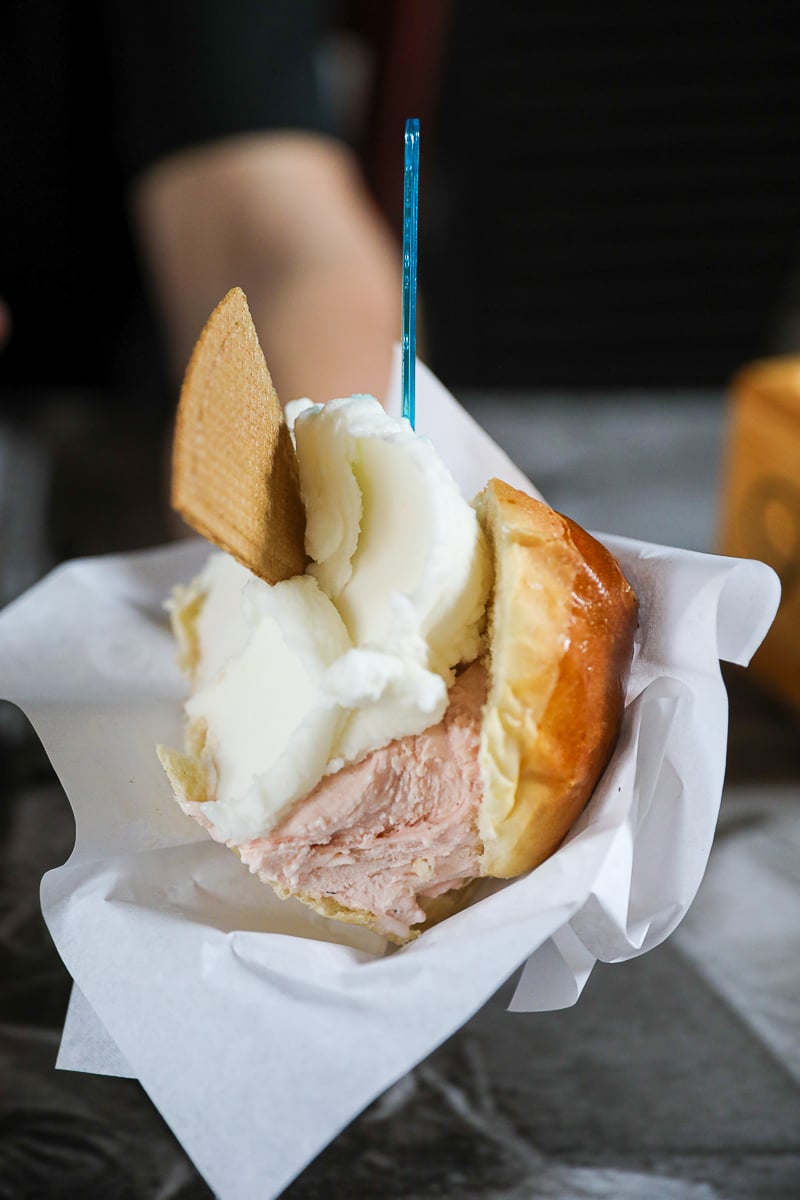
- And for a final sweet stop, we ducked into a local bar for the best-imaginable chocolate chip cannoli topped with candied orange peel and cherries, and brioche con granita (a very normal Sicilian summertime breakfast, if you can believe it).
It was obvious a lot of care went into curating this tour – it only features vendors doing the best of the best Palermitana street food – because everything we tried was so good.

2. Do the Addiopizzo “No Mafia” Walking Tour
The Palermo “No Mafia” Walking Tour by Addiopizzo is one of the most interesting and important walking tours I’ve ever done – not just in Sicily, but anywhere.
For context, addio means goodbye, while pizzo is the term for the extortion money the Mafia forces business owners to pay in exchange for “protection” (or else…).
During this anti-Mafia culture walking tour, you’ll hear gripping first-hand accounts of how the Mafia has infiltrated, corrupted, intimidated, and extorted its way into almost every aspect of Italian life – from the highest levels of government to the local espresso bars.
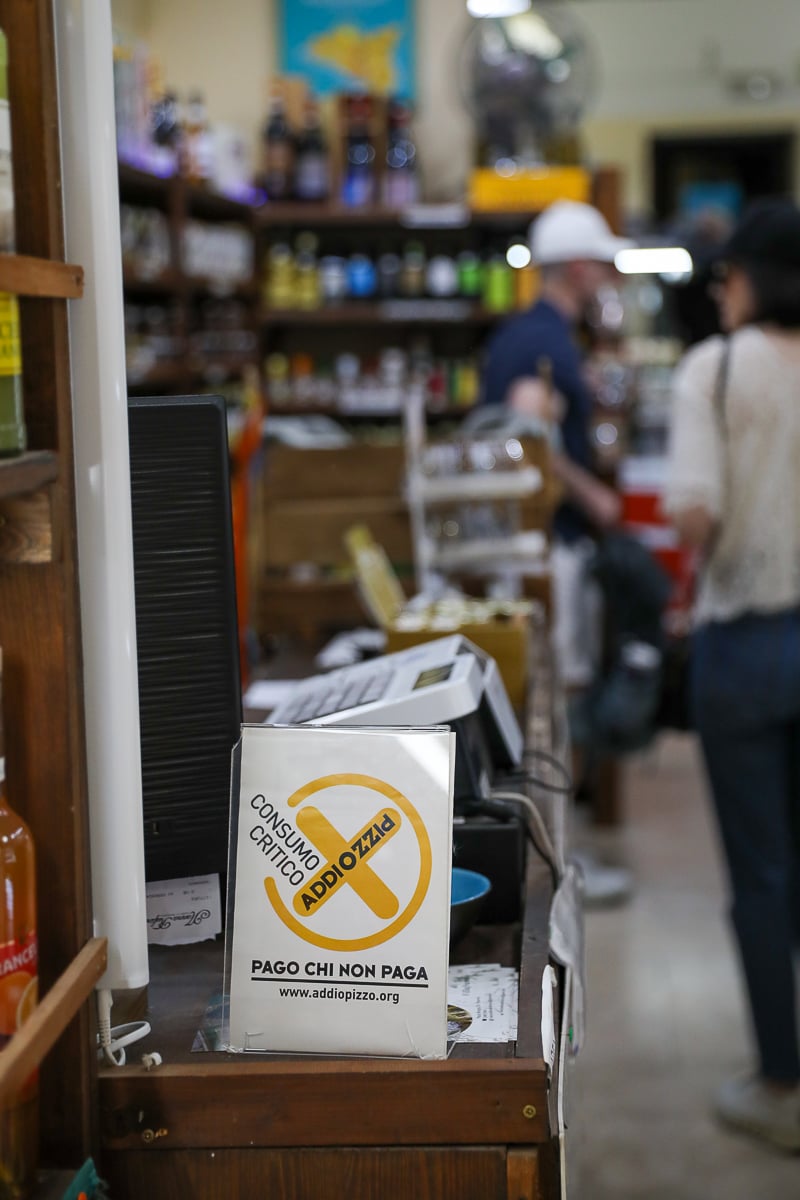
You’ll learn how the Mafia still affects everyone’s daily life on the island – and what some brave locals are doing about it. And you’ll learn what you can do, too. (Hint: You can support a growing number of local Sicilian restaurants, hotels, and shops that are official Addiopizzo members, standing up and refusing to pay the pizzo.)
One of the most powerful stops is at The Wall of Legality (Il Muro della Legalità). This colorful mural is a symbol of the public’s commitment to justice, honoring anti-Mafia martyrs and heroes – including judges Giovanni Falcone and Francesca Morvillo, whose assassinations were turning points in Italy’s anti-Mafia movement.
Click here to book your “No Mafia” (Addiopizzo) Walking Tour of Palermo.
MADDY’S NOTE: The “No Mafia” tour will add a layer of meaning to your trip that most visitors completely miss. Plus, it doubles as a historic sightseeing tour, naturally stitching together key monuments like the Quattro Canti, Piazza Pretoria, and Palermo Cathedral. Perfect if you’re short on time but want to understand a bit about thereal Sicily.
3. Explore Palermo’s Markets
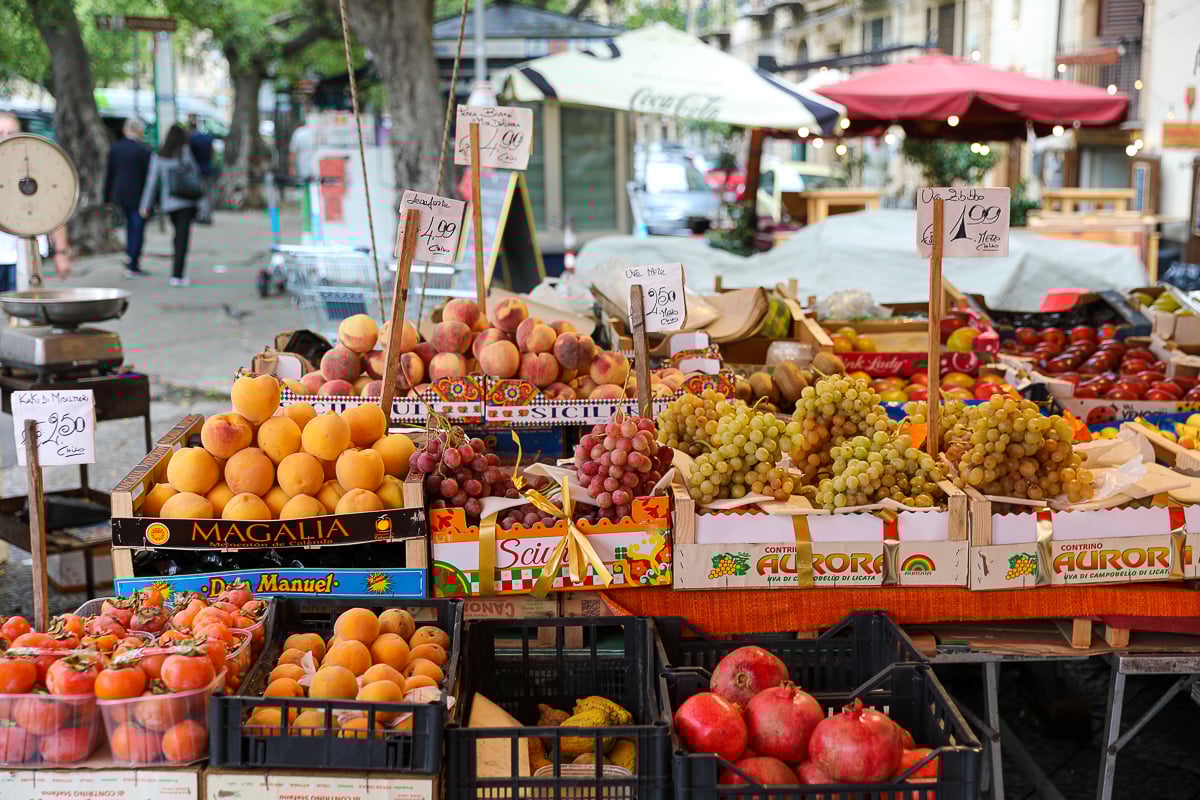
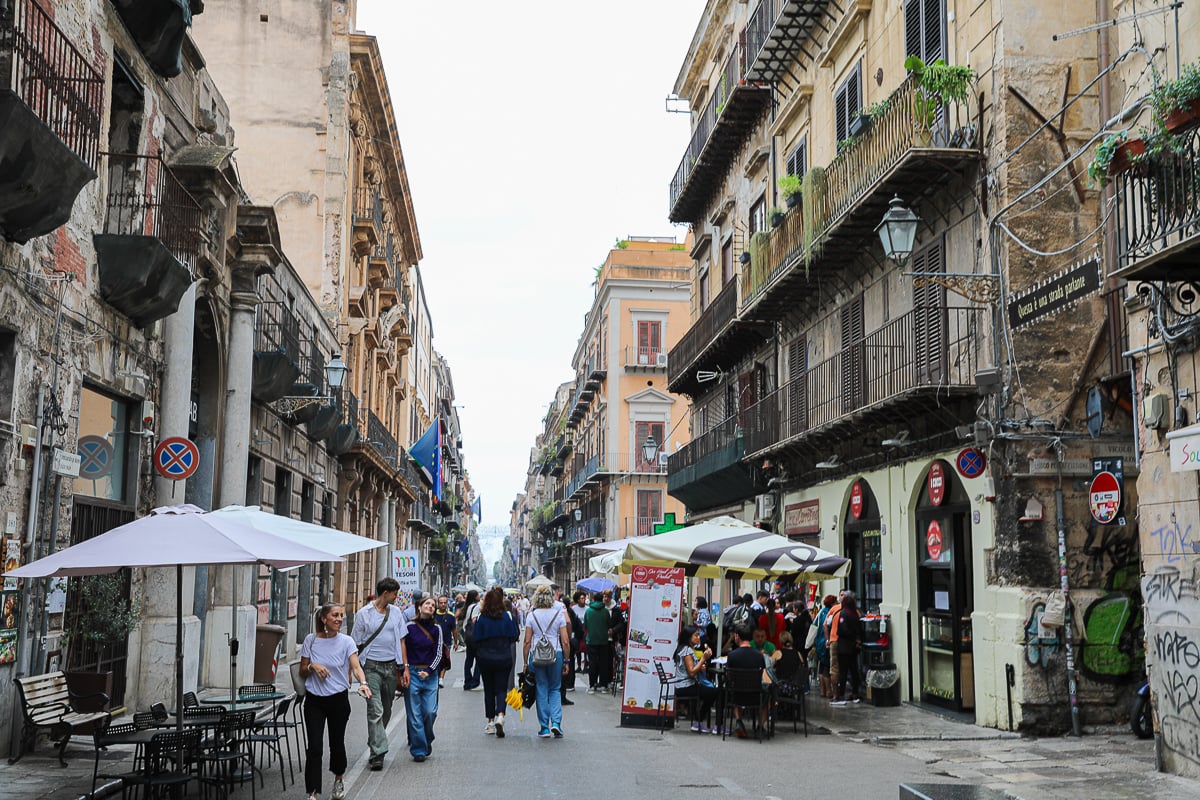
Palermo’s three main open-air markets (Il Capo, Ballarò, and Vucciria) put Palermo’s personality on full display. They’re loud, messy, colorful, chaotic, crowded, and alive. While you’re in Palermo, try to make it to each one…
Il Capo Market (Most Navigable)
We first visited Il Capo Market during our Palermo Street Food Walking Tour – and for the rest of the week, my husband and I kept coming back for more…
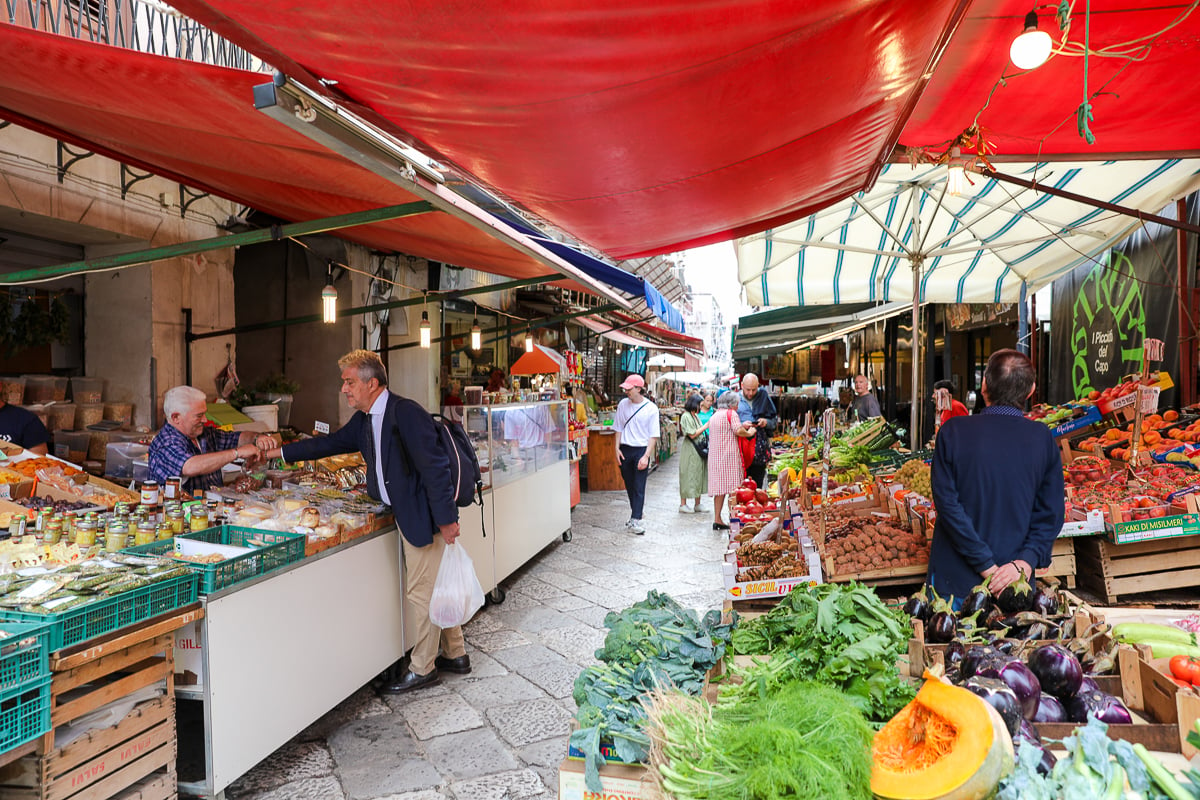
At Il Capo, you’ll find stalls piled high with fresh produce, friggitorie pulling up baskets of freshly fried calamari, locals on their daily shopping and socializing rounds, and the occasional tourist hunting down the best sfincione (deliciously spongy, crispy pizza squares).
Weekday mornings are the perfect time to visit. Bring cash. Come hungry.
La Vucciria Market (Most Grungy)
La Vucciria Market is vivid, grungy, barbecue-smoke-filled, and real.
Always packed with locals, fresh seafood (since La Cala marina is just steps away), and authentic, old-school street food stalls, this market is perfect for a stroll, camera in hand.
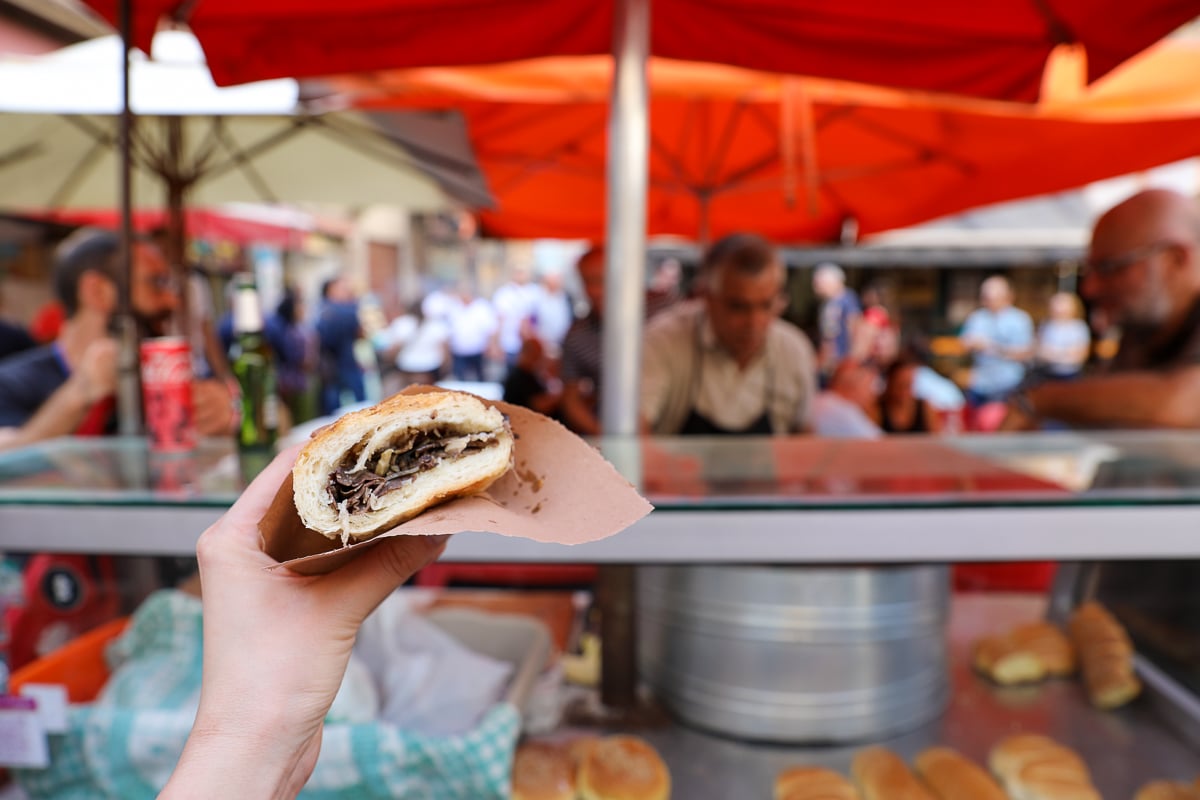
Here, I ordered pani câ meusa: a historic and beloved Palermitana street sandwich of lard-fried veal lung and spleen in a sesame bun. It was salty and lemony, but I definitely cannot say I liked it. I’m proud I tried it, though…
Ballarò Market (Most Iconic & Chaotic)
The iconic Ballarò Market is considered Palermo’s oldest market, dating back more than 1,000 years. And you can think of it as Palermo at full volume, unapologetically.
It’s chaos. Total sensory overload. Vibrant produce, aromatic spices, seafood on ice, heaps of fried food on platters, vendors yelling out their offerings at the top of their lungs.
You don’t need a plan for this market, just curiosity and an appetite.
MADDY’S TIP: I recommend visiting these markets during this Palermo Street Food Walking Tour. Then, once you have the lay of the land, go back again (and again) to taste anything (and everything) that looks interesting. Book your Palermo Street Food Walking Tour here.
4. Take an Authentic Sicilian Cooking Class
Want to dive even deeper into Sicilian cuisine? Then book this “Wanna Be Sicilian” Cooking Class & Market Tour.
You’ll start at Mercato del Capo, shopping alongside locals for seasonal ingredients – then head into the kitchen to cook a classic three-course Sicilian meal from scratch.
The menu typically includes arancine al ragù, homemade pasta alla Norma, and freshly made cannoli (A.K.A. the other Sicilian Holy Trinity).
After cooking, you’ll sit down family-style to eat everything you made, with local wine – of course!
I took this amazing Sicilian cooking class in Taormina, so I didn’t do this one. It looks pretty fabulous though…
Check out the “Wanna be Sicilian” Cooking Class & Market Tour here!
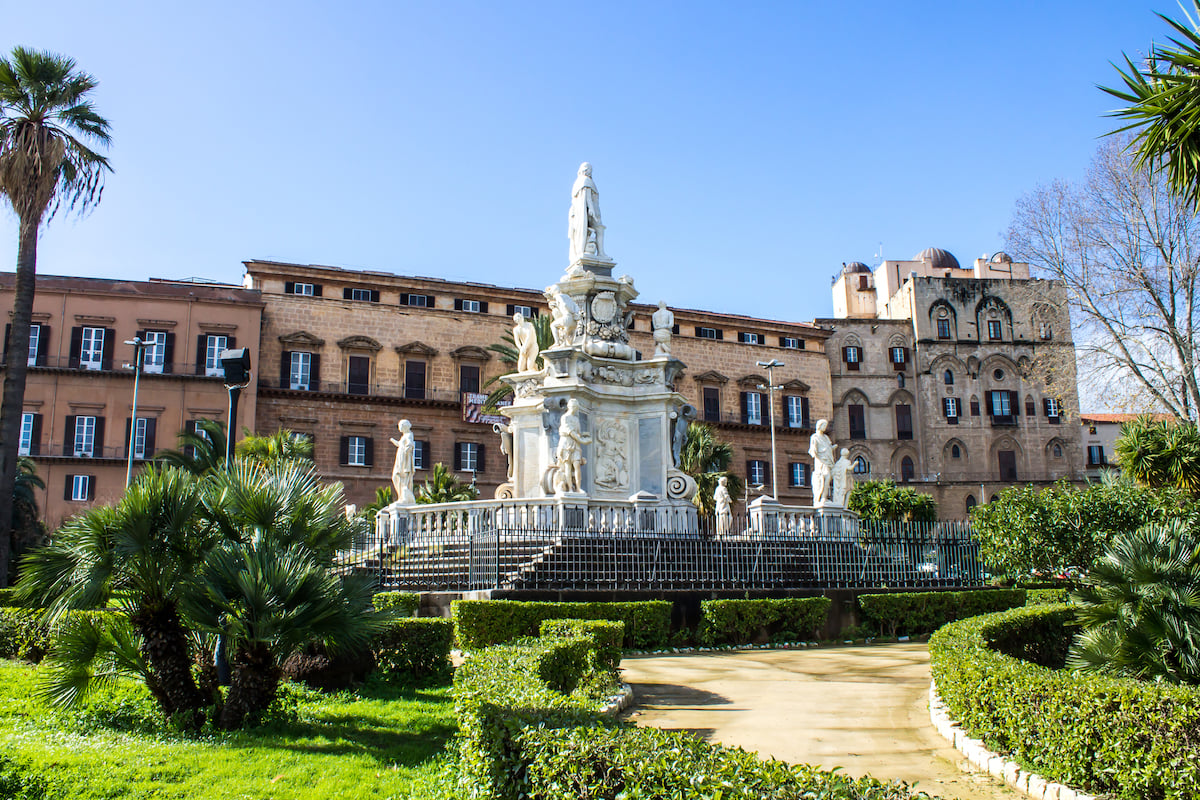
5. Visit the Palazzo dei Normanni & Cappella Palatina
If you want to visit somewhere that explains Sicily, the Norman Palace (and its Palatine Chapel) is that place.
Palazzo dei Normanni (A.K.A. the Norman Palace) is Palermo’s historic seat of power – and one of Europe’s oldest royal residences. And despite its name, the story starts long before the Normans. The site was first developed during Arab rule in the 9th century, then after the Norman conquest of Palermo in 1072, it became a royal stronghold and political center – and was once home to the Kings of Sicily.
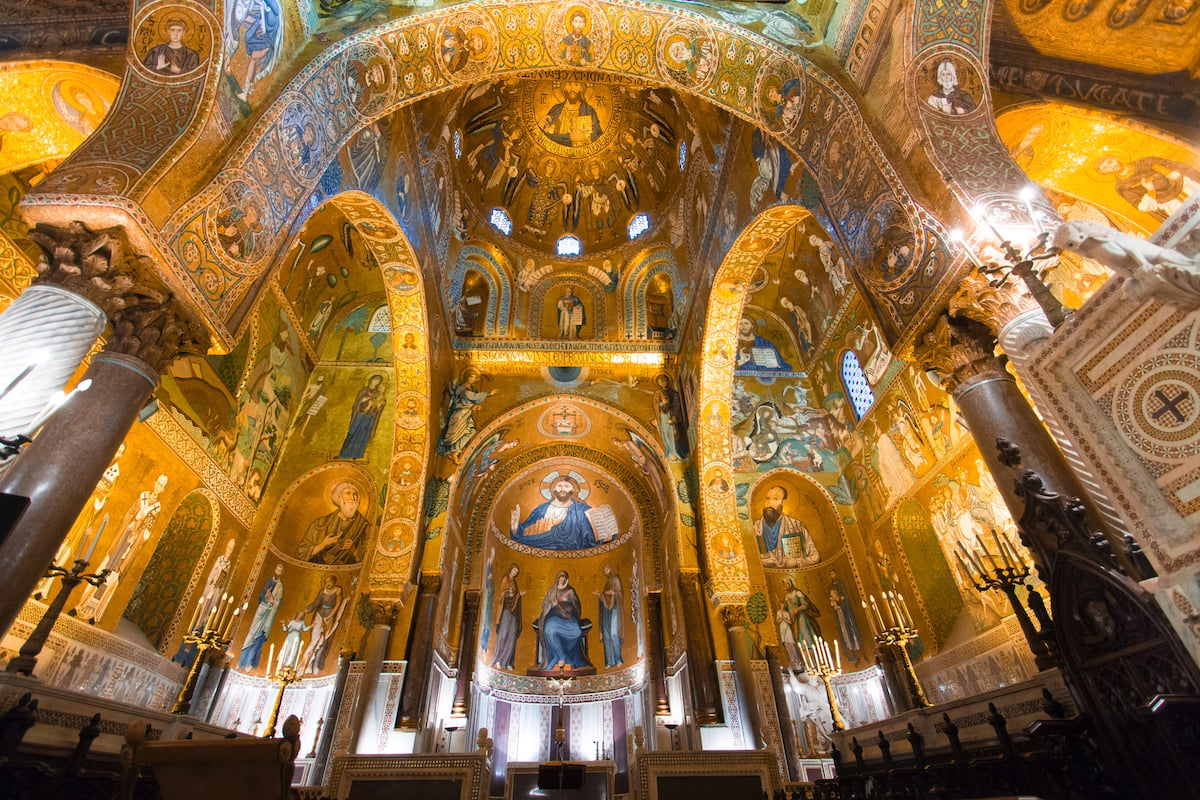
Inside, the must-see is the Cappella Palatina (Palatine Chapel), commissioned by Roger II in 1132. This is where Palermo’s layered identity becomes impossible to ignore: Norman power, Byzantine sparkle, and Arab influence all coexisting in the same space.
And while it’s not as famous as Vatican City’s Sistine Chapel, the Palatine Chapel is still one of the most spectacular interiors in Italy – thanks to its glittering mosaics, rich frescoes, and intricate architectural details.
If you want to do this right (and not just walk through wondering what you’re looking at), I recommend booking this 1.5-hour Norman Palace & Palatine Chapel Tour (Small-Group or Private).

6. Visit Palermo Cathedral
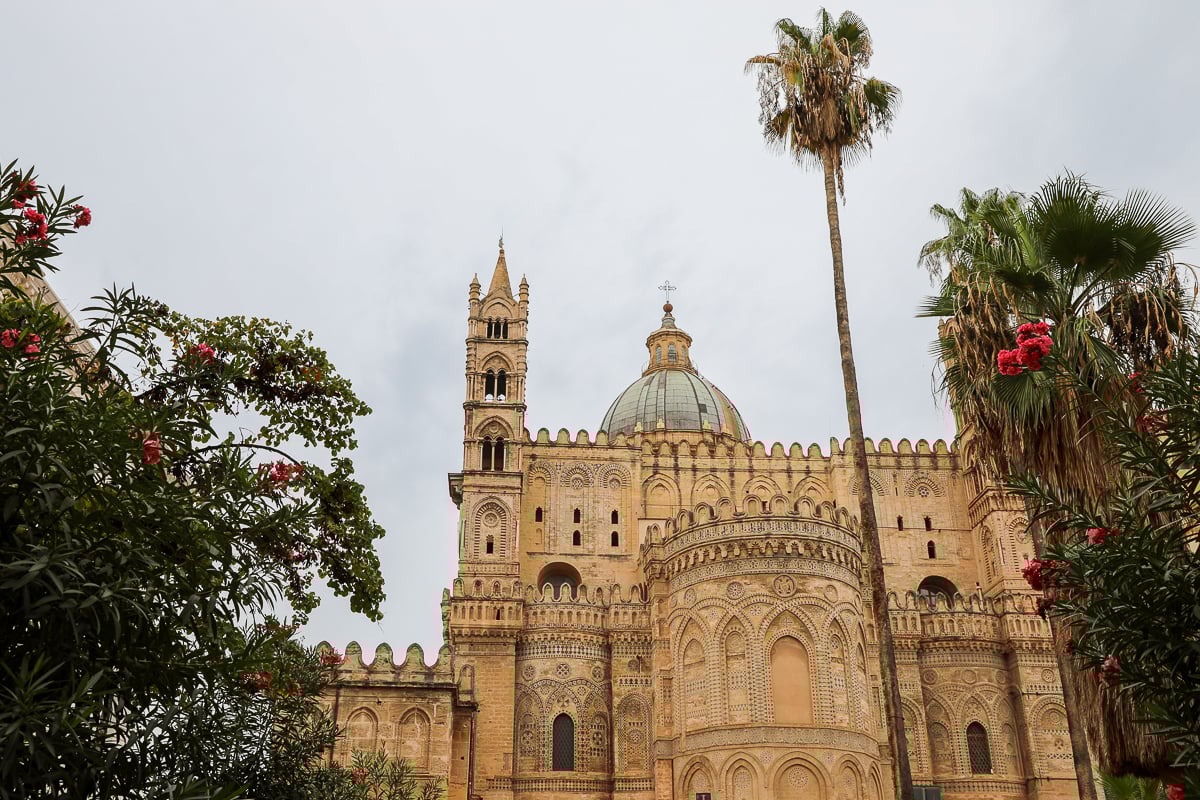
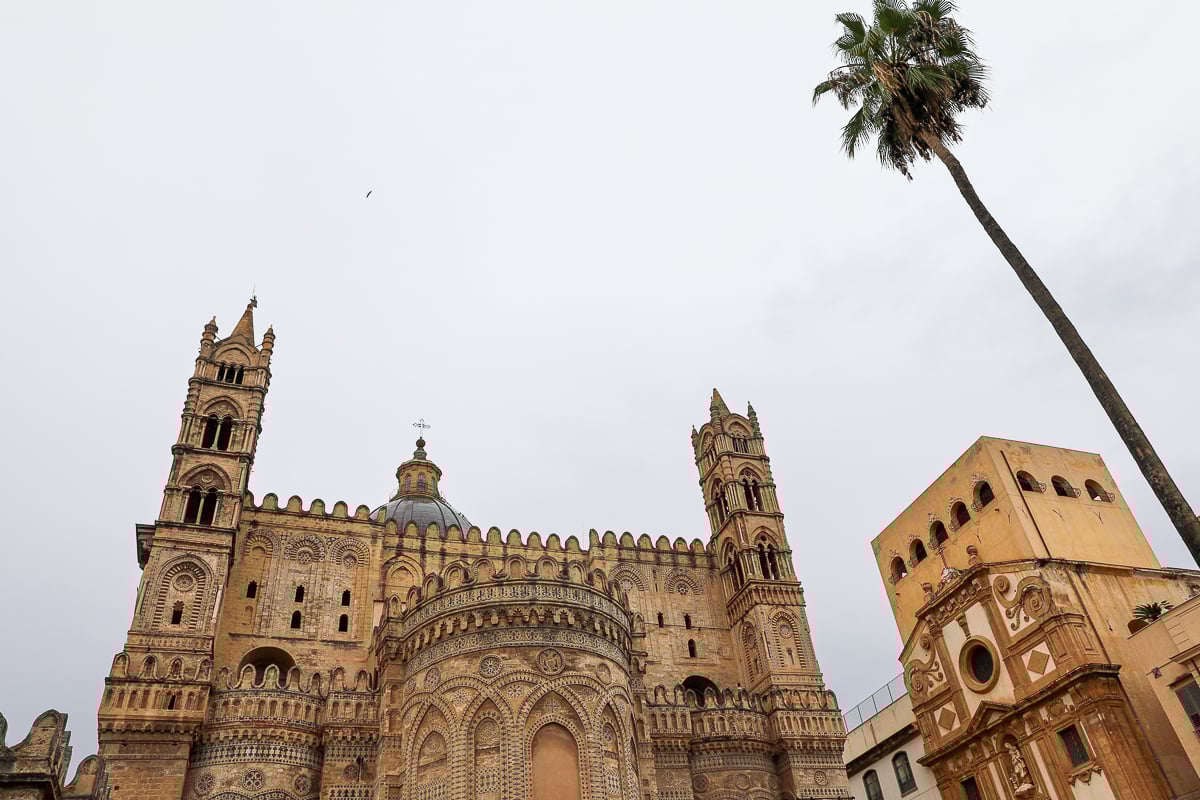
Everyone loves visiting St. Peter’s Basilica and touring St. Mark’s Basilica – myself included. But the Palermo Cathedral is in a category of its own. Not just a striking façade – it’s an architectural timeline of a city that’s been shaped by centuries of invasions and conquests.
It was founded in 1185 during the Norman era, on a site that had already been a church – and, during Arab rule before that, a mosque. Over the centuries, Norman, Arab, Gothic, Baroque, and Neoclassical styles have been layered on top of each other.
You’ll stop here during the “No Mafia” Walking Tour. But if you visit on your own instead, know this: the main cathedral is free to enter, but you’ll need a paid Monumental Area ticket if you want access to areas like the royal tombs, crypt, treasury, and the rooftop for panoramic views.
7. Visit the No Mafia Memorial
The No Mafia Memorial is a quick stop, but an important one.
Palermo’s Mafia history isn’t just a movie plot or a chapter from the past. The No Mafia Memorial is a simple, public reminder of the people who fought back, the lives lost, and the ongoing push for justice and change.
The memorial is free to visit, though you’re welcome to leave a donation of any amount to support their cause.
After going on the Palermo “No Mafia” Walking Tour I recommend, this stop will make everything you learned feel even more tangible.
MADDY’S TIP: Need a pick-me-up after? Steps away, head to Caffè del Kassaro for a seriously delicious Sicilian-style lunch; despite the touristy location, this place is always packed with locals. For something sweet, Cappadonia Gelati is your place. Both of these businesses are Addiopizzo.
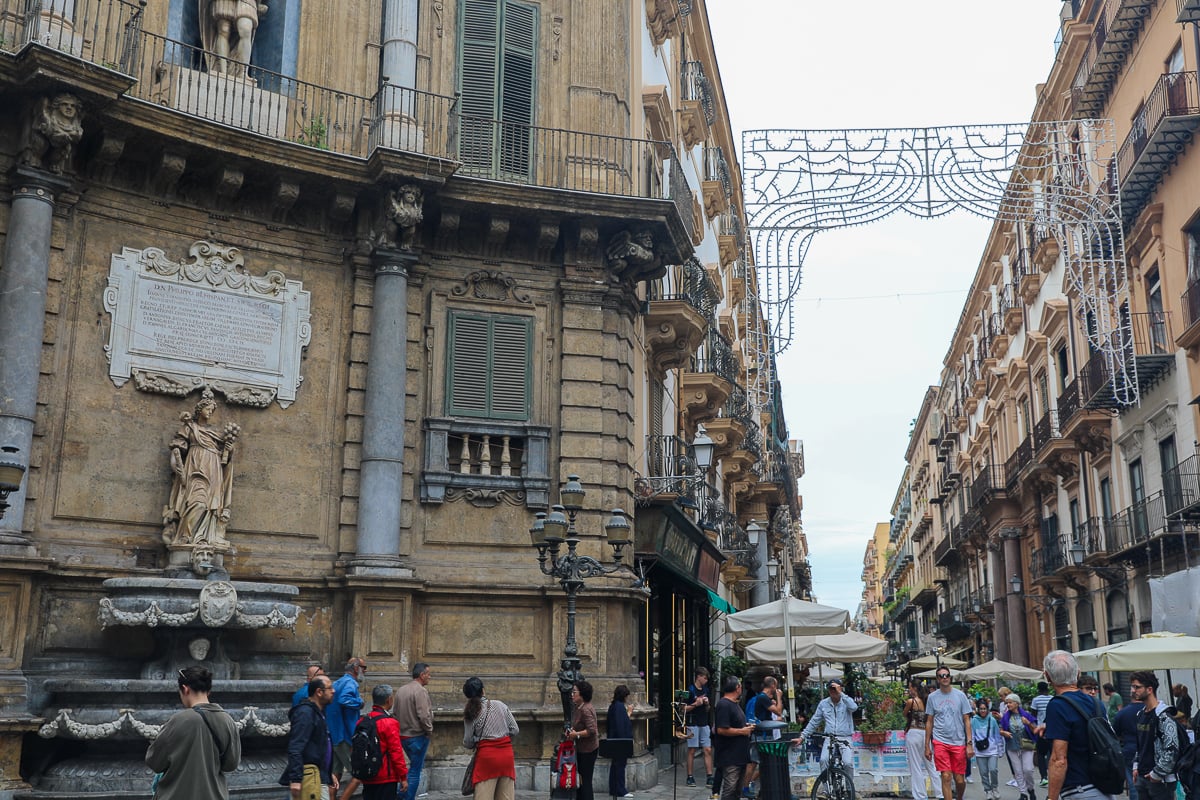
8. Walk through Quattro Canti
Quattro Canti is Palermo’s most iconic crossroads. This Baroque octagonal piazza – where Via Vittorio Emanuele and Via Maqueda meet – was built in the early 1600s as a grand focal point… And that’s exactly what it is.
As you pass through, take in the four curved façades that feature marble statues, columns, fountains, and other ornate decoration.
This landmark makes for a quick photo stop and an easy way to orient yourself in Palermo’s historic center. From here, you’re just a few steps away from another must-see: Piazza Pretoria.
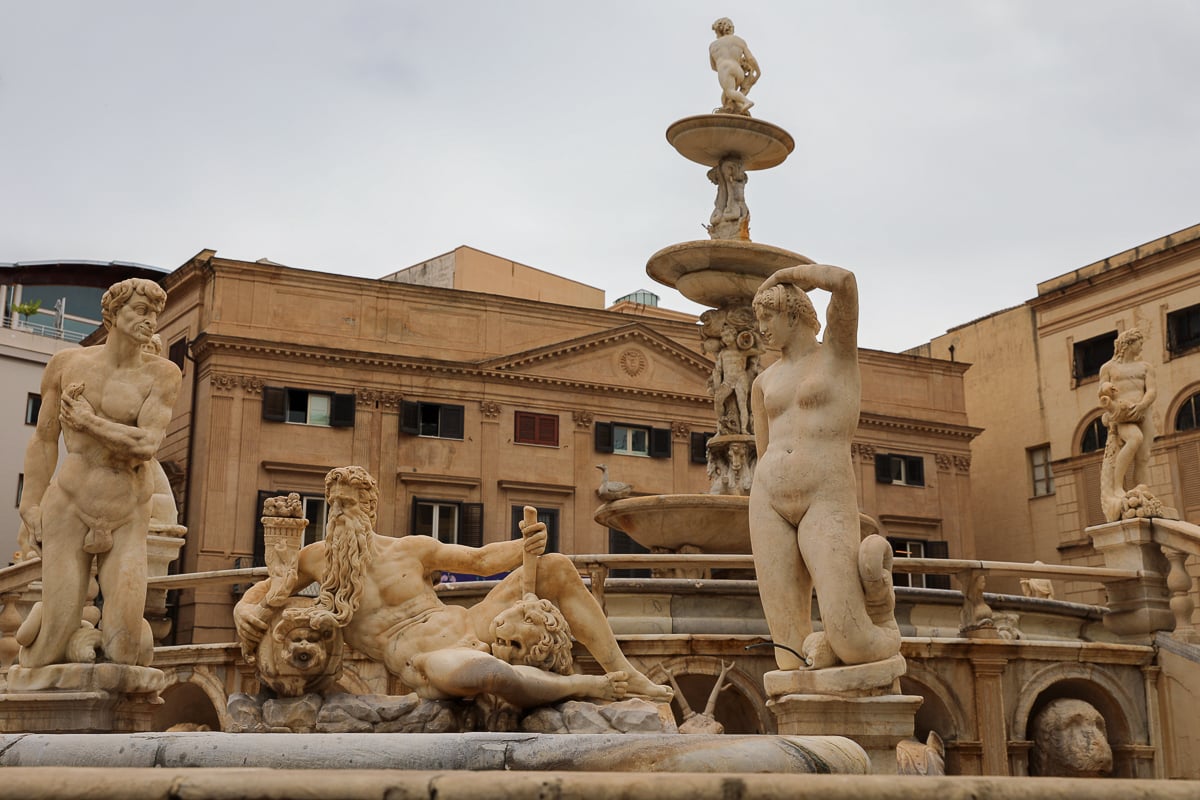
9. See the Fontana Pretoria
As you wander Palermo’s main pedestrian street, Via Vittorio Emanuele, you can’t miss Piazza Pretoria. The star of the show is the Fontana Pretoria (Praetorian Fountain), a massive Renaissance fountain surrounded by dramatic nude statues of gods and goddesses.
Legend has it, back in the mid-1500s, Palermitana locals were so scandalized by all the nudity that it earned the nickname Fontana della Vergogna (Fountain of Shame) – which is still what many people call it today.
Planning to book the Palermo “No Mafia” Walking Tour? Good. This piazza is one of its stops, so you’ll see it without a detour or extra planning.
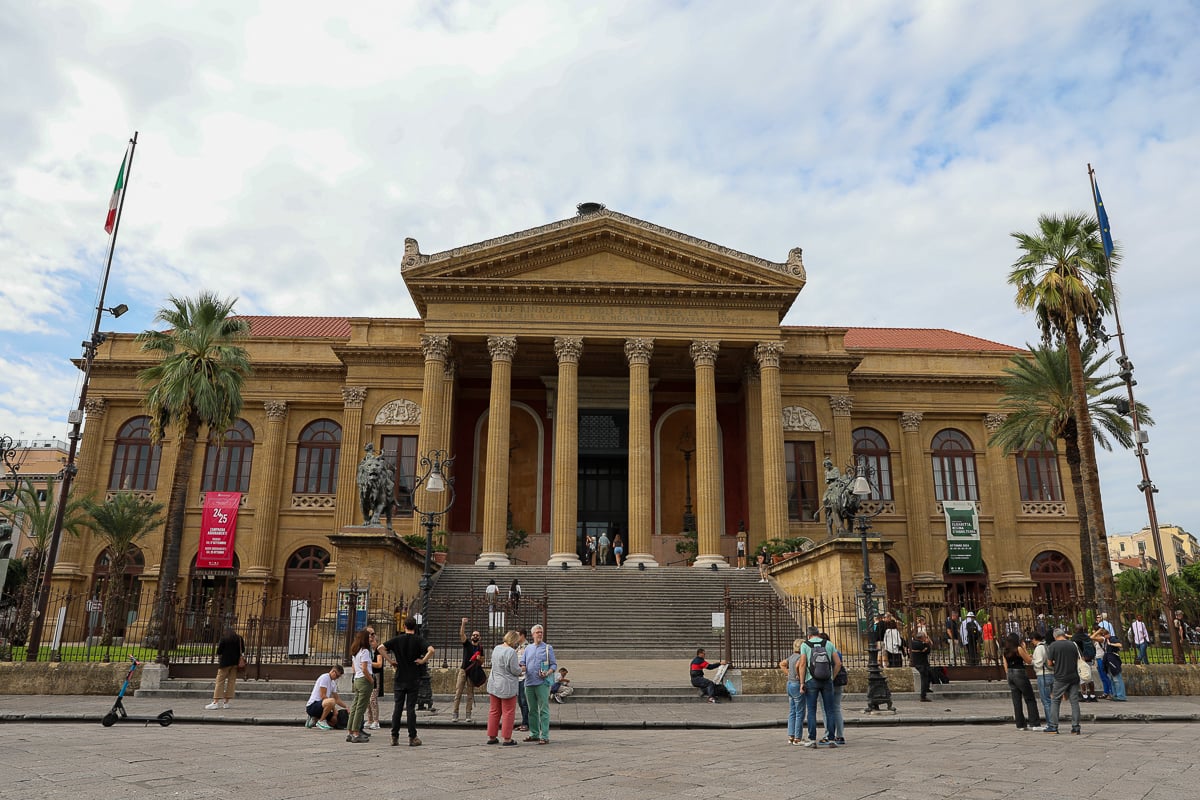
10. See a Show at Teatro Massimo
Opened in 1897, Teatro Massimo is one of Palermo’s most iconic landmarks – it’s the largest opera house in Italy, and the kind of place where the building itself is part of the show.
Here, my husband and I saw Elisabetta, Regina d’Inghilterra by Gioachino Rossini. The show was entirely in Italian, so we had almost no idea what was happening, but we still enjoyed it.
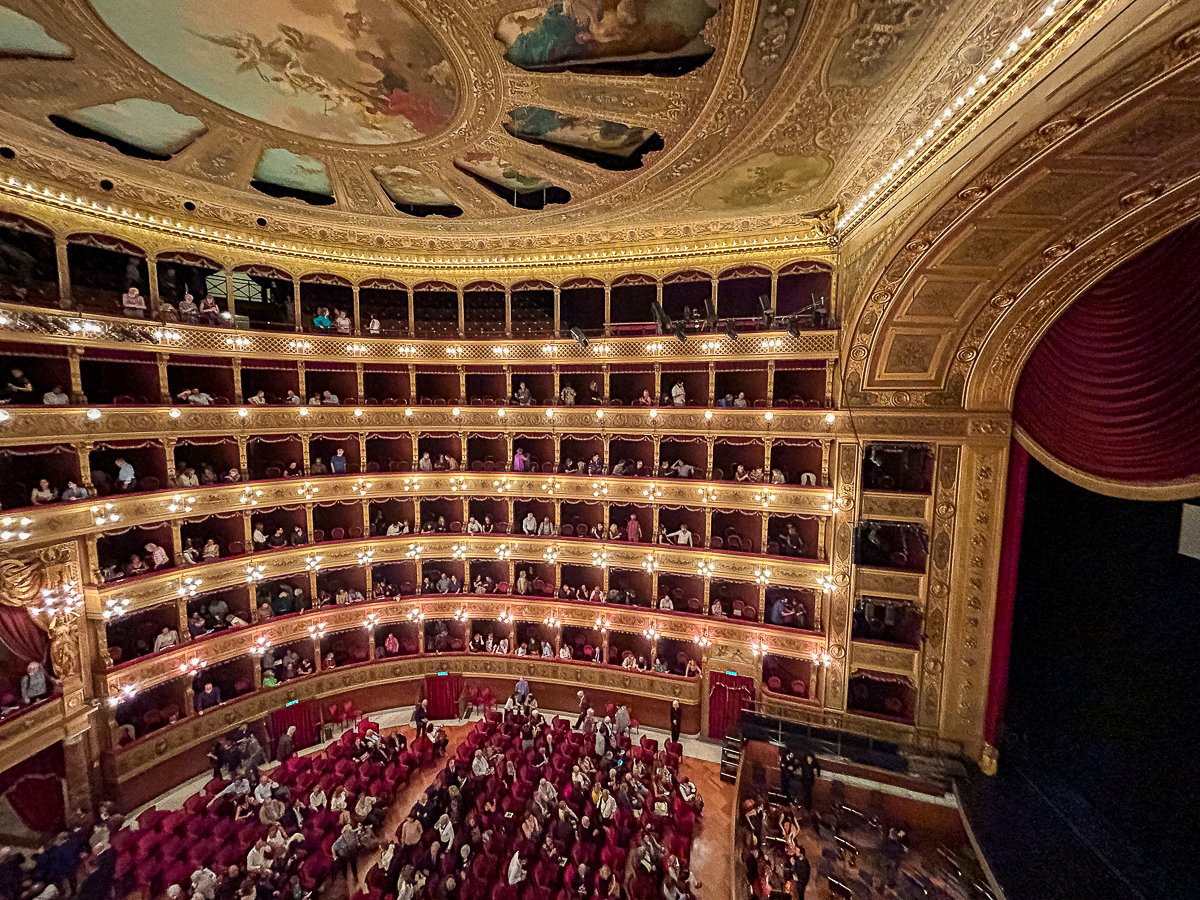
We bought tickets a few days ahead at the ticket office, but you can also buy them online in advance. You'll get better seats that way. Here's Teatro Massimo’s event calendar.
There’s no strict dress code – some people were dressed up, others weren’t. Smart-casual feels just right in this setting.
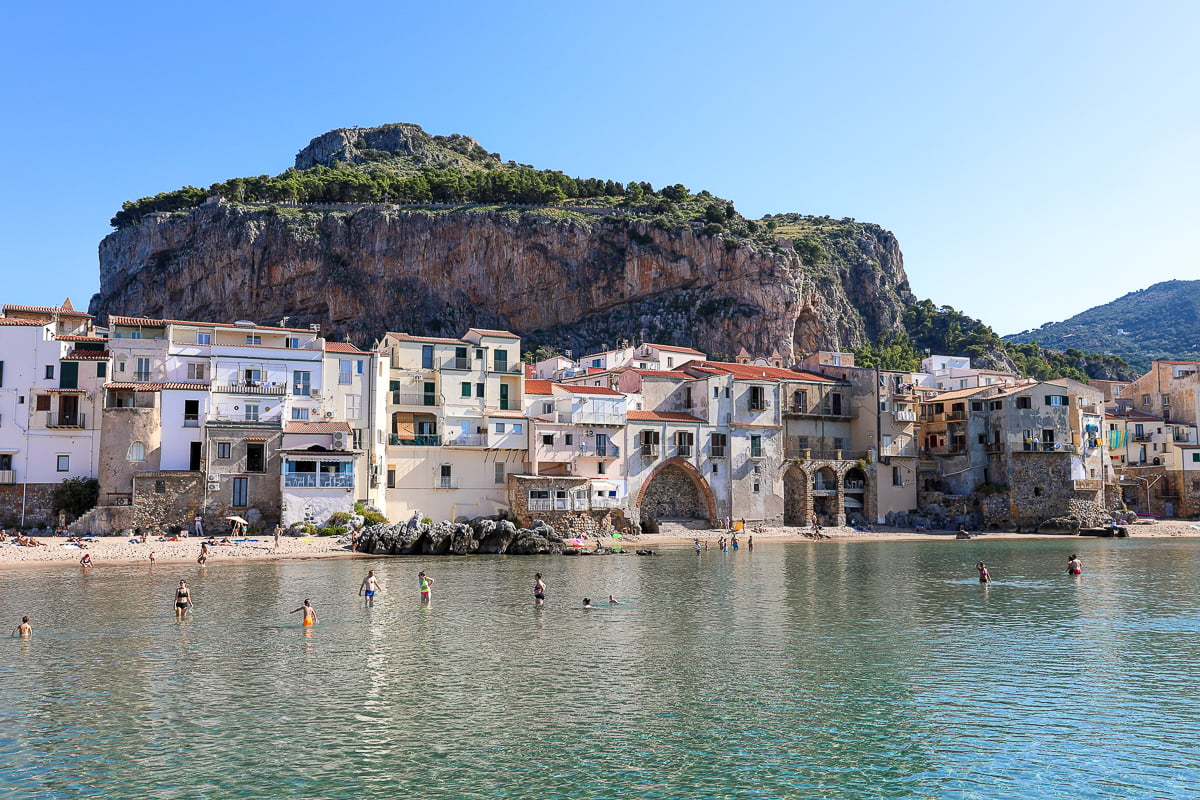
11. Day Trip to Cefalù
If you don’t have plans to stay overnight in Cefalù, then at least take a day trip there! This medieval seaside village is my favorite place in Sicily (so far, anyway).
From Palermo, Cefalù is an easy 45-minute one-way train ride. But it feels an entire island away: beachy, impossibly charming, instantly calming.
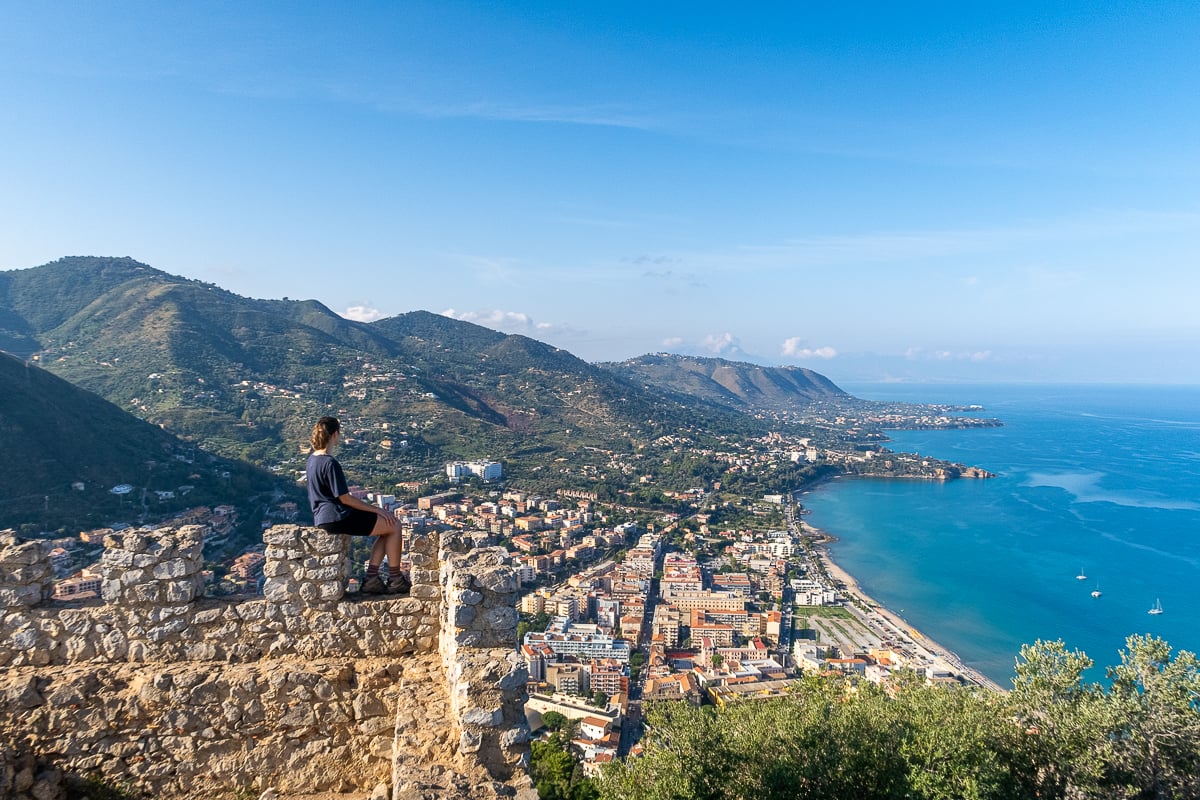
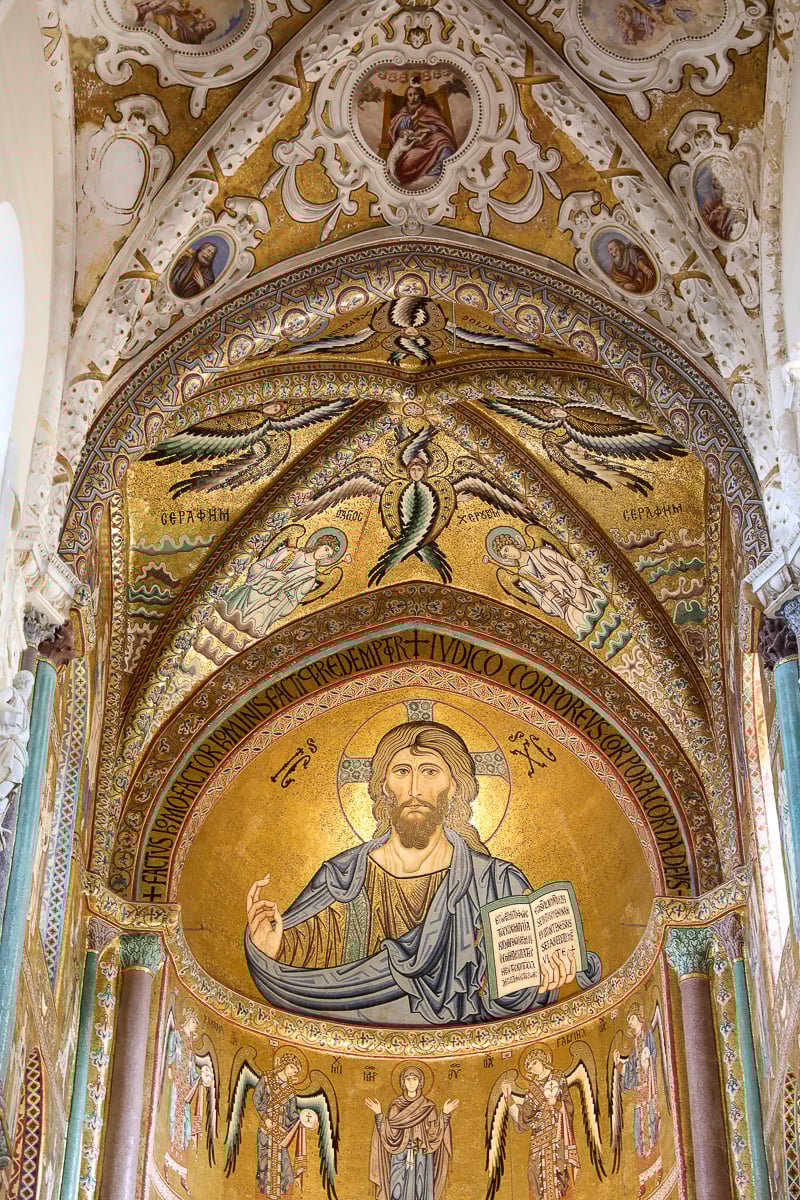
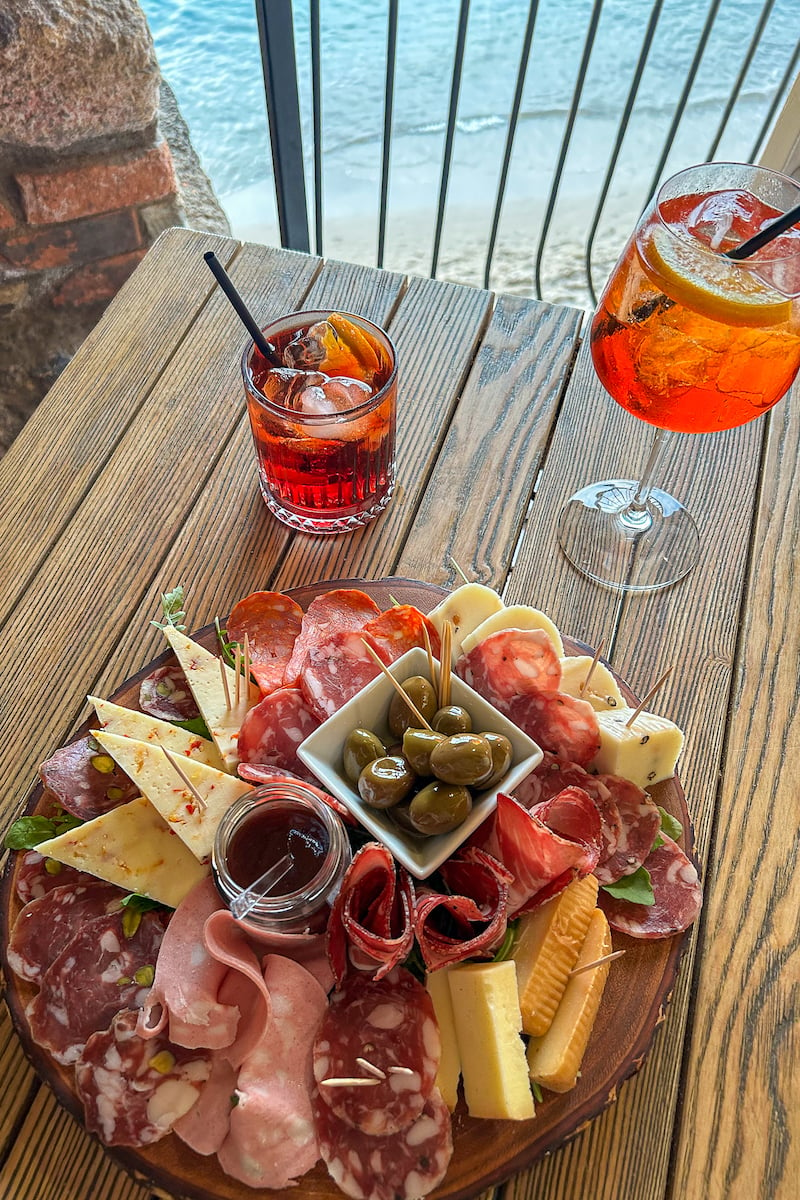
There, you’ll wander the ancient cobblestone lanes. Laze on sandy beaches and swim in turquoise seas. Stop by the gorgeous Duomo di Cefalù, filled with Byzantine mosaics. Pop into cute wine bars (like Enoteca Le Petit Tonneau, my favorite). And hike up to La Rocca for unforgettable views and castle ruins.
Read my full Cefalù travel guide, then decide if you’ll go by train or book a guided day trip to Cefalù.
For a two-in-one experience, I recommend this full-day trip to Cefalù and Castelbuono from Palermo – Castelbuono is another enchanting village, tucked into the Madonie Mountains.
12. Day Trip to Valley of the Temples & Villa Romana del Casale
If you love ancient history, then a day trip to the Valley of the Temples and Villa Romana del Casale is another one for your to-do list.
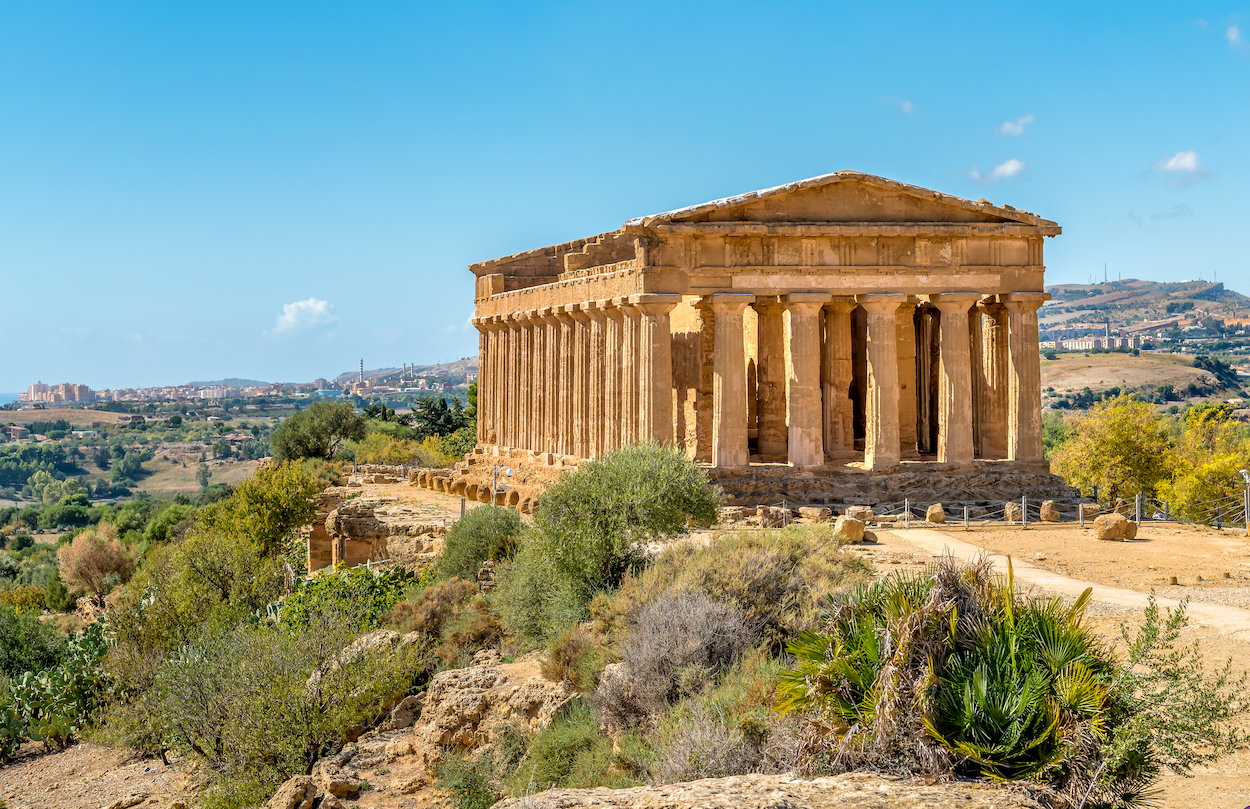
For some quick context, the Valley of the Temples is an archaeological park outside Agrigento, featuring some of the world’s best-preserved ancient Greek temples (trailing behind the ones in Athens, of course). Mostly built by Greek settlers around the 5th century B.C., you’ll see massive Doric temple ruins spread along a scenic ridge. Pretty impressive.
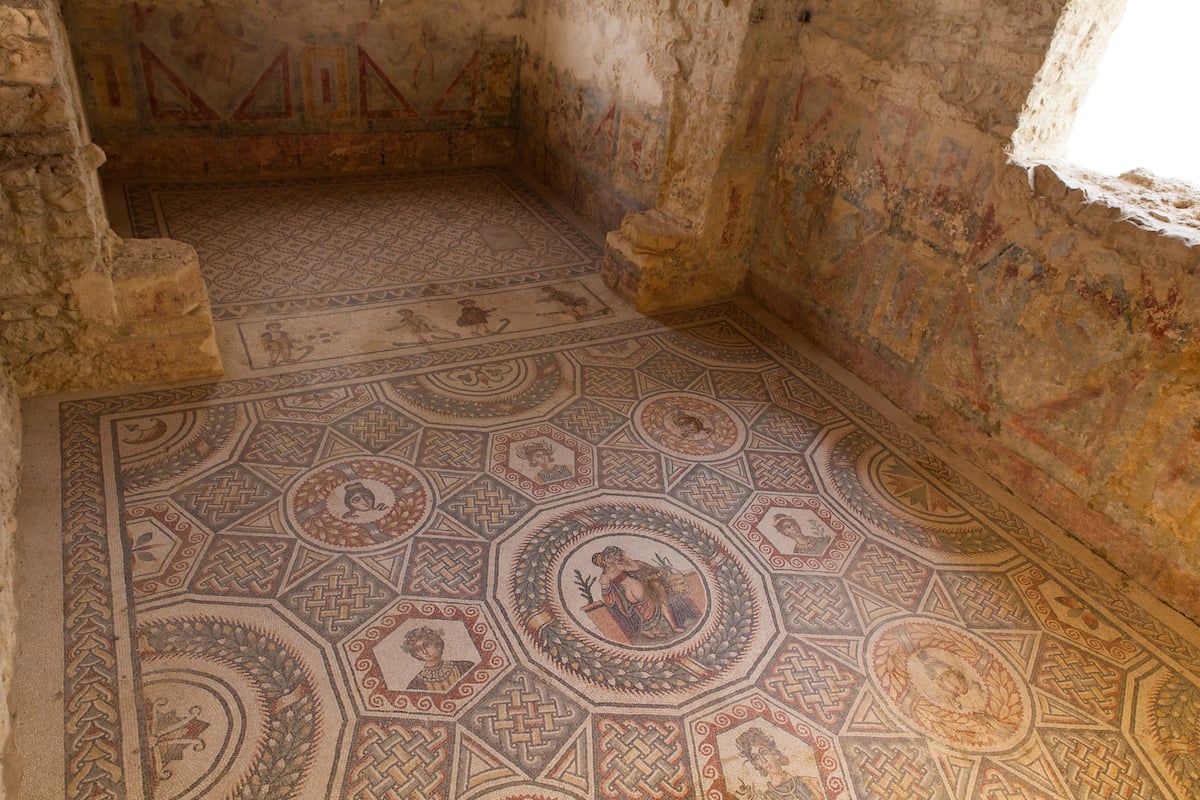
Then there’s Villa Romana del Casale, a lavish late Roman countryside villa near Piazza Armerina, dating back to around the 4th century A.D. It’s famous for its jaw-dropping floor mosaics – room after room of intricate scenes of daily life, animals, and mythology.
Visiting both sites from Palermo makes for a long day with a lot of time on the road (roughly 5.5 hours). But if you love history – and if you’re not visiting Agrigento otherwise – this Valley of the Temples and Villa Romana del Casale tour is worth considering.
MADDY’S TIP: Don’t forget to wear comfy footwear and to pack a refillable water bottle, an adventure sunhat, and natural sunscreen.
13. Tour Palazzo Conte Federico
If you love getting inside historic and exclusive palazzi (not just walking past them), Palazzo Conte Federico belongs on your things to do in Palermo list.
This privately-owned aristocratic palace in Palermo’s historic center is a total hidden gem – and a peek into living, breathing history. It’s still inhabited by the same family, and they personally accompany you on the tour. How cool is that?
Inside, you’ll walk through grand rooms with period details like colorful frescoes and antique collections – plus, you’ll see the palace’s standout feature: the Scrigno Tower, a 12th-century Arab-Norman tower built high above Palermo’s ancient city walls.
Tours take roughly 45 minutes and are available daily except Wednesdays. I regret that I didn’t squeeze in a visit, but it’s high on my list for next time.
What to Eat in Palermo, Sicily
Palermo may not be the Food Capital of Italy (that crown belongs to Bologna), but it’s definitely one of Italy’s best foodie cities.
Palermitana cuisine is bold, briny, fried, scrappy, local, and surprising. It’s shaped by centuries of Greek, Arab, and Spanish influence. It favors fresh seafood and local produce. It loves stark contrasts – sweet and sour, soft and crunchy, deep-fried and brightly citrusy. And often, it’s best eaten in the streets, with your hands.

While you’re in Palermo, there are a few dishes you must eat:
- Arancine (stuffed, deep-fried rice balls)
- Panelle (chickpea fritters, often eaten in a sandwich)
- Crocchè or cazzilli (potato croquettes)
- Sfincione (thick, spongy Sicilian-style pizza squares)
- Coppo di fritto (fried seafood cone)
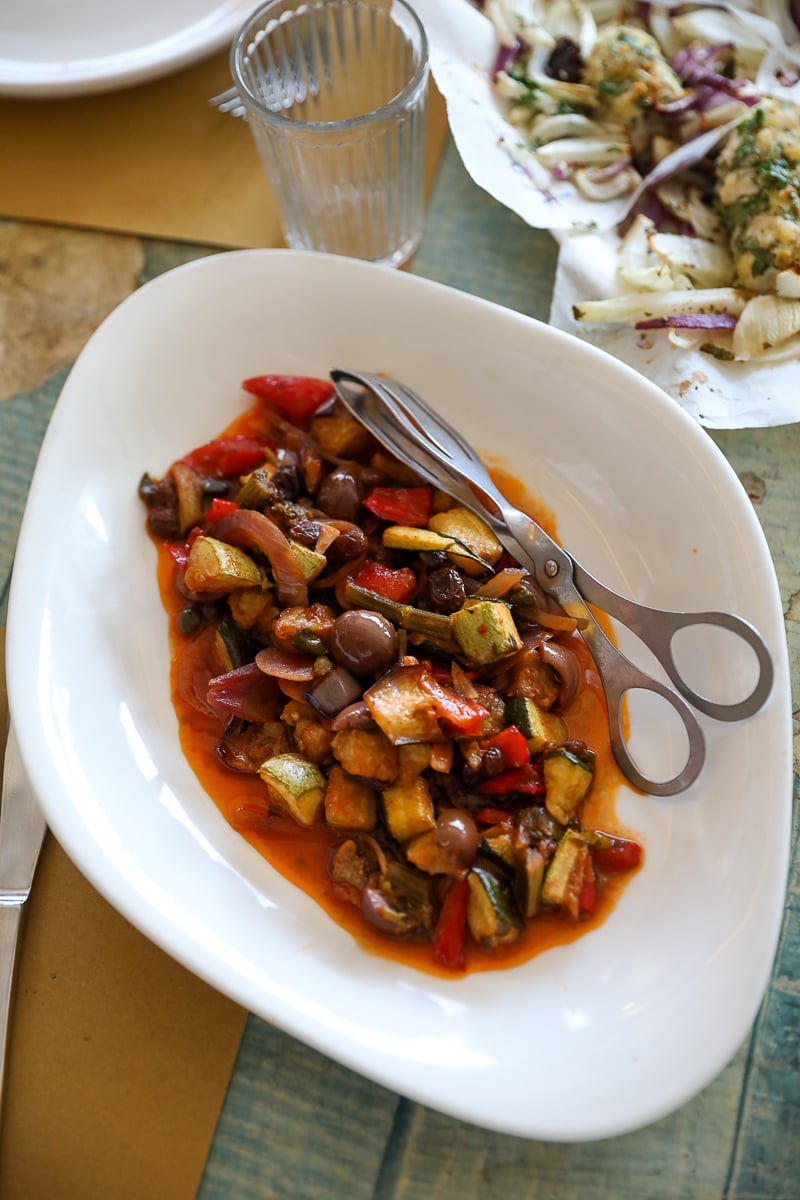
- Caponata (a sweet-and-sour eggplant dish)
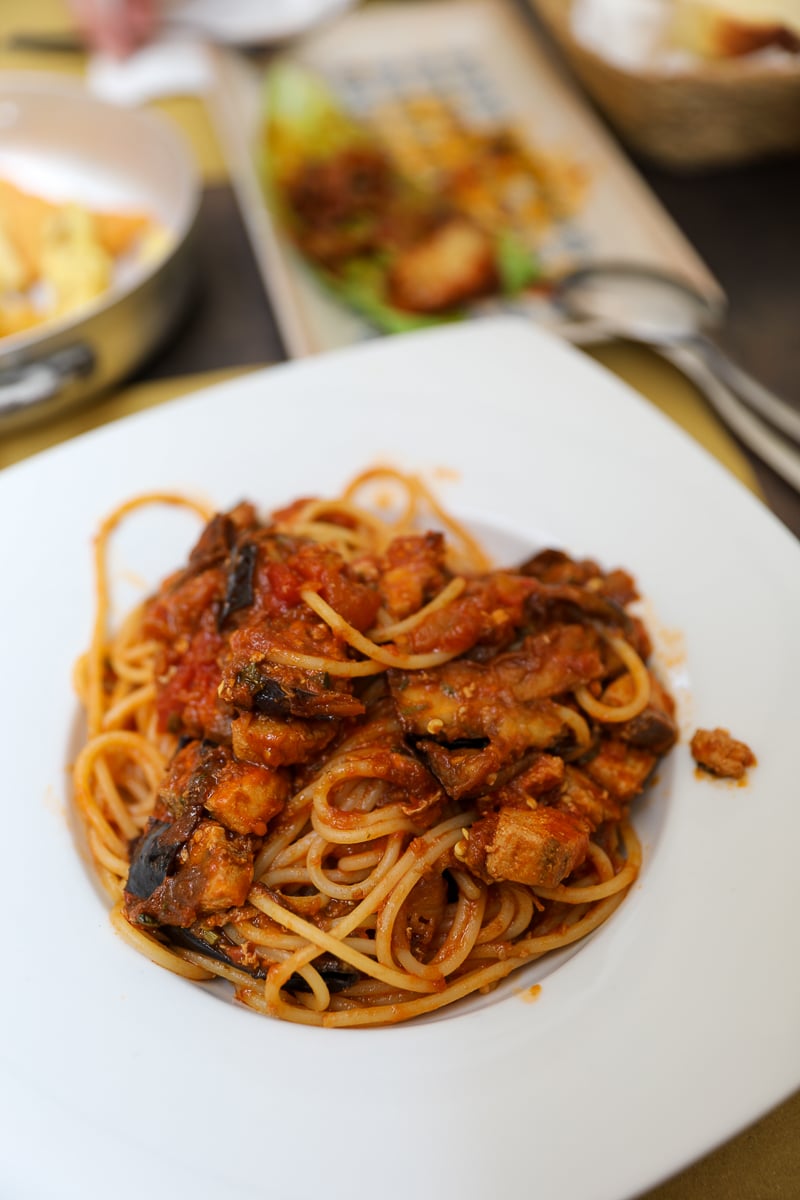
- Pasta c'anciova e muddica atturrata (pasta with anchovies, tomato, raisins, pine nuts, and crunchy breadcrumbs)
- Cannoli (ricotta-filled pastry tubes)
- Brioche con gelato or brioche con granita (granita or gelato sandwiched in brioche)
If you want to deep-dive into Palermo’s food scene (and trust me, you do), don’t miss this Palermo Street Food Walking Tour.
MADDY’S TIP: Most travelers use “arancini” as a catch-all for rice balls, but here’s the nuance every Sicilian is passionate about. In western Sicily (including Palermo), rice balls are round and called arancine (singular: arancina) – which translates to “little oranges.” Arancini (singular: arancino) are pointy and triangular – and you likely won’t find any until you make it to the east side of the island (ciao, Taormina).
Best Restaurants & Bars in Palermo, Sicily
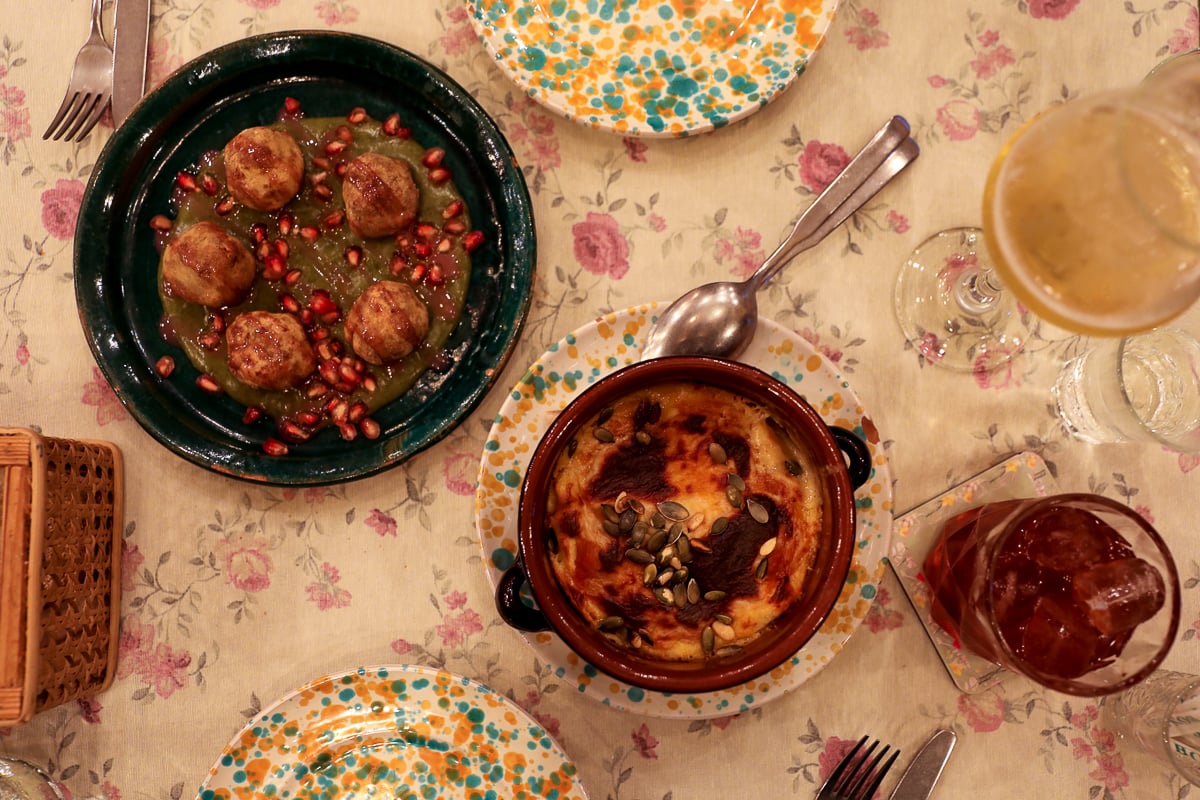
- Le Angeliche: This restaurant is as romantic as Palermo gets. Le Angeliche’s modern and creative Sicilian cuisine, extensive wine list, friendly service, and airy, whimsical garden make for a magical dining experience. We loved the crudo di alalunga (raw albacore tuna) with ginger, burrata cream, mango, and pistachios; fried tuma with sweet-and-sour carrot cream and anchovies; cinnamon cod balls with pomegranate; and the hand-stretched lasagna with pumpkin, sausage, and smoked Ragusa cheese. Book in advance!
- Bottega Monteleone: If you love natural wine as much as I do, then this’ll be your favorite aperitivo spot in Palermo. Little tables lining a narrow street, relaxed vibes, and delicious Sicilian wines? Simple perfection.
- Caffè del Kassaro: Casual, budget-friendly, and always packed with locals despite its touristy location on Via Vittorio Emanuele, this is an authentic little place you shouldn’t miss. Caponata, a perfect parade of fried things like panelle, crocchè, arancinette, and seafood pasta? Perfetto.

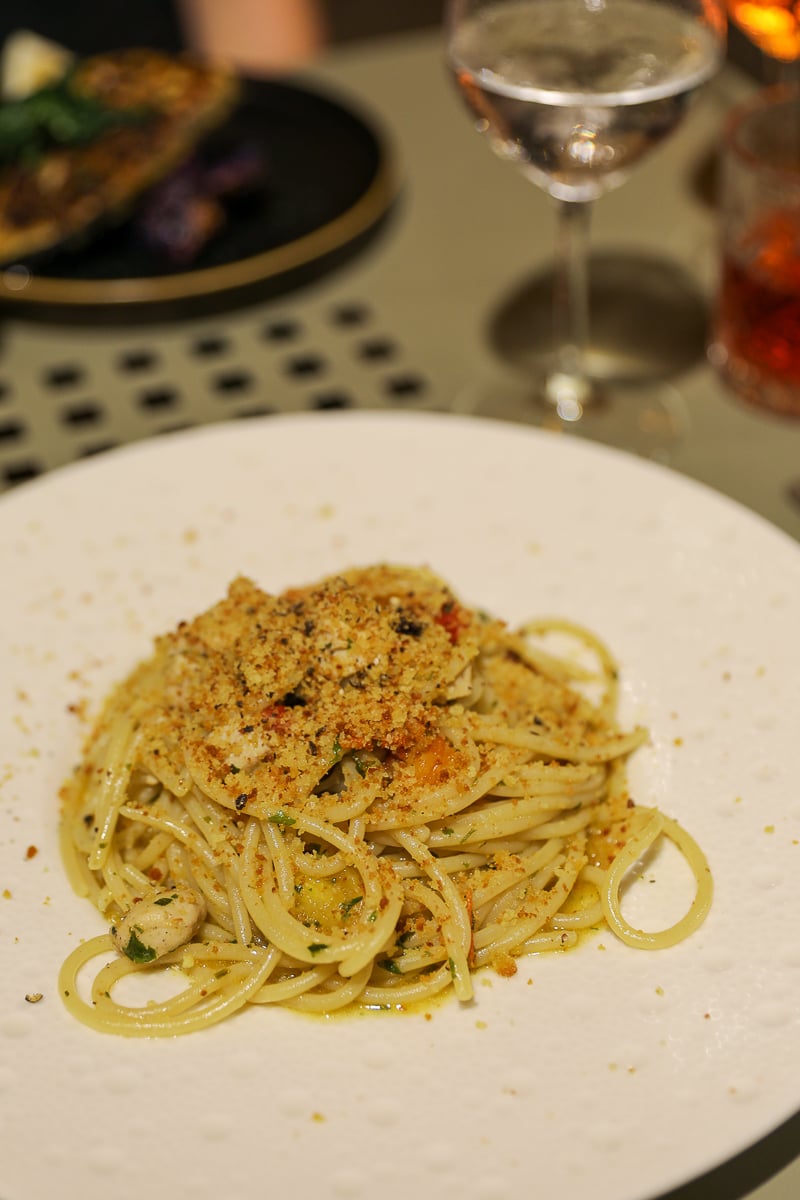
- Ristorante Quattro Mani: My favorite restaurant in Palermo, no contest. The menu is seasonal, ingredient-driven, and changes daily. Start with something like eggplant croquettes over tomato sauce topped with shaved ricotta salata. Then order the pasta. I had one of the best pastas of my life here: bright, briny spaghetti with swordfish, anchovies, little tomatoes, raisins, mint, citrus, and crunchy pangrattato – basically Sicily in a bowl. You can’t go wrong with their fish of the day either. Reservations are essential.
- Terra Natural Spirit Bar: My husband and I loved sipping cocktails outside at this cute little bar pre-dinner at Quattro Mani – you will too.
- Enoteca Butticè: This is a charming little wine bar and restaurant in Piazza San Francesco di Paola.
- Casa Stagnitta: Time for breakfast? Steps from Piazza Pretoria, beeline it here for the espresso, pastries, and especially the granita.
- Cappadonia Gelati: My top gelato stop in Palermo, serving “gelato di territorio” – made with local, seasonal, top-quality Sicilian ingredients.
Where to Stay in Palermo: Best Neighborhoods & Hotels
Where you decide to stay in Palermo really impacts your trip. Here are the two best areas for first-timers – plus my favorite hotel picks in each one.
Politeama / Via Libertà
If you want a more polished home base while still being walkable into the historic center, this is the best balance.
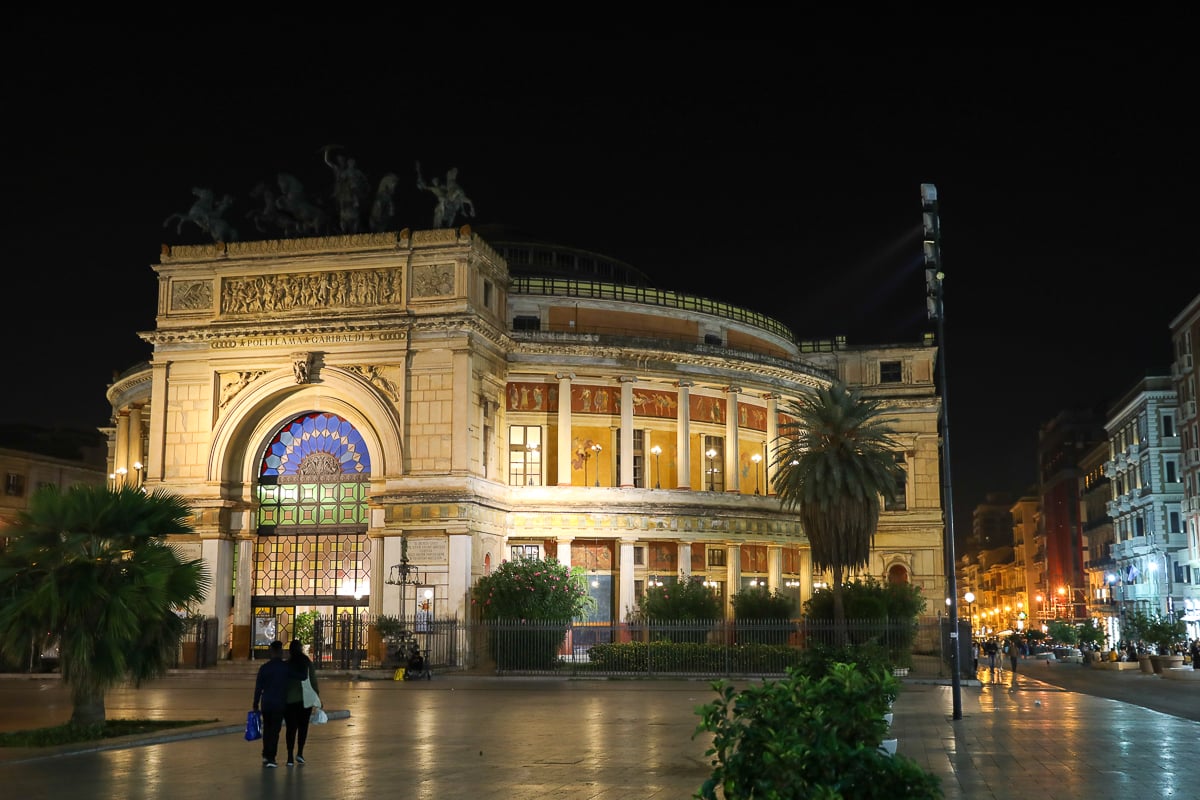
Politeama is the ideal base if you have more than one night in Palermo. It’s calmer and more polished than the historic center, but within easily walking distance of all the chaos, wine bars, markets, and street food. If you’re the type who wants to experience the best of Palermo – but also wants to sleep well – this is your neighborhood.
Here are the best hotels in Politeama / Via Libertà:
- Hotel Politeama ($$)
- Palazzo Liberty Unique Hotel ($$$) – my top pick!
- Grand Hotel et Des Palmes ($$$$)
Kalsa
Kalsa’s historic streets feel very Palermo-esque: artsy, gritty (but in a charming way), and packed with character. It’s close to the historic center, and home to plenty of standout restaurants and aperitivi spots.
Here are the best hotels in Kalsa:
- Bastione Spasimo Boutique Hotel ($$$) – my top pick!
- Spasimo Hôtellerie ($$$)
How Many Days in Palermo?
If you have two or three days in Palermo, you can tackle all of the best things to do in Palermo without rushing – especially making time for experiencing this Palermo street food tour and this “No Mafia” walking tour, exploring the city’s main monuments on foot, and enjoying a few fabulous meals.
But if you only have one day (maybe you’re visiting during a cruise?), you need to be strategic to uncover the best things to do in Palermo.
How to Spend 1 Day in Palermo
Wondering how to cover the best things things to do in Palermo in one day? Here’s an example of how I’d spend a day in Palermo – depending on the season and tour availability:
- Grab an espresso at Casa Stagnitta
- Join the Addiopizzo “No Mafia” walking tour (you’ll hear Mafia stories, while seeing the Palermo Cathedral, Piazza Pretoria, and more)
- For lunch, join a street food tour (which will cover Il Capo Market and Vucciria Market) or take a Sicilian cooking class
- Visit the Palazzo Conte Federico or the Palazzo dei Normanni
- Go for an aperitivo at Terra Natural Spirit Bar (before Quattro Mani) or Enoteca Butticè or Bottega Monteleone (before Le Angeliche)
- Have dinner at Ristorante Quattro Mani or Le Angeliche
- If timing allows, see an opera performance or show at the Teatro Massimo
Is Palermo Safe?
Yes, Palermo is generally safe for tourists – especially around the main sightseeing areas and the historic center.
That said, it helps to set your expectations before you arrive. Palermo is pretty dirty and dilapidated in parts. As you stroll along noisy streets, you’ll probably see crumbling buildings, homelessness, graffiti, and litter.
Like any big city, keep your usual street smarts: watch your bag in crowded areas, stick to well-lit streets at night, and don’t leave valuables unattended.
More Southern Italy Travel Inspiration
- Ultimate Travel Guide to Cefalù, Sicily
- One Day in Taormina, Sicily: Best Things to Do, See & Eat
- The Perfect Puglia Itinerary: 7-10 Day Road Trip!
- The Dreamiest Amalfi Coast Itinerary (For 3, 4, or 5 Days)
- How to Plan the Perfect Day Trip to Capri, Italy
- Things to Do in Ravello, Italy (In 1 Day!)
- Positano, Italy: Ultimate Travel Guide for First-Time Visitors